We often say it — and we truly believe it: Italy is one of the most beautiful countries in the world.
It’s where our journeys begin, the place we know best, and the landscape we love to explore step by step.
But travel is also about expanding your horizons, discovering new cultures, and seeing familiar things from a different perspective.
And sometimes, crossing a border is all it takes to rediscover that sense of wonder we look for in every journey.
That’s why, alongside our trips in Italy, we also offer a selection of carefully designed walking holidays across Europe — created with the same attention, or developed with trusted local partners who know their regions deeply. Our goal is always the same: to offer reliable support on the ground and thoughtfully designed routes suited to our travellers.
If you’re planning a summer trip, the good news is that you don’t need to go far — and often, you don’t need to fly again.
Many European destinations are well connected by rail, making it easy to continue your journey beyond Italy in a smooth and continuous way.
If you’re looking for inspiration for your next Camino, or want help choosing the itinerary that best matches your needs,
take our quiz at the link below!
For many travellers, reaching Europe means flying — especially if you’re coming from overseas.
But once you’re here, you don’t necessarily need to keep flying to explore more.
Europe’s rail network makes it possible to move across borders gradually, without interruption.
Travelling overland allows you to:
If you’re based in Europe, many of these destinations are directly reachable by train.
If you’re arriving from further away, they can easily be combined into a longer itinerary starting from Italy.
Here are a few journeys that can be easily connected to Italy — whether by train or as part of a wider European trip.
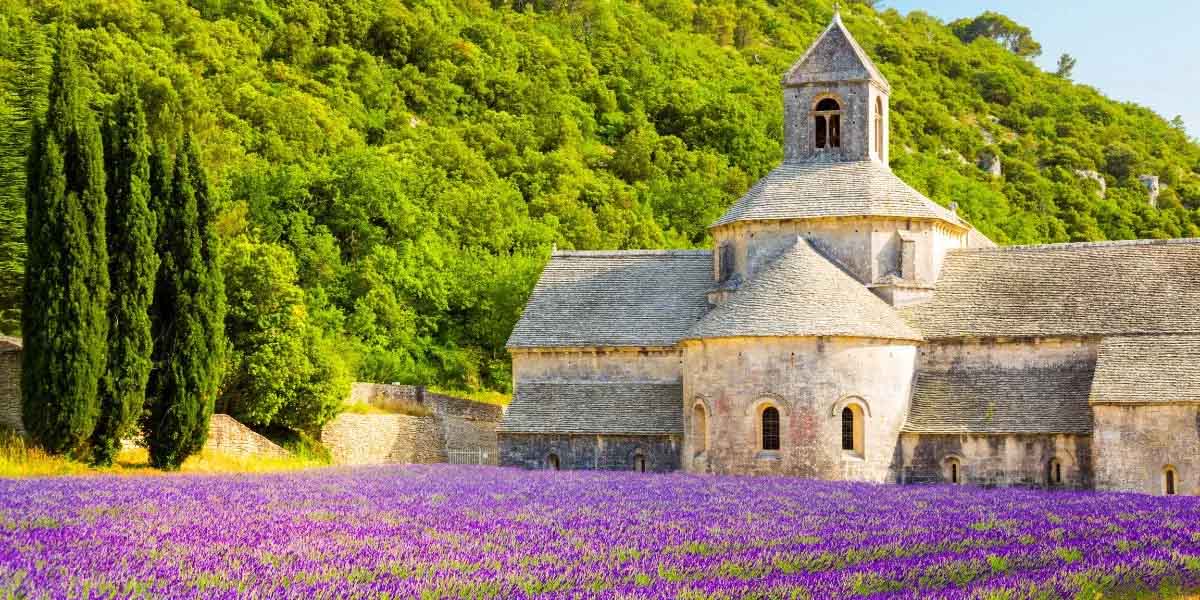
Provence is one of the most accessible regions from Italy and one of the most suitable for a walking holiday abroad.
The route takes you through the Luberon area, linking villages such as Gordes, Roussillon and Bonnieux. You’ll walk among vineyards, olive groves and open countryside, on a mix of rural paths and quiet roads, with moderate distances and manageable elevation.
It’s a well-balanced itinerary, ideal for those looking for variety without technical difficulty, and easily reached by train from northern Italy.
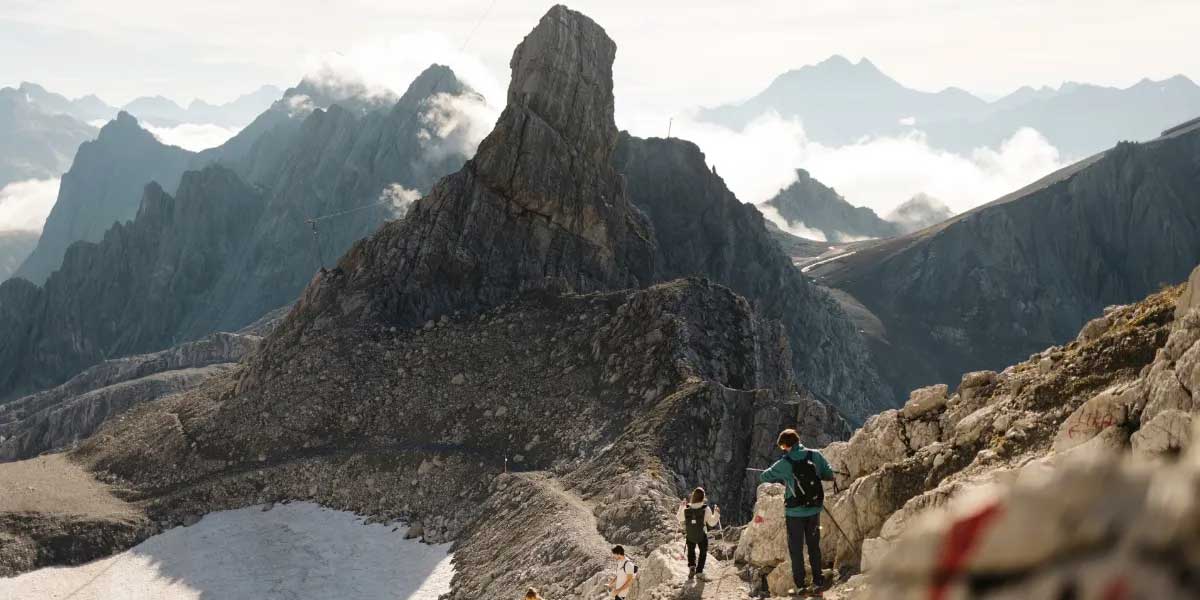
The Arlberg Trail is a circular alpine route in western Austria, connecting mountain resorts such as St. Anton, Lech and Zürs.
The trail follows well-marked high-altitude paths through alpine meadows, mountain lakes and traditional villages. Elevation gain is more significant than in other itineraries, making it suitable for experienced walkers looking for a structured mountain trek.
It’s a natural extension for those who want to explore the Alps beyond Italy, with convenient train connections across Austria and Switzerland.
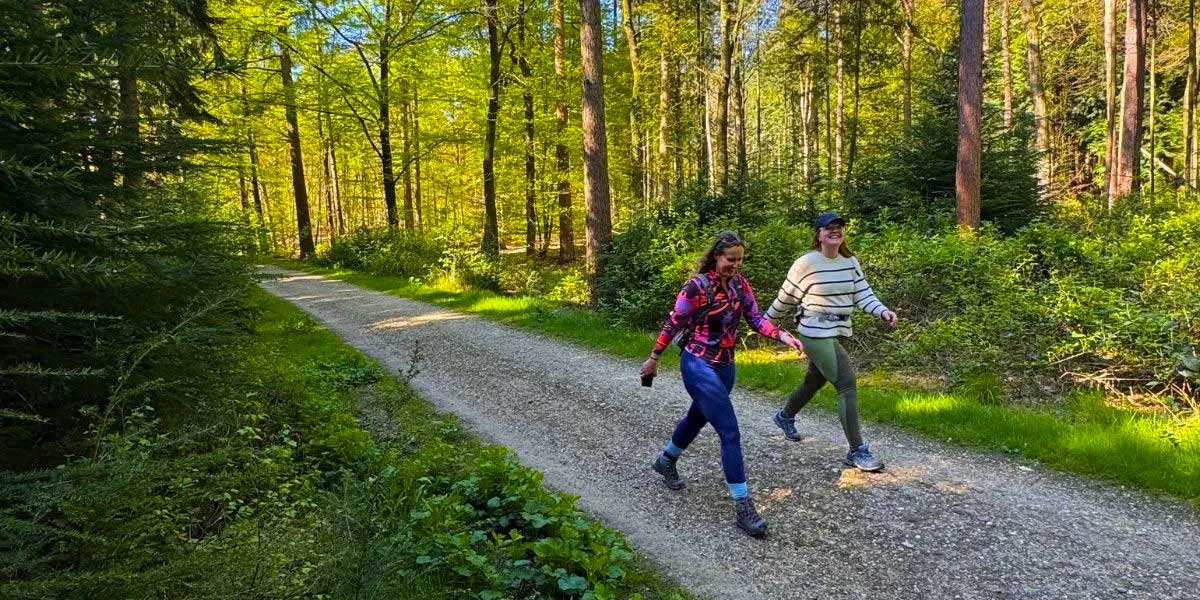
The Pieterpad is the most famous long-distance trail in the Netherlands, crossing the country from north to south.
The landscape is flat and varied, alternating farmland, canals, nature reserves and small towns. Routes follow clearly marked paths and secondary roads, with no technical difficulty and no significant elevation gain.
It’s an ideal choice for those looking for a steady, continuous walk in a completely different environment.
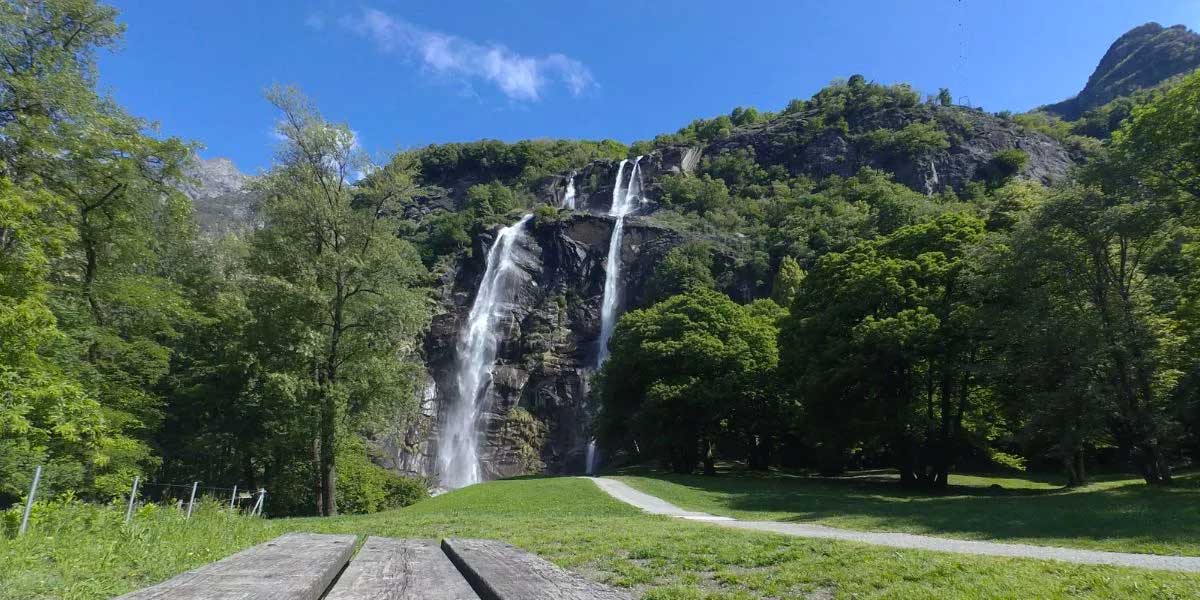
The Via Spluga is a historic route linking Italy and Switzerland, starting from Chiavenna, near Lake Como, and crossing the Splügen Pass into the Rhine valley.
The trail follows ancient mule tracks through alpine gorges, including the Via Mala, and traditional villages shaped by centuries of trade and travel.
It’s a journey defined by continuity: starting in Italy and crossing into another country step by step, without interruption, through changing landscapes and cultures.
Travelling in Europe doesn’t have to mean moving between airports.
Whether you begin in Italy or arrive from further away, it’s easy to extend your journey across borders — discovering new regions while staying connected to the same rhythm of travel.
Because sometimes, going further doesn’t mean going faster.
It simply means continuing the journey.
Written By the SloWays Team
` Nominee Best Specialist Tour Operator 2026