Sustainability — we know — is a word you hear repeated in countless different contexts. It’s a good and important thing that it is talked about so much, but what do you actually feel when you see it written down, or included among the declared values of a product you choose, or a tour operator you are considering travelling with?
The association with giving something up often comes quickly. Being sustainable seems to mean having to renounce something. So we would like to ask a different question: is there a way of travelling that is naturally more balanced?
A walking holiday is certainly our answer. Because walking imposes — and at the same time offers — a different rhythm of travel, slower and more conscious.
You move through a place step by step, experiencing its changes in landscape and perceiving its different layers in a much more vivid way than a view rushing past a window.
And this is why a walking holiday has something truly special about it.
If you’re looking for inspiration for your next Camino, or want help choosing the itinerary that best matches your needs,
take our quiz at the link below!

You move using the simplest means in the world
The heart and meaning of the journey is walking. Your feet are enough: no engine for most of the day. Hours pass moving slowly on foot, with human energy, curiosity and the desire to discover as your only fuel.
Of course, you may take public transport to shorten a day or to reach the starting or ending point. But overall, energy consumption is significantly lower compared to many other types of travel.
You consume less, you experience more
A walking holiday naturally exposes you to far less consumption than other types of trips. Starting with essential luggage: even when you take advantage of luggage transfer services, you are still encouraged to travel with just one bag and a light daypack.
You choose carefully, select what matters, and bring only what is essential. The value lies in the experience, not in accumulation.
The benefits are more evenly distributed
Walking travel also differs in the type of places and communities it involves. The routes we select often cross inland areas and lesser-known regions, far from mass tourism.
Local economies are supported through small cafés, family-run restaurants, local shops and scattered accommodation, often outside peak season.
You truly get to know the places you visit
Walking creates a deeper connection with the places you pass through. The landscape is experienced more slowly and more thoroughly, in its details and transformations.
Encounters with other walkers, local people and hosts enrich the journey and help you understand the territory more fully.
It is good for the traveller too
Walking — and science confirms it — is highly beneficial for mental wellbeing. It offers a mental reset that few other forms of travel can provide.
It is also quality time to share, encouraging real conversations, connection and presence.
No journey is automatically sustainable. Even walking requires transport, accommodation, organisation and energy. Even when the impact is lower, it still exists.
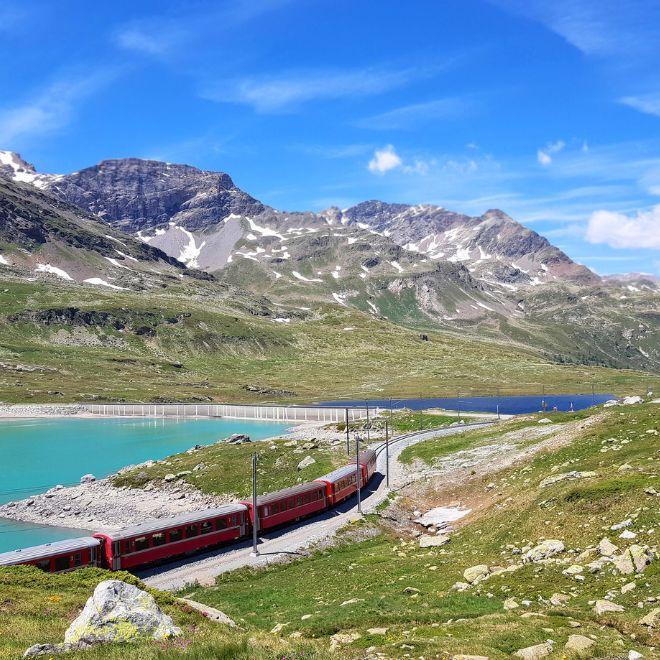
We encourage trains and public transport
From the very first travel page, we encourage the use of public transport to reach the starting point and return at the end of the journey.
When transfers are necessary, we work with small local providers to support local economies and reduce unnecessary travel.
We measure our processes
We collect, measure and publish data, because sustainability for us is a method, not a slogan.
We have adopted an environmental management system certified according to the ISO 14001 standard.
Independent certifications
We rely on independent certifications such as Travelife, one of the leading international standards for responsible tourism.
Transparency
We publish our Sustainability Report, sharing results, objectives, challenges and areas for improvement.
Local partners and team
Every journey is built on relationships: accommodation providers, guides, transport services and local collaborators.
Sustainability also means building long-term, trust-based relationships with the people and places we work with.
We are not perfect — and we do not believe any brand is. For us, sustainability is about following a path with intention, consistency and attention.
As with walking, real change happens step by step.
Written By the SloWays Team
` Nominee Best Specialist Tour Operator 2026