There is a particular quality to the light in Tuscany in late September. It arrives at an angle, golden and unhurried, catching the dust that rises from the vineyards where hands are moving through the vines. The air smells of crushed fruit and warm earth. Somewhere nearby, a tractor idles. A dog sleeps in the shade of a cypress.
This is the vendemmia, the grape harvest, and it has been happening in these hills for more than two thousand years.
The harvest season is not a backdrop. It is the story. Tuscany in autumn reveals something that the summer crowds rarely see: a landscape that is not performing for visitors, but simply living. The farms are working. The cellars are full of activity. The olive groves, silver-green and ancient, are weeks away from their own moment.
To travel through Tuscany during the harvest is to understand, finally, why this place has held such a grip on the imagination for so long. It is not the art, not the towers, not the wine list. It is the feeling that the land and the people who tend it are still, quietly, in conversation.
If you’re looking for inspiration for your next Camino, or want help choosing the itinerary that best matches your needs,
take our quiz at the link below!
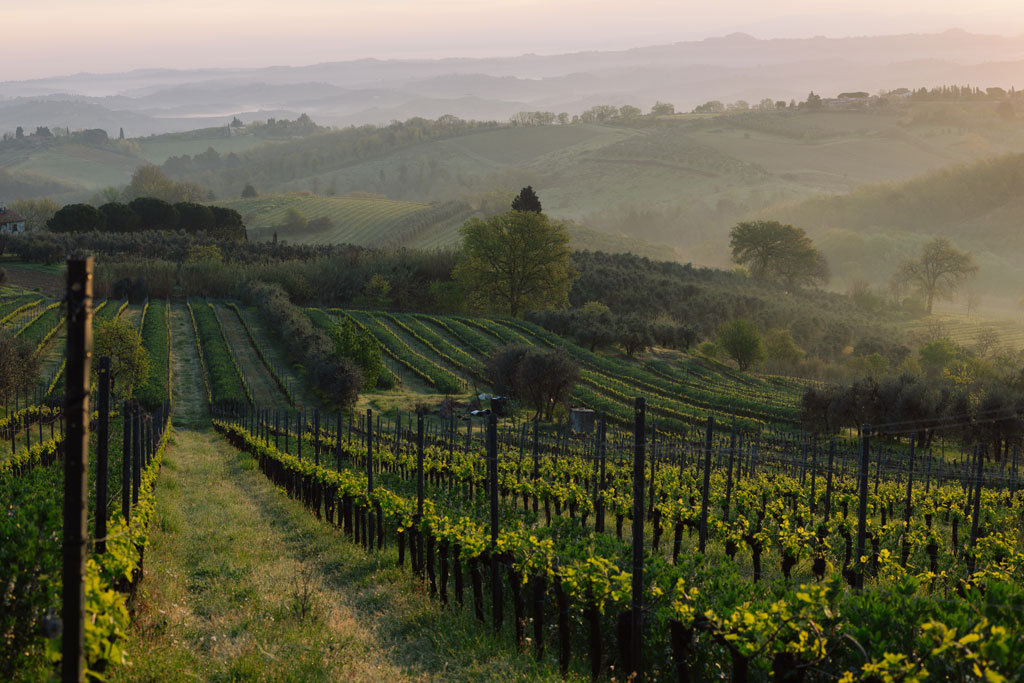
In the Chianti Classico zone, harvest begins in earnest between mid-September and early October, depending on the year and the elevation of the vineyard. The Sangiovese grape, the backbone of Chianti, needs time. It is not a grape that rushes.
Walking through the Chianti hills in this period, you move through a landscape in full motion. Rows of vines run down the slopes in precise lines, broken by farmhouses, stone walls, and the occasional flash of a tractor. The grapes hang heavy and dark, and the pickers work with a focus that feels almost meditative.
Across the Chianti hills, harvesting may still involve considerable hand-picking, with different plots harvested as the grapes reach the desired ripeness. There is no single day of the vendemmia: timing shifts with altitude, variety, and the particular character of each growing season.
Harvest typically runs from mid-September through mid-October for red varieties
White grapes, including Vernaccia, are picked earlier, often in late August or early September
The same estate may harvest over several weeks, moving through different plots as each reaches peak ripeness
In the evenings, the landscape shifts register. The day's work settles into the kind of quiet that follows physical labour, and the autumn table reflects the season: ribollita, pici al ragù, the year's new wine beginning its transformation in the cellar. It is the kind of meal that tastes different when you have spent the day walking through the place that produced it.
Walking the Chianti route means passing directly through this world. The paths run between estates, through oak woods, past stone farmhouses where the shutters are open and the smell of the cellar drifts out onto the track. You do not need to visit a winery to encounter the harvest here. It simply surrounds you.

Most visitors arrive in San Gimignano for the towers. Fourteen of them still stand, medieval skyscrapers built by rival families in a competition of wealth and ego that the town has never quite explained away. They are extraordinary. But there is something else here that deserves equal attention.
Vernaccia di San Gimignano has been documented here since at least 1276, when the town's commercial records registered its sale. In 1966, it became the first Italian wine to receive DOC status. It grows on the pale, mineral-rich soils that surround the town, and it produces a wine of unusual character: dry, structured, with a faint bitter finish that the Italians call mandorlato, almond-like. It is not a wine that tries to please everyone. It knows what it is.
The Via Francigena passes directly through San Gimignano on its way south toward Siena. Walking into the town from the north, through the Vernaccia growing zone, the towers appear on the horizon long before you arrive. In late August and early September, when the white grapes are ready, the vineyards that line the approach have a particular stillness. The harvest here is quieter than in Chianti, smaller in scale, more intimate.

Further southeast, a different ancient route crosses a different kind of landscape. The Via Lauretana follows a pilgrimage road that once connected Siena to the Marian sanctuary of Loreto, passing through the Crete Senesi, the thermal baths of Rapolano, the Valdichiana, and finally up to Cortona.
The Crete Senesi, the clay hills south of Siena, are a landscape that photographs cannot quite capture. The soil is pale and almost lunar in certain lights, the hills bare and rolling, punctuated by isolated farmhouses and the occasional line of cypresses. In October and November, when the olive harvest is underway in the valleys, the air along the Via Lauretana carries the particular stillness of a countryside that has finished one season's work and is not yet ready to begin the next.
Walking the Via Lauretana is less about the destination and more about the pace it imposes. You slow down to the speed of the landscape, and the landscape, in return, shows you things that faster travel misses entirely: the sound of the bells from a village you will pass through in an hour, the particular silence of a Tuscan afternoon in October, the way the light changes over the Crete as the morning advances.
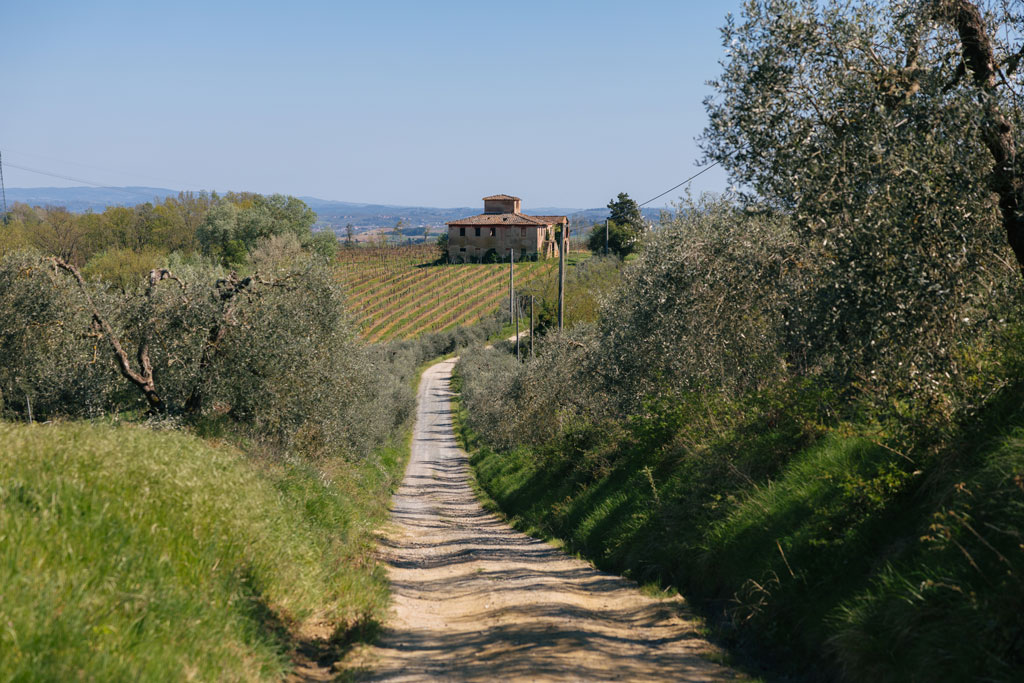
If the vendemmia is Tuscany in full voice, the olive harvest has a quieter rhythm. It comes later, in November, when the busiest months are over and the hills have turned the colour of rust and gold. The olive trees, some of them centuries old, stand in the same positions they have occupied for generations, their silver leaves catching the low autumn light.
Nets appear beneath the trees. Olives are gathered by hand or with mechanical combs before being taken to the local mill for pressing. The timing matters: the window between harvest and pressing affects the quality of the oil, and experienced growers move with purpose through the groves.
Fresh Tuscan olive oil is known for its vivid green colour, grassy aromas, and characteristic peppery finish. During the harvest season, olio nuovo begins appearing on tables, traditionally tasted simply on toasted Tuscan bread. It is one of those seasonal foods that cannot really be replicated at other times of year.
The Val d'Orcia, a UNESCO World Heritage landscape designated in 2004 partly for its agricultural character, is also one of Tuscany's great olive-growing territories. The walking routes through the Val d'Orcia pass through groves and past farms where, during the harvest season, olives are taken to local mills, the frantoi, for pressing. Walking here in November means arriving at a Tuscany that has put away its summer face and returned to something older and quieter.
The olive harvest in Tuscany typically runs from late October through December
Early-harvest oil is often particularly intense, with a pronounced peppery finish
During the harvest season, olio nuovo tastings can be found at some farms and local mills
The Val d'Orcia was designated a UNESCO World Heritage Site in 2004, partly for its agricultural landscape
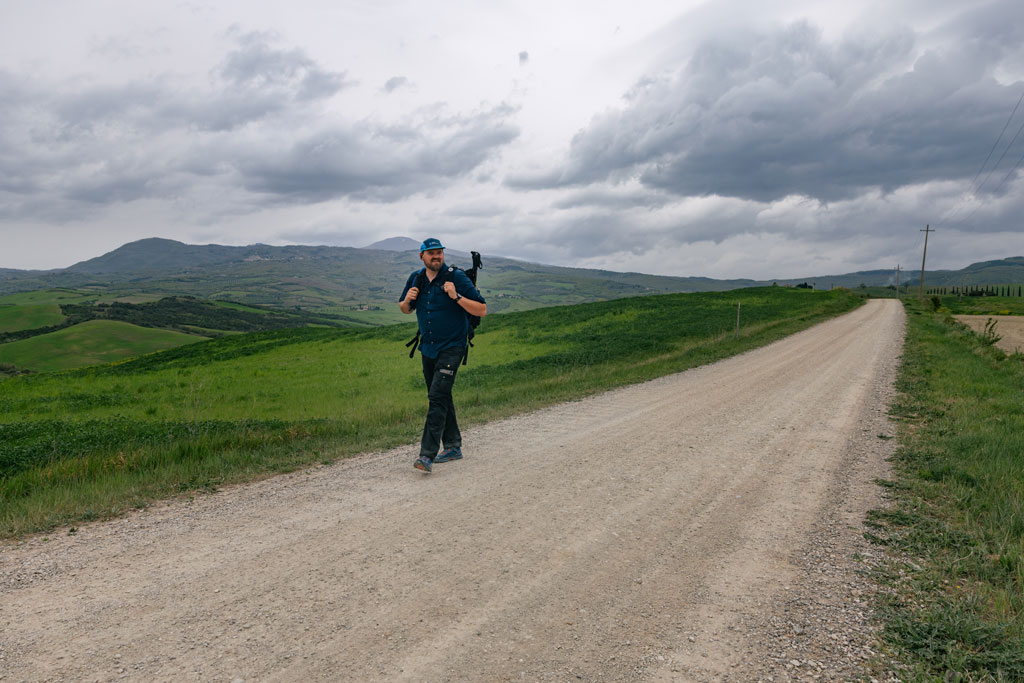
Here is something worth knowing: you do not need to arrive during the harvest to feel its presence.
The vineyards are there in spring, when the new shoots are tender and the farmers are pruning with a precision that borders on sculpture. They are there in summer, when the vines are dense and green and the grapes are swelling invisibly inside the canopy. They are there in winter, when the bare rows reveal the architecture of the land beneath, the slopes, the drainage, the centuries of terracing.
The olive trees are always there. They are some of the oldest living things in the Tuscan landscape, and they carry their history visibly, in the gnarled trunks and the spread of their branches.
What walking gives you, in any season, is proximity. A car window filters the landscape into a series of postcards. A walking path puts you inside it. You smell the rosemary growing at the edge of the track. You hear the wind in the pines above a vineyard. You stop, without planning to, because a view has opened up that you were not expecting.
This is what the harvest teaches, even when you are not there to witness it directly: that Tuscany is a working landscape, and that the most interesting thing about it is not how it looks, but how it lives. The rhythm of the seasons, the rhythm of the work, the rhythm of the meals that follow the work. Walking slows you down enough for that rhythm to become audible.
The Via Lauretana, the Chianti route, the paths through the Val d'Orcia and around San Gimignano: they all pass through this world. Not as observers, but as participants. You arrive at the agriturismo in the evening with dust on your boots and an appetite that the city never quite produces. Perhaps this is the real reason people keep coming back: not simply to look at the Tuscan landscape, but to move through it slowly enough to understand what keeps shaping it.
Written by the SloWays Team
 Nominee Best Specialist Tour Operator 2026