There is a particular kind of freedom that comes with a self-guided walking holiday. You set the pace, stop when a view demands it, and linger over lunch in a village square without a group timetable to follow.
That freedom works best when the practical side of the journey has been thought through beforehand. Which route suits your experience? How far do you actually want to walk each day? What happens to your luggage, and how will you find your way?
This guide takes you through the decisions that matter, from choosing the right route to packing your daypack, so that once you start walking, you can concentrate on the journey itself.
In short: On a self-guided walking holiday, you walk independently without following a guide or group schedule, while the route and practical arrangements can be organised in advance. You choose your pace; the logistics stay in the background.
If you’re looking for inspiration for your next Camino, or want help choosing the itinerary that best matches your needs,
take our quiz at the link below!
A self-guided walking holiday means following a pre-planned route independently, at your own pace, without a guide or group schedule. You walk the stages, sleep in pre-booked accommodation, and move through the landscape on your own terms.
In its simplest form, self-guided travel means you have done the planning yourself: chosen the route, sorted the accommodation, and worked out how to navigate each day. With an organised self-guided holiday, much of that practical work can also be taken care of in advance:
A chosen route with clearly defined daily stages
Pre-booked accommodation at the end of each walking day
Detailed route notes, maps, or a navigation app
Luggage transfer between overnight stops, so you carry only a daypack
Support available if something goes wrong on the trail
You retain complete control: when to start each morning, where to stop for coffee, whether to push on or rest. The difference is that the logistics stay in the background, rather than taking up most of your planning time.
When choosing a walking holiday, the destination matters, but so does the kind of walking experience you want to have there. Before browsing itineraries, a few honest questions help narrow things down:
How many consecutive days are you comfortable walking?
What daily distance feels enjoyable rather than exhausting?
Do you prefer flat coastal paths, rolling countryside, or routes with real elevation?
Do you want time to visit villages and markets, or do you prefer to focus on the walk itself?
For a first multi-day walking holiday, around 10 to 15 km can be a comfortable starting point, particularly in hot weather or on more demanding terrain. Many walkers find 15 to 22 km a good daily range, while experienced hikers may be comfortable going further. But kilometres never tell the whole story: elevation, terrain, weather, and consecutive walking days can make two stages of the same length feel completely different.
Walking holidays for beginners are designed with this in mind, with manageable stages and practical support built in.
Sometimes the easiest way to narrow down your options is to start with the landscape, or the kind of journey, that you would like to wake up to every morning:
Historic pilgrimage routes: The Via Francigena, the Camino de Santiago, and the St. Francis Way pass through medieval towns and religious sites across centuries-old paths.
Coastal walks: The Dingle Way in Ireland and the Albanian Coastal Trail offer dramatic cliff paths and sea views.
Cultural and historic routes: The Via degli Dei follows an ancient trans-Apennine road between Bologna and Florence, through forests, ridgelines, and Etruscan history.
Mountain itineraries: Routes like the Tour des Six in the Aosta Valley suit walkers who want elevation and alpine scenery.
The right route is the one that fits how you want to feel at the end of each day.
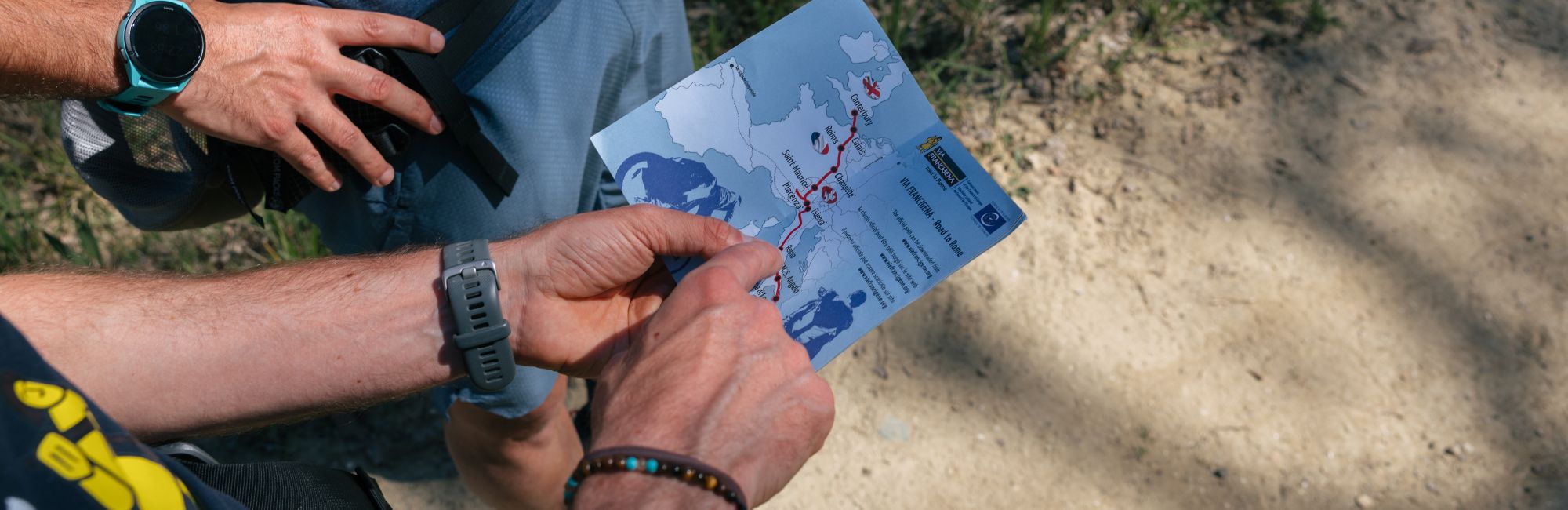
There is no single best walking season in Europe: April in Sicily and April in Norway are two very different propositions. The right time depends on the route, the landscape, and what kind of experience you are looking for.
Spring (April to June): Comfortable temperatures and green landscapes across much of southern and central Europe. The Via Francigena through Tuscany and the St. Francis Way are particularly rewarding in May, before summer heat arrives.
Summer (July and August): Long days and reliable sunshine, though heat can be demanding on exposed southern routes. Northern itineraries, including the St. Olav Way in Norway, come into their own during these months.
Autumn (September to October): Often the most comfortable season for walking in Mediterranean regions. Fewer other walkers, harvest season in wine and olive country, and pleasant temperatures across Tuscany, Umbria, Puglia, and Portugal. A good moment to consider routes that feel busier in spring.
Winter (November to March): Possible on selected southern routes, including parts of Sicily and coastal Portugal, though some services operate on reduced schedules.
On popular routes, accommodation in smaller overnight stops can fill surprisingly early, particularly around holidays and during the busiest walking months. If your dates are fixed, it is worth planning ahead.
Distance is the question most first-time walkers get wrong. The instinct is to plan ambitious stages, then discover by day three that 20 km feels very different from how it looked on a map.
A good walking day should leave you pleasantly tired, not too exhausted to enjoy dinner or walk again tomorrow.
Kilometres alone never tell the full story. When thinking about daily distances, always factor in:
Total elevation gain, not just the distance figure
Surface type: gravel tracks and forest paths are kinder on joints than asphalt
Shade and water access, particularly in summer
Stage length relative to daylight hours in autumn and early spring
On longer itineraries, an extra night can completely change the rhythm of the journey. It gives your legs time to recover and, just as importantly, lets you spend a full day somewhere you would otherwise only pass through. On a SloWays itinerary, adding an extra night to a stage is something the team can arrange when you book.
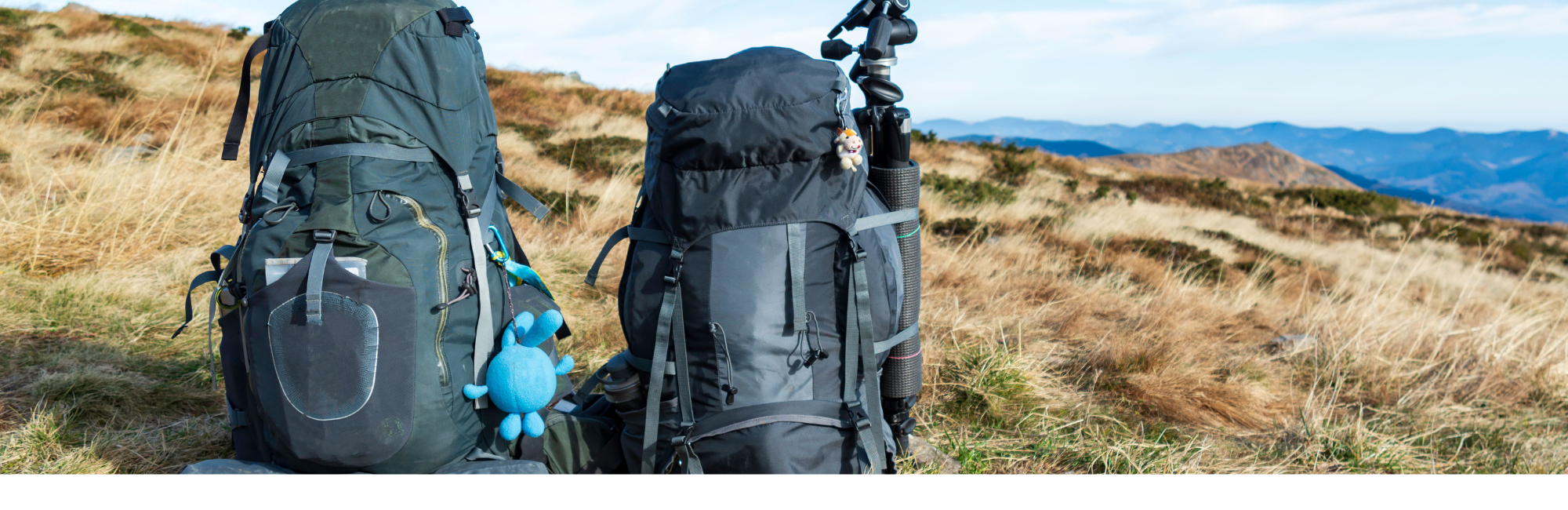
For most multi-day routes, arranging luggage transfers is one of the most practical decisions you can make. A transfer service collects your main bag each morning and delivers it to your next overnight stop. You walk with a daypack. Your larger bag arrives before you do.
Walking with only what you need for the day makes a noticeable difference, particularly over several consecutive stages. It allows you to keep the independence of a self-guided journey without carrying everything you brought with you from one accommodation to the next.
On SloWays itineraries with luggage transfer, the allowance is one bag of up to 20 kg per traveller. That does not mean you need to fill it: packing light still makes every transfer and hotel change easier.
Enough water for the stage, based on the weather and available refill points
Waterproof jacket and a light insulating layer
Snacks or a packed lunch for stages with limited food stops
Phone, portable power bank, and any navigation device
Sun protection, blister care, and a small first-aid kit
Any daily medication
On well-established trails like the Via Francigena and the Camino de Santiago, transfer networks are well developed. On more remote routes, logistics may work differently. Always confirm the specific arrangements for your itinerary before booking.
Booking accommodation for a walking holiday is not the same as booking a city break. Overnight stops need to align with your daily stages, and small villages may have only one or two suitable properties. During peak season, those rooms fill early.
The best walking accommodation is not always the most polished. A welcoming B&B with an early breakfast and a place to dry wet kit is often far more useful than a larger hotel with no flexibility on check-in time.
If you are planning independently, accommodation can be one of the most time-consuming pieces of the puzzle. On a SloWays journey, the overnight stops are already coordinated with the stages, so you do not need to build the route around whichever rooms happen to be available. The properties are selected to fit the itinerary: local in character, sensibly positioned, and familiar with what walkers need at the end of a long day.
When booking independently, look for:
Location within easy walking distance of the trail
Breakfast available early enough for a summer start
Ability to receive a luggage transfer if you are using that service
Flexibility on arrival time, since stages do not always finish at predictable hours
Many European long-distance routes are well waymarked. The Via Francigena signage system uses consistent markers through towns, fields, and forests; the Camino de Santiago is famously marked with yellow arrows and scallop shells.
That said, waymarking quality varies by country and by section. Markers can be faded, obscured, or missing at critical junctions. Good waymarking helps, but it should not be your only navigation tool.
Before departure:
Download offline maps and route files while you still have a reliable connection
Carry a portable power bank so your phone does not run out at a confusing junction
Read the next day's stage the evening before, so you know the key waypoints in advance
Use a dedicated walking navigation app with GPS tracking
SloWays walkers have access to a navigation app with offline GPS, georeferenced route files, and a full digital information pack for each itinerary, available on iOS and Android.
You do not need to train like an athlete for most walking holidays, but arriving with some walking in your legs makes the first few days much more enjoyable. In the weeks before departure, gradually build up your distance and, if possible, walk on consecutive days so your body gets used to the rhythm of a multi-day journey.
Whatever shoes or boots you choose, make sure you have already walked in them before the trip. A multi-day itinerary is not the ideal moment to discover that a new pair rubs in exactly the wrong place.
Your daypack carries what you need on the trail each day. Your main bag, transferred between overnight stops, holds everything else:
Broken-in walking shoes or boots (and a lighter pair for evenings)
Moisture-wicking base layers and lightweight trousers or shorts
Waterproof jacket and a light insulating layer
Sun hat, sunscreen, and sunglasses
Blister care and a small first-aid kit
Any prescription medication
Route notes and accommodation confirmations
If you are on a SloWays itinerary with luggage transfer, the allowance is one bag of up to 20 kg. Packing well within that limit makes every transfer and check-in easier. If you are unsure whether you need something, leave it out. Every extra kilogram is felt by the end of a long stage.
A self-guided walking holiday involves a series of decisions, not a complicated logistical operation. These are the ones worth confirming before you travel:
Route chosen to match your fitness level, interests, and available time
Season and dates confirmed, with accommodation booked well ahead on popular routes
Daily stages reviewed, with elevation and terrain factored in alongside distance
Luggage transfer arranged, and the specific rules for your itinerary understood
Navigation prepared: offline maps downloaded, power bank packed
Footwear tested on real walks before departure
An extra night considered at the start or end of the trip, to allow for travel delays and a slower finish
The best self-guided walking holidays feel independent because they are. You choose the pace, stop when something catches your attention, and make the journey your own. With the route, accommodation, luggage, and navigation already in place, you have more space to actually experience the walk rather than manage it.
SloWays has been designing self-guided walking itineraries across Europe for over twenty years, from beginner-friendly stages in Tuscany to coastal paths in Ireland, pilgrimage routes through Spain and Portugal, and mountain itineraries in the Alps. The team is available to help you find the right itinerary for your fitness level, travel dates, and the kind of trip you have in mind.
Browse walking holidays by destination, explore routes with luggage transfers, or get in touch to start planning.
Written by the SloWays Team
 Nominee Best Specialist Tour Operator 2026