There is a particular kind of hunger that walking produces. Not just the physical kind, though that is real enough after a long stage. It is the hunger of attention: the desire to understand a place more completely, to know what grows here, what people eat, what the land actually produces when nobody is watching.
Autumn and winter are when the Mediterranean answers that question in a particularly revealing way.
The summer table is abundant but familiar: tomatoes, aubergine, grilled fish, cold white wine. It tells one kind of story about a place. The autumn and winter table tells another: heavier, more rooted, shaped by what has just been harvested rather than what travels well.
Walk the Mediterranean in autumn or winter and you experience its food differently: closer to the rhythms of harvests, seasonal produce and the landscapes you are walking through.
If you’re looking for inspiration for your next Camino, or want help choosing the itinerary that best matches your needs,
take our quiz at the link below!
Most people think of the Mediterranean harvest as a summer event. In reality, the most significant harvests happen in autumn, and in some cases well into winter. Across the Mediterranean, autumn brings some of the year's most important harvests. Depending on the region and variety, olives are picked from autumn into winter; citrus begins to ripen; vineyards move from harvest into winemaking; chestnuts and, where conditions allow, wild mushrooms appear.
Walking through this season means walking through a landscape that is actively producing something. The nets spread under olive trees. The vineyards emptied of their grapes but still vivid with colour. The smell of new oil drifting from a village mill. These are not decorative details. They are the agricultural reality of the Mediterranean in its working season.
The food you eat at the end of a stage in October is not the same food you would eat in July. It is heavier, more rooted, more particular to the place. Soups made from legumes dried over the summer. Bread baked with new olive oil. Pasta dressed with freshly pressed oil and nothing else, because when the oil is good enough, nothing else is needed.
This is what slow travel tastes like when it is working properly.
The Mediterranean is not one food culture. It is dozens of them, each shaped by its own soil, climate, and history. Here is what the autumn and winter table looks like in the destinations where SloWays walks.
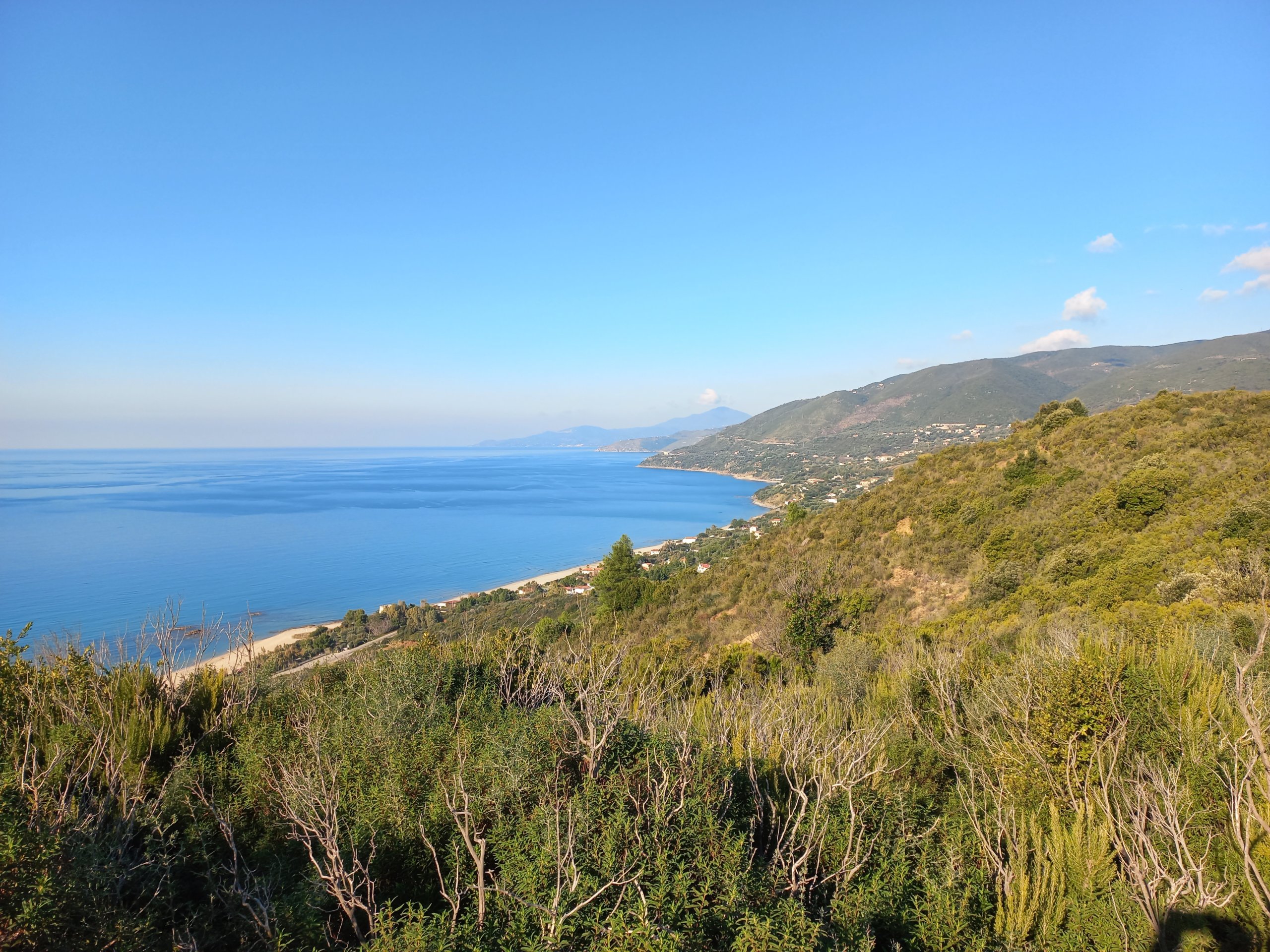
In the Cilento, olive harvest runs from late October through November. The freshly pressed oil, grassy and slightly peppery, is one of the flavours most associated with this stretch of southern Italy in autumn. The Cilento Coastal Walk passes through a landscape of olive groves, fishing villages and hillside towns where the autumn kitchen is built around what has just been harvested or preserved: dried legumes, preserved anchovies, aged cheeses, new oil. The cooking is simple in the way that only very good ingredients allow.
Further north, the Langhe walking itineraries in Piedmont offer a completely different autumn food experience. The white truffle of Alba is at its peak from October through to December, and the Langhe hills in this period are truffle country: vineyards and oak woods, the scent of the season in the air, and on the table tajarin pasta, braised meats with Barolo, hazelnuts in everything. Whether you encounter a truffle hunter at work depends on timing and luck, but autumn is the season when the white truffle becomes one of the defining flavours of the Langhe.

The Magna Via Francigena crosses western and central Sicily from Palermo to Agrigento, moving through an interior landscape of wheat fields, olive groves and hilltop towns shaped by a long agricultural tradition. This is not the Sicily of beach resorts or Etna's volcanic slopes: it is older, quieter, and gastronomically rooted in the land rather than the sea.
Walking here in October and November, the route's operating season, means moving through a landscape in active transition. Almonds and capers have been harvested; olives are coming in; the towns along the way have their own food traditions, closely connected to the agricultural landscape of inland Sicily. Look for slow-cooked lamb and pork, bread made with local durum wheat, cheeses from the interior, and the particular sweetness of Sicilian pastry-making that does not require a special occasion to appear on a table.

Maltese food is less well known than it deserves to be. The Malta and Gozo Coastal Trail is available from September through December and again from January through May, and walking it outside peak season means encountering a food culture with its own distinct character.
Some things to look for along the way: ftira, the traditional Maltese bread, dense and ring-shaped, typically filled with tuna, capers, olives and tomato; ġbejniet, small rounds of sheep's milk cheese, dried and peppered; fenek, the slow-cooked rabbit dish that is as close to a national dish as Malta has. In autumn, lampuki, the dolphinfish that arrives in Maltese waters seasonally, is among the most prized catches of the year. Maltese wine, stronger and more characterful than most visitors expect, is worth seeking out.

The Aegina Short Break offers a compact but concentrated food experience. Aegina is famous for its pistachios, harvested in August and September, and by autumn they are a constant presence: roasted and salted, ground into paste, folded into pastry. In local tavernas outside peak season, look for horta (wild greens cooked in olive oil), slow-cooked pulses, and simply prepared fish. The food is unfussy, seasonal and closely connected to the rhythms of island life.
Food tastes different when you have earned it with your legs. When the path itself runs through olive groves, vineyards and agricultural landscapes, the connection between landscape and plate becomes much less abstract. The oil on the table, the wine in the glass, the bread made from local grain: these are not incidental to the walk. They are part of what the walk is through.
This is the particular gift of walking holidays in the harvest season. The trail is not separate from the food culture. It runs through it.
Planning a walking trip around the autumn or winter harvest season? Browse our Mediterranean itineraries or get in touch with the SloWays team to find a route that aligns with the season you want to experience. We can help you choose the right destination and dates, and take care of all the practical details of your trip.
Written by the SloWays Team
 Nominee Best Specialist Tour Operator 2026