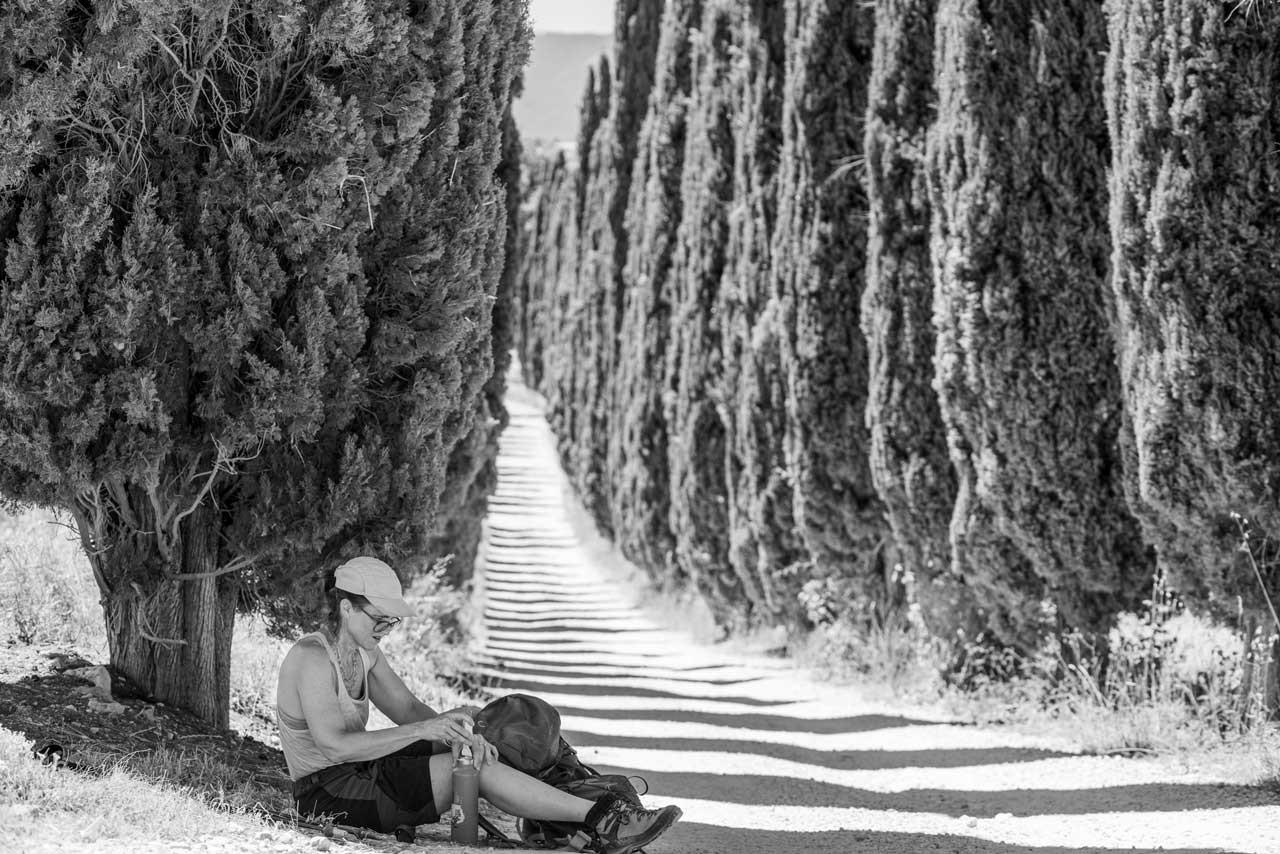
Few things are as rewarding as an early summer morning on the trail: empty paths, birdsong, the smell of warm herbs, and the feeling that the day still belongs entirely to you.
Walking in the heat is one of those things that sounds straightforward until it isn't. You set off at 9am feeling fine, the sun climbs, the shade disappears, and somewhere around midday you realize you've been pushing through discomfort instead of managing it.
After more than twenty years organizing walking holidays across southern Europe, we've seen first-hand which habits make the biggest difference when temperatures rise. This guide pulls together the practical habits we share with every walker heading out on a hot-weather stage.
If you’re looking for inspiration for your next Camino, or want help choosing the itinerary that best matches your needs,
take our quiz at the link below!
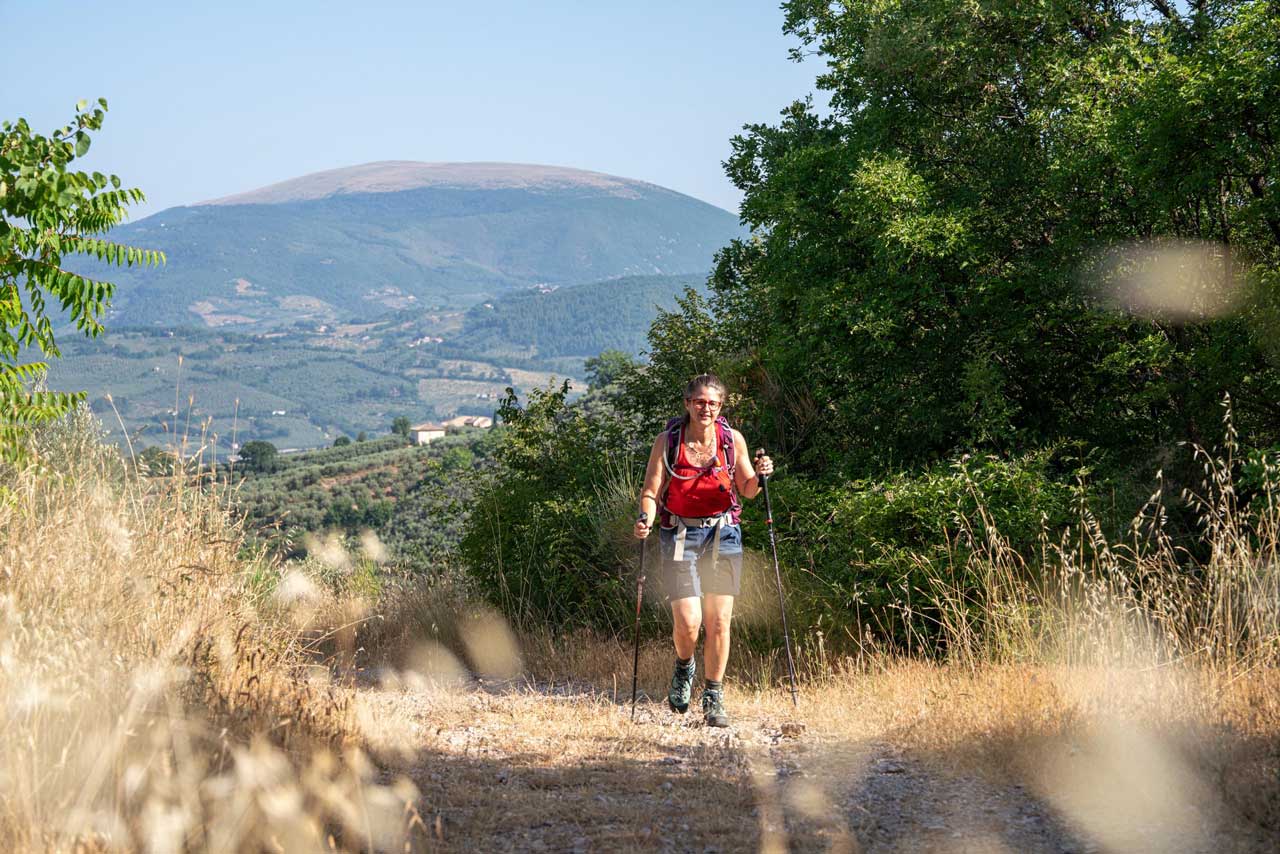
The short version: start early, rest in shade, drink little and often, and cool your body at every fountain you find. Everything below is the detail behind those four principles.
Q: Is it actually safe to walk in the heat, or should walkers just avoid summer stages altogether?
Tullia, SloWays founder and CEO: "Summer is my favourite season, so the short answer is yes, it's absolutely safe if you approach it with the right habits. The walkers who struggle are usually the ones who try to replicate what they'd do in spring or autumn. Hot-weather stages require a different mindset: slower pace, earlier start, shorter distances if needed. The goal is to finish the day feeling good, not to prove you can push through."
This is the single most effective thing you can do. The difference between walking at 7am and walking at 1pm on a July day in Tuscany or southern Spain is not just a few degrees. It's the difference between a good day and a miserable one, potentially with a sunburn or heat rash.
Aim to be on the trail by 7am or 8am at the latest. On longer stages, plan to be at your accommodation, or at least in a village with a bar, by early afternoon. Most of our walkers on the Via Francigena or the Camino routes naturally fall into this rhythm after the first day.
If you must walk through the middle of the day, shorten the stage. There is no shame in splitting a 25km day into two shorter ones in July.
Q: What's the most common mistake you see walkers make when they head out on a summer stage?
Tullia: "Starting too late and underestimating how fast the heat builds. On exposed routes with long stretches between villages, I always tell walkers: if you've used half your water and you're not halfway through the stage, stop and reassess. It sounds dramatic, but heat exhaustion creeps up on you. The goal is to finish the day, not to prove a point."
Most walkers stop for water or a snack but stay standing in the sun. That's a missed opportunity. Whenever you find shade, use it, even for five minutes. Your body needs time to offload heat, and standing still in the sun doesn't give it that chance.
When you stop for longer, say 15 minutes or more, do this:
Take off your shoes and socks. Feet generate a lot of heat, and damp socks inside warm shoes are the main reason blisters develop in summer. Letting your feet breathe for even 10-15 minutes reduces moisture, lowers skin temperature, and significantly cuts blister risk.
Sit down. Obvious, but many walkers hover. Sitting reduces muscle heat production and lets your core temperature drop faster.
Find the deepest shade you can. A wall, a tree line, a doorway. Dappled shade is better than nothing, but full shade is meaningfully cooler.
Q: What's the one shade-break habit most walkers skip but really shouldn't?
Tullia: "Taking my shoes and socks off. It's one of those habits that experienced walkers swear by but nobody writes about. I do it every time, even in the middle of a village. Damp socks inside warm shoes are the main reason blisters develop in summer, and even 10-15 minutes of airing your feet makes a real difference by day three."
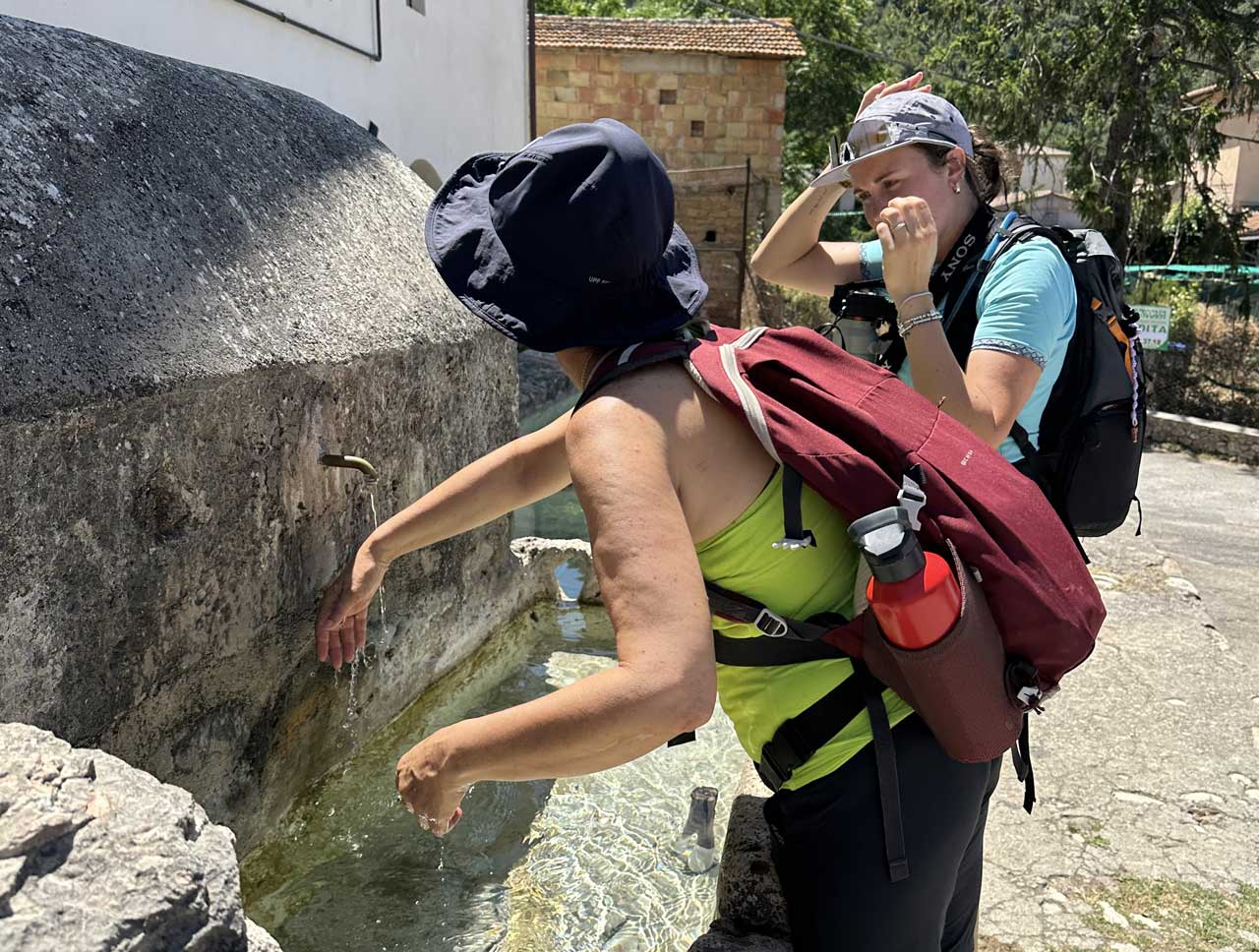
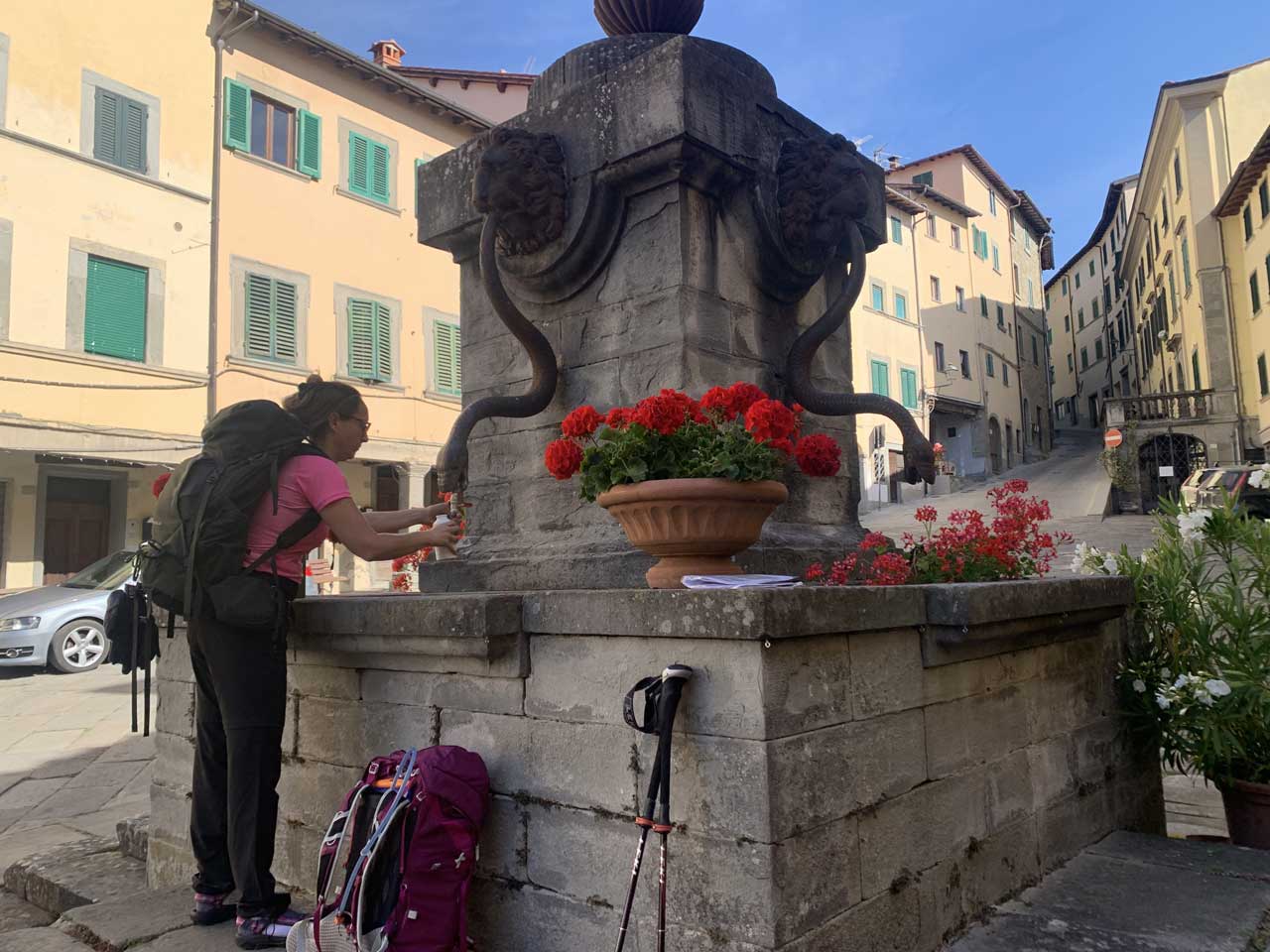
On most European long-distance routes, fountains and drinking water points appear regularly. Don't just refill your bottle and move on. Use the water on your body.
The most effective areas to cool with water are your head, neck, forearms, and hands. These are zones where blood vessels run close to the surface of the skin. When water evaporates from those areas, it pulls heat away from your blood, which then circulates cooler through your body. It's not the water itself that cools you; it's the evaporation.
Practical habits at a fountain:
Wet your hat and put it back on. A soaked hat creates continuous evaporative cooling as you walk. On an exposed stretch, this can make a 5-6 degree difference in how the heat feels.
Soak a small towel or buff. Drape it around your neck or tie it to your pack where air can hit it. Rewet whenever you find water.
Splash your forearms and the back of your neck. Takes 30 seconds and buys you real comfort for the next kilometer.
Q: What's your go-to trick for cooling down fast when you're mid-stage and overheating?
Tullia: "A small microfibre towel or a buff, soaked at a fountain and put around my neck. The moment I find water, that's the first thing I do. It sounds like a small thing but it genuinely changes how I feel for the next stretch. On the Via Francigena in August, or even high up in the Dolomites, it's not optional for me. Wetting your hat at the same time gives you continuous cooling as you walk, which is worth far more than the few seconds it takes."
The usual checklist covers sunscreen, sunglasses, and a hat. Those are non-negotiable. But two items that rarely appear on packing lists make a real difference on exposed routes.
On routes like the Camino Francés across the meseta, or exposed coastal paths, shade can disappear for hours at a time. A compact folding umbrella weighing around 200-300g provides instant shade wherever you are. It works in rain too, which makes it genuinely dual-purpose rather than extra weight.
Some walkers go one step further and use a hands-free umbrella holder that clips to a backpack strap, keeping both hands free for poles. It looks eccentric until you've been on an exposed plateau at noon and you're the only one with shade.
Light-coloured, loose-fitting fabrics reflect heat rather than absorbing it.
Long sleeves in a technical fabric can actually be cooler than bare arms in direct sun, because they block radiation and allow sweat to evaporate across a larger surface.
A wide-brimmed hat, not a cap. Caps leave your neck and ears exposed.
Factor 50 sunscreen, applied generously to all exposed skin, paying particular attention to often-forgotten areas such as the ears, nose, and the back and front of the neck.
Q: What's the one piece of gear most walkers don't pack but should?
Tullia: "A lightweight folding umbrella, without question. I know it sounds counterintuitive, but on exposed routes like the Magna Via Francigena in Sicily, the Camino Primitivo, or the Menalon Trail in Greece, shade can disappear for hours. A few of our walkers have come back and said it was the best thing in their pack. And if you use trekking poles, the hands-free holder that clips to your backpack strap means you never have to choose between shade and your poles."
Most walkers think about water in the heat. Fewer think about food, but what and when you eat affects how your body handles temperature.
Check breakfast times when you arrive. Ask what time breakfast starts. If you plan to set off before it's served, ask if the accommodation can provide a boxed breakfast, or pick something up from a local shop the evening before.
Don't skip breakfast. On a hot day, it's the most important meal on the trail. Your body needs fuel before the heat builds, not after.
Eat salty snacks while you walk. Nuts, crackers, olives, cured meat. Salt helps your body retain water and replaces what you lose through sweat. Have some when you stop for a rest.
Carry fruit. Watermelon, peaches, grapes. High water content, easy to eat on the move, and genuinely refreshing mid-stage.
Plan your lunch in advance. If there is no place to eat or buy food along the route, carry food with you. Buy supplies beforehand or ask your accommodation if they can prepare a picnic lunch.
Keep lunch light. A heavy meal in the middle of a hot day makes the afternoon much harder. Save the full sit-down lunch for when you're done walking, ideally in the shade of a restaurant terrace.
Tullia: "I like to carry a lunch box with a watertight lid. Fruit doesn't get squashed and I can take chopped watermelon, which I love. It also serves as a salad bowl, instead of eating sandwiches every day. I like to prepare my salads with tomatoes, cucumbers, peppers, and any sort of legumes - it's long-lasting energy and you feel full longer."
In summer you'll also notice more wildlife on the trail: butterflies, lizards basking on walls, and the occasional chorus of cicadas that tells you the heat has properly arrived. Less welcome but worth remembering: mosquitoes are more active in the early morning and at dusk, and sometimes unexpectedly in forests, so carry repellent if you're sensitive.
Hydration advice usually stops at "drink plenty of water." That's not enough. How you carry it and how you drink it both matter.
The most important habit is also the most overlooked. Rather than drinking half a liter at a stop, aim for 150-250ml every 15-20 minutes while you're moving. Small, frequent sips are absorbed more efficiently by the body and reduce the risk of arriving at your destination dehydrated without having noticed it happening. With a hydration bladder and its tube always at hand, this becomes automatic. Soluble mineral salts and electrolyte mixes are an effective way to replace the fluids and minerals lost through sweating during a hike and give you an energy boost.
Both have a place in your pack, you can refill them with tap water everywhere our routes go, and both are far more sustainable than buying bottled water. Here's the honest comparison:
Hydration bladder: pros
The tube is always at hand, so you sip constantly without breaking stride or dropping your poles
Higher capacity (1.5-2L) means fewer refill stops on longer stages
Sits close to your back at the centre of the pack, so the weight distributes better
Hydration bladder: cons
Hard to know how much water remains without removing the pack
Fiddly to refill at a fountain and requires thorough cleaning after use; left damp, it can develop mold
Some walkers notice a slight plastic taste, though this is subjective
Insulated steel bottle: pros
Keeps water noticeably cooler for several hours and doesn't alter the taste
Easy to check how much is left, quick to refill, dishwasher safe
Insulated steel bottle: cons
Lower capacity (500-750ml), so you need to refill more often
Sits in a side pocket, which is less balanced than a central bladder
Our recommendation: carry both. Use the bladder for continuous sipping while walking. Use the steel bottle for electrolyte drinks or mineral salts, which help replace what you lose through sweat on longer days.
Q: What's your personal hydration setup on a summer stage?
Tullia: "A 2-liter bladder and a 750ml steel bottle together. The bladder keeps me sipping without thinking about it, and the bottle is for my electrolyte mix. I also like to take a few honey sachets as an energy boost on longer days. One thing people don't realize: if you leave water in a bladder for a day or two without drying it properly, it develops a slimy type of mold. After every trip, empty it, rinse it, leave it open to dry, and thoroughly wipe the inside dry with a paper towel. There are specific cleaning kits for hydration bladders that make this much easier, particularly for the tube."
None of this is meant to put you off walking in summer. Some of the best days on trail happen in July and August: long light, quiet paths in the early hours, cold drinks in a village square at noon. The reward is often waiting at the end of the stage: a swim in the sea, lunch under a pergola, an empty medieval square, or simply the satisfaction of reaching your destination before the afternoon heat arrives, allowing for a well-deserved siesta. The heat is manageable when you have the right habits and the right route.
Not every summer route is equal. Some stages are shaded and forgiving. Others are long, exposed, and demand careful planning around water points, rest stops, and daily distances.
Q: Can walkers still book a great walking holiday in summer, or are some routes better avoided in July and August?
Tullia: "Not everyone has holidays at other times of the year, and summer is a wonderful time to walk - therefore route choice matters more than in spring or autumn. Some routes have long shaded stretches, regular villages, and reliable water points. Others have exposed plateaus and long gaps between stops. We know which is which, and we always factor the season into our recommendations. A route that's perfect in May might need adjusting in August, because we have tried and tested all our routes, and it's exactly the kind of advice we're here to give."
Q: What's your favourite thing about walking in summer?
Tullia: "Early mornings. I'm not an early riser, yet when hiking, it's not an effort to get up. Everybody thinks about the heat, but nobody talks about those first two hours of the day when the air is fresh, the light is low, and the paths are empty. That's when summer walking is at its absolute best. The heat is just the price of admission."
Not sure which route is best in July or August? We'd be happy to help you choose one that suits both the season and the way you like to walk.
` Nominee Best Specialist Tour Operator 2026