What does it really mean to spend weeks walking towards Santiago? After 24 days on the Camino Francés, SloWays CEO Tullia shares the routines, unexpected encounters, challenges and personal discoveries that made the experience unforgettable.
Some journeys are best understood through the people who have walked them.
At SloWays, we've spent years helping travellers discover the Camino de Santiago. But recently, our CEO Tullia set off to experience the Camino Francés herself, walking for 24 days, first with her husband and later joined by their daughter.
An experienced long-distance walker, Tullia was already familiar with the rewards and challenges of travelling on foot. Yet the Camino had its own surprises in store: from early-morning Gregorian chants and unexpected friendships to difficult days, beautiful landscapes and conversations that went far beyond everyday life.
We asked her to tell us what walking the Camino really feels like.
If you’re looking for inspiration for your next Camino, or want help choosing the itinerary that best matches your needs,
take our quiz at the link below!
Every pilgrim arrives at the starting point with a different story. Some have a particular reason for walking; others are simply curious to discover what happens when the usual rhythms of life are replaced by days on the trail.
For Tullia, the Camino Francés had been on her mind for a long time.
You had already completed several long-distance walks. Why did you want to experience the Camino Francés?
I'd wanted to walk the Camino Francés for years. Having done many other long-distance walks, I was particularly curious about this one because so many people choose to do it.
I also wanted to spend time with my husband and daughter. My husband accompanied me for the first two weeks, and our daughter joined us for the third. Altogether, we walked for 24 days.
Did you have any particular expectations before setting off?
I actually prefer travelling somewhere without knowing too much about it beforehand. I like discovering a place for myself, without arriving with too many preconceived ideas.
One thing I did know was that the first day would be difficult. We started in Saint-Jean-Pied-de-Port, and the climb towards Roncesvalles is particularly demanding.
What surprised me most, though, was the number of people. I expected the Camino to be much busier, especially in the earlier stages, but it was relatively quiet.
That changed dramatically when we reached Sarria, where many pilgrims begin the final 100 kilometres. Suddenly, the paths were extremely crowded. At times, particularly in the morning, we even had to ask groups to let us pass.
I love quiet, peaceful walks, so that was quite a contrast.
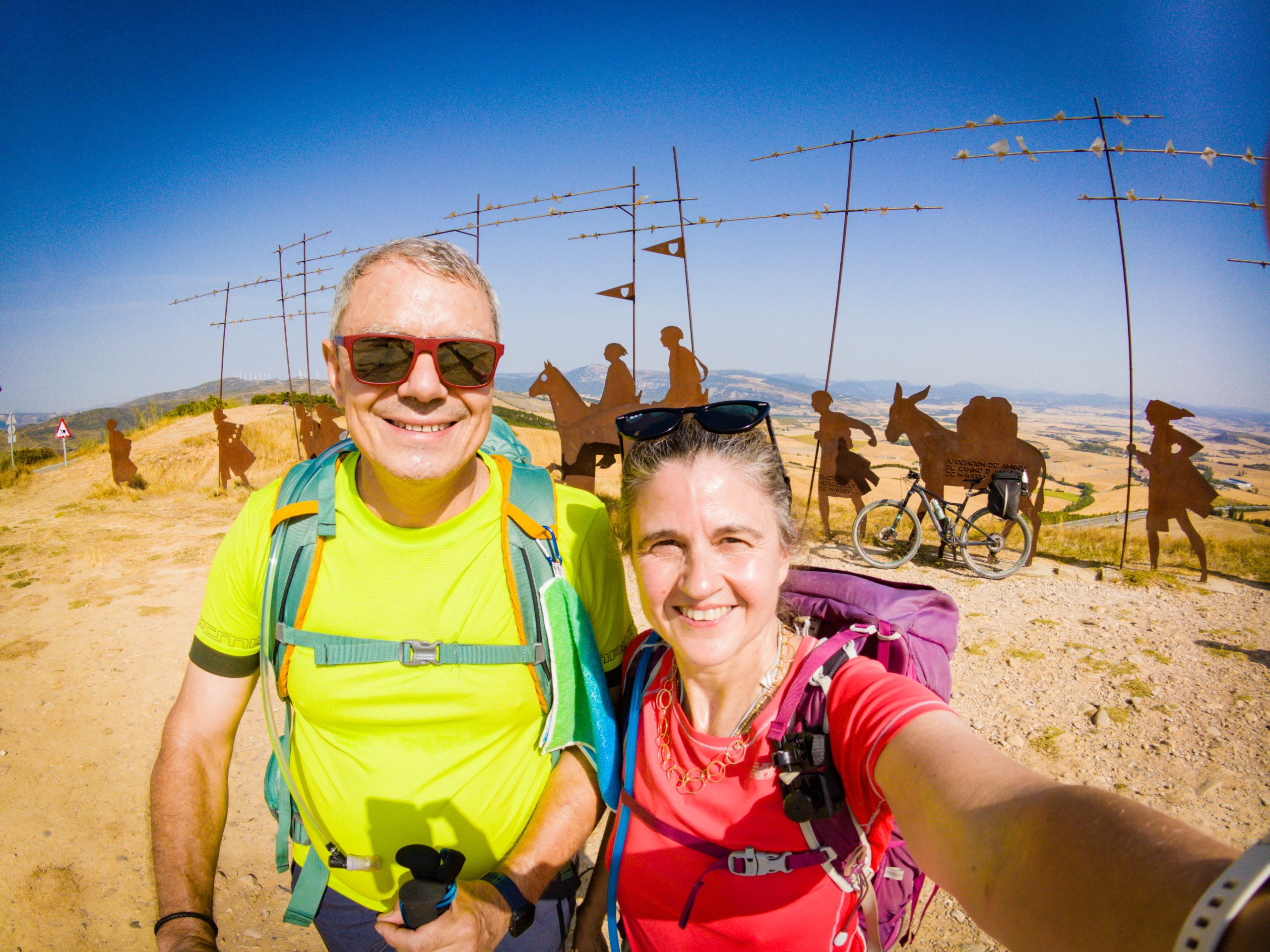
Life on the Camino soon develops a rhythm of its own. Days begin early, especially in the summer heat, and revolve around walking, resting, eating and preparing to do it all again.
But within that apparently repetitive routine, every day brings something different.
What did a typical day on the Camino look like?
Our days were quite similar in structure.
We'd get up early, prepare our luggage for collection and have breakfast before setting off. Since we were walking in August, the heat could be intense, so on some days we started at dawn.
We decided to spend a few nights in pilgrim hostels, which was an experience in itself. I hadn't realised quite how regulated the timetable could be!
Everyone generally had to leave by eight in the morning, and in some hostels the lights came on at six. In Roncesvalles, we were woken by Gregorian chants playing over the loudspeakers. Somewhere else, it was a military-style wake-up call.
In the evening, doors closed and lights went out at ten. If you weren't back in time, you risked being locked out.
And once you started walking?
One lovely thing about the Camino is how well signposted it is. We rarely needed to check a map or an app.
There were often cafés along the way, so we could stop for a cold drink and a rest. You'd regularly bump into someone you'd met the previous evening or a few days earlier, and end up chatting again.
Around lunchtime, we'd look for some shade and take a longer break, although finding shade wasn't always easy. Some stretches had very few trees.
Then we'd carry on until we reached our destination.
The first things I wanted to do were always the same: have a shower, stretch, look after my feet and lie down with my legs raised.
After a rest, we'd explore the village, buy supplies for the next day and sometimes visit the pharmacy for blister plasters.
We usually had dinner between six and seven. In many places, you could have a pilgrim's dinner, sitting at a communal table with other walkers. It was a lovely opportunity to exchange stories.
Then we'd go to bed early and start again the next morning.
How did you spend all those hours walking?
That's one of the most beautiful things about walking for days on end: you have time.
My husband and I talked about everything. Small everyday things, but also dreams, desires, important decisions and aspects of our lives we wanted to change.
We reached a depth of conversation that's difficult to find in ordinary life, when there's always something else demanding your attention.
Those conversations brought us much closer. They helped us understand certain dynamics in our relationship, understand each other better and even change a few things.
We came home feeling much more connected.
But we didn't spend every moment talking. Sometimes one of us walked ahead while the other stayed behind.
There was time to admire the landscape, listen to nature, watch birds of prey overhead and stop to pick delicious blackberries.
And there was time to be silent, to listen to yourself and reflect on the conversations you'd had.
The Camino brings together people of different ages, nationalities and backgrounds. Some walk together for weeks. Others share a conversation lasting only a few minutes.
Often, those brief encounters become some of the strongest memories of the journey.
Was there a particular encounter that stayed with you?
One of the most meaningful encounters was with a young man from South Korea.
He was walking in pool sliders rather than hiking shoes, which made me curious. I asked him why, and that question led to a much deeper conversation.
He'd spent about two weeks walking with a small group of people he'd met along the Camino and had become particularly close to one of them.
Two days earlier, that friend had finished his walk and returned home.
The young man was terribly sad about the separation. The following day, he'd walked around 38 kilometres at a very fast pace, almost as though he were trying to walk away from the sadness.
He'd developed four terrible blisters, so painful that he couldn't wear proper shoes.
We started talking about friendship, affection and how difficult it can sometimes be to express our feelings.
I asked whether he'd told his friend how much he would miss him. He said no, as though that were the most obvious answer in the world.
Then I asked him how he would feel if his friend sent him a message saying how much he'd enjoyed their walks, conversations, drinks and laughter together.
He was quiet for a long time.
Eventually, he said it would make him incredibly happy.
So I suggested that perhaps his friend would feel exactly the same if he allowed himself to say those things.
A little later, he stopped to rest and I continued walking.
We didn't know each other's names, and we'll probably never meet again. But it was an incredibly meaningful conversation.
Did you meet other travellers who surprised you?
Quite a few.
During the first ten days, we saw several French families walking with children as young as eight or nine. It was lovely to see them spending time together in such a different way.
We also repeatedly crossed paths with a German mother walking alone, carrying a large backpack and pushing a buggy with her five-year-old son.
She was doing the whole Camino. She told me that when they reached a difficult climb, her son would get out and help her push the buggy.
I felt enormous admiration for her strength and courage.
We also met a Canadian couple walking with a baby of around six months, again with a buggy.
It reminded me that there are so many different ways to experience the Camino.
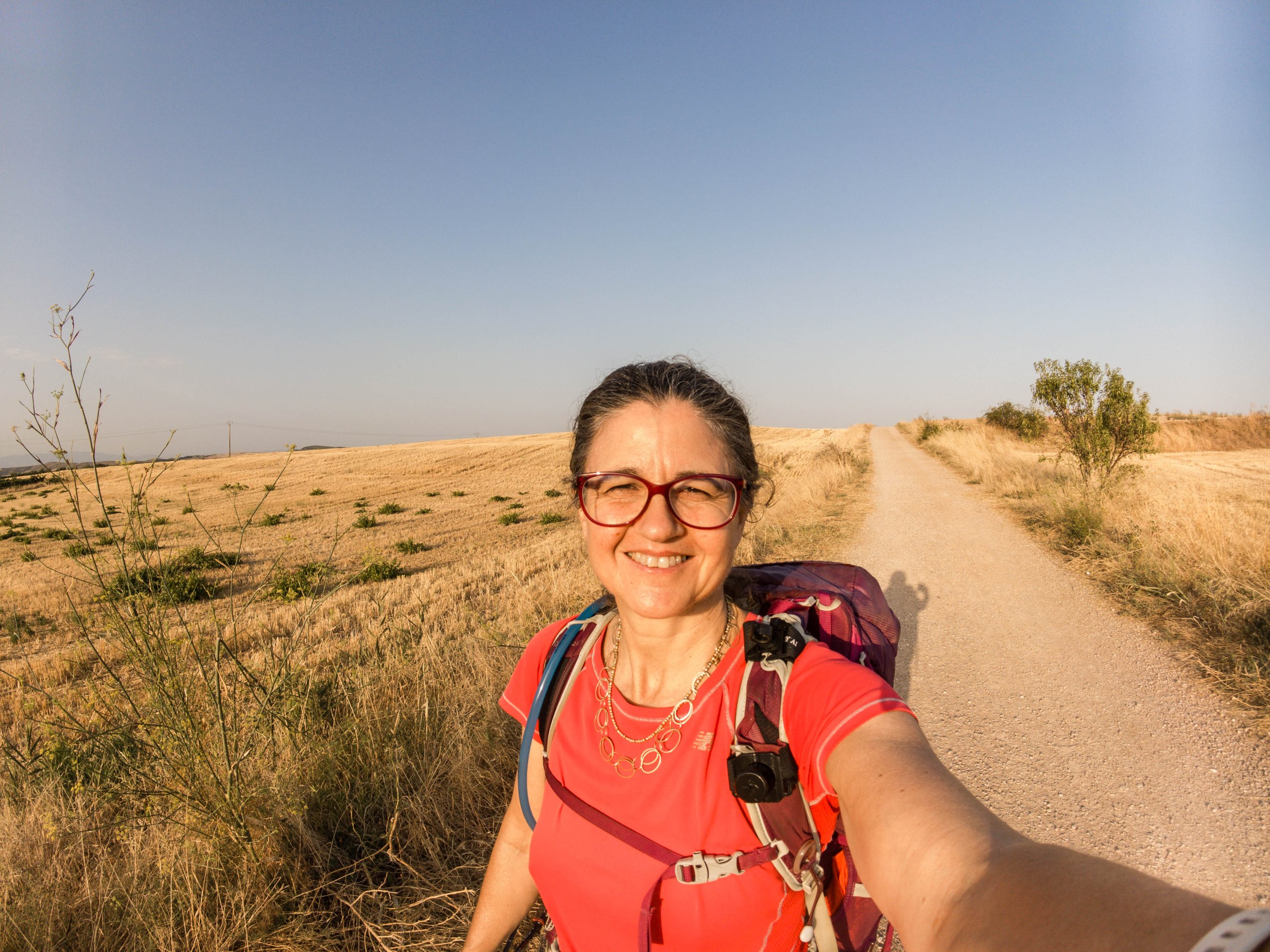
Walking for several weeks isn't always comfortable. There are difficult climbs, exhausting afternoons, sore feet and moments when even the most experienced walker has to reconsider the day's plans.
Tullia's Camino was no exception.
What was the most physically demanding part of the journey?
Without a doubt, the first day from Saint-Jean-Pied-de-Port to Roncesvalles.
It's around 27 kilometres with approximately 1,000 metres of ascent, and most of the stage is uphill.
The weather made it even harder. It was cloudy, it rained near the top, there was thick fog, and it was cold and windy.
Even though I knew the stage would be difficult, I hadn't expected such a demanding climb, especially on the very first day.
There was another particularly hot day when we'd set off too late. The stage was long, the heat was unbearable, and by the time we reached a village, I was completely exhausted.
I simply couldn't take another step, so we called a taxi.
Were there any other unexpected difficulties?
About halfway through the journey, my husband developed a blister underneath a callus on the sole of his foot.
It was so painful that he was limping, and we couldn't treat it ourselves. We had to find a podiatrist, which wasn't easy, but luckily we managed. Afterwards, he could continue walking without any problems.
Then, after leaving Sarria, I developed an awful cramp in my right big toe.
It got progressively worse until I couldn't walk at all. I had to stop and call a taxi, while my husband continued on foot.
While I was waiting, he sent me a photograph of himself beside the famous 100-kilometre marker.
I was incredibly jealous!
Having started all the way back in Saint-Jean-Pied-de-Port, I couldn't bear the idea of missing such an iconic moment.
So I asked the taxi driver to stop as close to the marker as possible, and I practically dragged my leg over to it to take my own photograph.
I wasn't going to miss that picture!
What was the best part of reaching the end of a stage?
Honestly, the last kilometre is always the hardest for me.
You're already tired, and all you want is to stop walking, take off your shoes, have a shower, drink something cold and lie down.
Reaching your accommodation and finally stretching out on a comfortable bed is one of life's great pleasures after a long day on the Camino.
Ask someone who has completed a long-distance walk what they remember most, and the answer isn't necessarily a famous landmark.
It might be a stretch of forest, a conversation, an unexpected act of kindness or the way a place looked when they arrived.
Was there a town or place that particularly surprised you?
Burgos was a wonderful surprise.
I knew almost nothing about the city before arriving, and the entrance to the historic centre was spectacular.
You pass through the main gate, and suddenly there's the cathedral rising behind it in a magnificent square. It looked almost like something out of a Disney film.
We loved Burgos so much, and the city was so lively in the evening, that we decided not to walk the following day.
Instead, we took a guided tour to learn more about it, then caught a bus in the afternoon to the end of the stage we'd originally planned to walk.
It was absolutely worth it.
What other memories come to mind when you think about the Camino?
So many different images.
The forest on the first day, shrouded in thick fog, with moss-covered trees.
Walking with my husband through the intense heat, surrounded by wheat fields and birds of prey circling above us.
The woodland paths where the branches meet overhead, almost as though the trees are embracing and protecting you.
The climb to the Cruz de Hierro, which was a particularly moving moment. I'd imagined a large cross, but it's actually a small cross at the top of a very tall wooden pole.
And then there were the little rituals, like looking for churches where we could collect stamps in our pilgrim passports and comparing their different designs.
Were there any small discoveries you hadn't expected?
The fruit!
We found so many wonderful things growing along the way, particularly large, juicy blackberries, but also figs, pears and wild plums.
On one stretch, we came across several wild plum trees and picked some fruit to eat as we walked.
We stopped at a fountain to wash the plums and offered some to a group of French pilgrims.
They were astonished we'd found them. They hadn't even noticed the trees.
Sometimes the smallest pleasures are the most memorable.
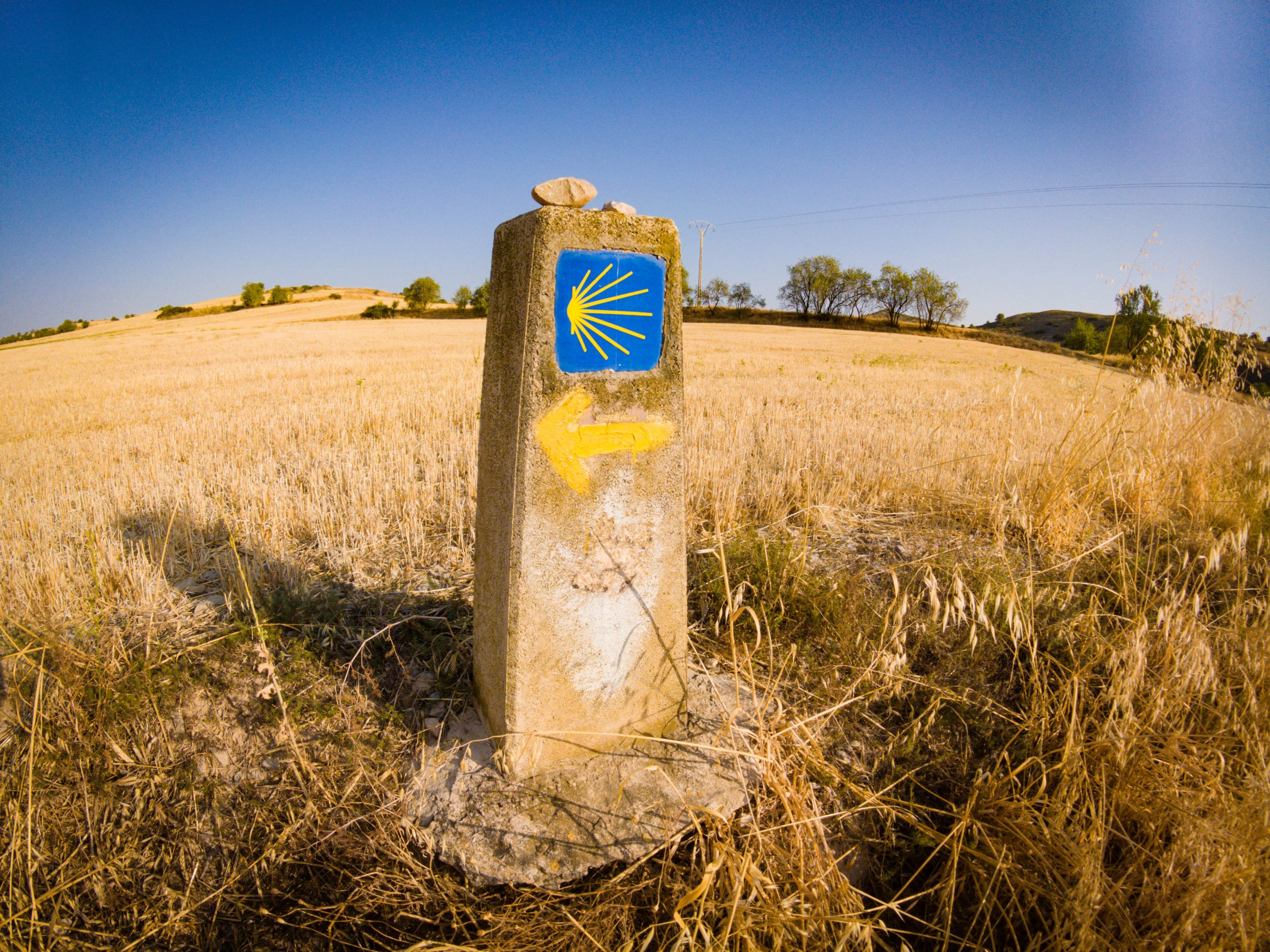
As CEO of SloWays, Tullia has spent years working in the world of slow travel. But experiencing a journey as a walker, day after day, offers a different perspective on what makes travelling on foot so special.
Did walking the Camino change the way you think about walking holidays?
I already knew that walking for several days helps clear your mind.
But experiencing it yourself is still surprising, and incredibly beautiful.
There's something special about the small encounters along the way: the people you meet in cafés, in accommodation, on the trail, and the kindness you experience.
I was also struck by the number of donation-based pilgrim hostels, known as donativo hostels, and by the people who volunteer to run them.
Some volunteers spend two weeks at a time welcoming pilgrims, and in certain places there are even waiting lists for people who want to help.
You can also see how much the Camino contributes to local communities.
Especially in the earlier stages, there are small cafés, restaurants and businesses in villages that might otherwise struggle to remain active. The walkers passing through help keep these places alive.
What makes the Camino de Santiago different from other long-distance walks?
One difference is the number of people you meet, particularly on the quieter sections of the Camino Francés, where you tend to cross paths with the same walkers and gradually get to know them.
There are also many young people, partly because of the large number of affordable pilgrim hostels.
And the Camino has an extensive network of services, including cafés, accommodation and luggage transfers, which you don't always find on less-established walking routes.
But that feeling of sharing an experience with other people isn't unique to Santiago.
On long-distance walks, there's often a sense that you're all working towards something together, even when you're not walking as a group.
And people set off for all sorts of reasons. Sometimes there isn't even one particular reason.
Did you discover anything about yourself during those 24 days?
For me, the most important change happens gradually.
You begin with curiosity, energy and the desire to discover somewhere new.
Then, as the days pass, you have more and more time to talk, reflect and listen, both to yourself and to others.
I like to describe it as peeling an onion, one layer at a time.
Little by little, you leave behind the distractions of everyday life and reach the things that really matter.
You allow yourself to ask questions you might normally avoid. Questions about yourself, your relationships, your choices and the things you'd like to change.
Some of those questions can be uncomfortable.
But as you go deeper, you reach the part of yourself that feels most vulnerable, the part you usually try to protect.
And I think that's also the most beautiful part of who we are.
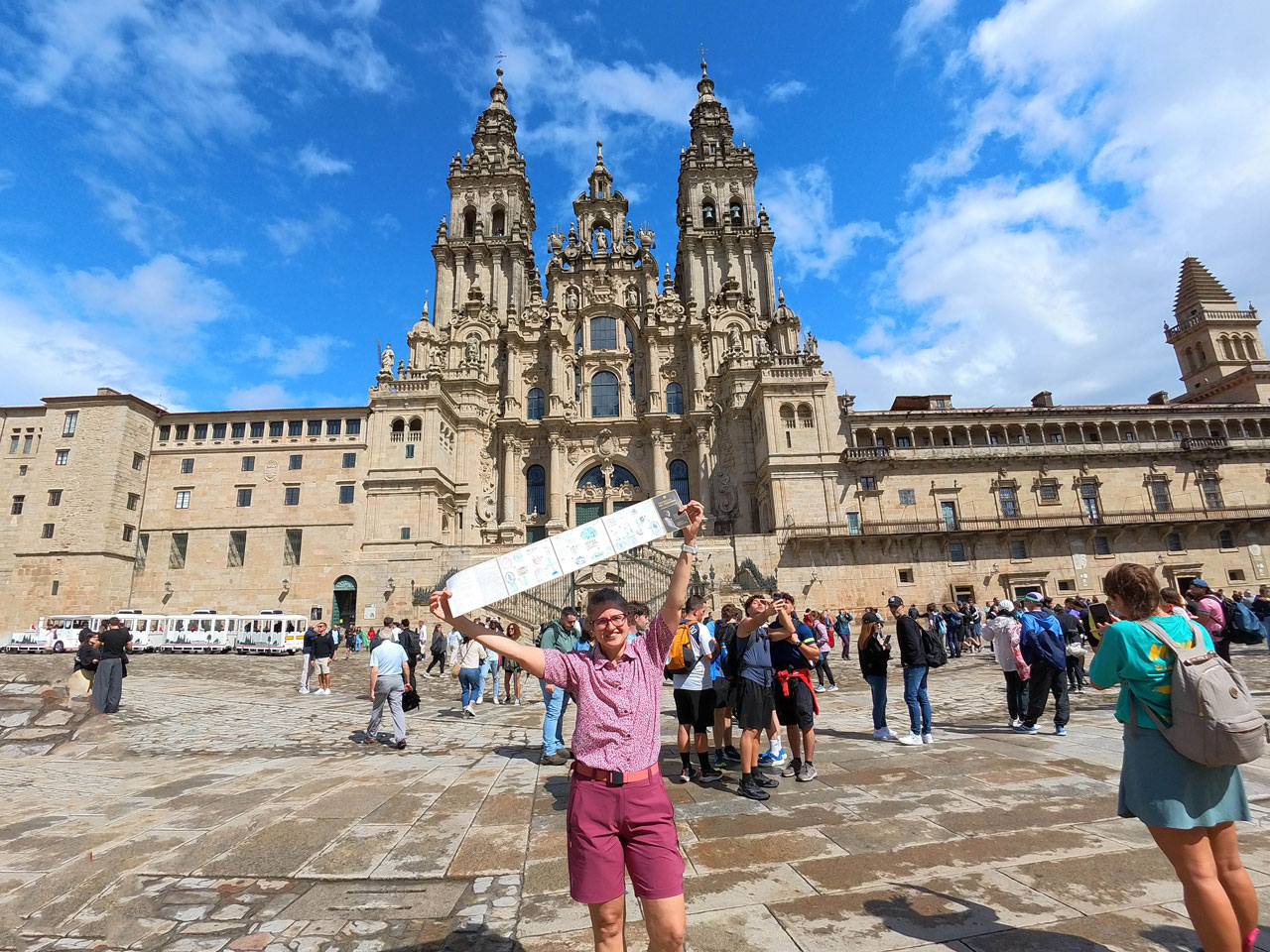
After weeks of walking, Santiago is no longer simply a destination on a map. It becomes the place towards which every early start, difficult climb, conversation and small discovery has been leading.
Yet even the final arrival doesn't always unfold as imagined.
What was it like to finally reach Santiago?
We arrived in a torrential downpour.
But there was something wonderful about it: the rain meant that the square in front of the Cathedral was almost completely empty.
Then, about an hour later, the sun came out.
And we were able to take our traditional photograph in front of the Cathedral.
It was a beautiful way to finish.
What would you say to someone thinking about walking the Camino for the first time?
I would encourage them to consider walking the earlier stages of the Camino Francés rather than automatically choosing the final 100 kilometres.
The first part was much quieter than I'd expected, and I really appreciated that.
There was time and space to walk, meet people, enjoy the landscape and experience the Camino at a different pace.
The final stretch from Sarria is very popular, and for good reason, but it has a completely different atmosphere.
I think it's worth considering what kind of experience you're looking for before choosing where to begin.
Tullia's experience is a reminder that there is no single way to walk the Camino de Santiago.
Some people are drawn by its history, others by the landscapes, the sense of community or the possibility of spending time away from everyday routines. And often, what stays with you is something you couldn't have anticipated before leaving.
Whether you dream of walking the quieter stretches of the Camino Francés, following the Portuguese Way or discovering another route towards Santiago, the most important thing is choosing a journey that feels right for you.
Explore our Camino de Santiago walking holidays and find your own starting point.
Written by the SloWays Team
 Nominee Best Specialist Tour Operator 2026