How long is the Camino de Santiago?
It depends on the route you choose.
The French Way, from Saint-Jean-Pied-de-Port to Santiago, is over 800 km long, but we offer it in tours of approximately one week.
Other routes are shorter or more flexible: the English Way is around 120 km, the Sanabrés about 360 km, and many of our tours last 6 to 12 days — perfect for experiencing the Camino without walking the full distance.
We can help you find the route that best suits your time and experience level.
How difficult is the Camino?
Difficulty varies by route:
French Way, English Way, Portuguese Way, Northern Way → moderate, suitable for reasonably fit walkers.
Primitivo and Le Puy Routes → the most challenging, with longer stages, mountains and steeper terrain.
Last 100 km from Sarria to Santiago → easy, ideal for first-time walkers
All of our tours feature well-paced daily stages to make the experience enjoyable and achievable.
What kind of accommodation do you offer?
Unlike traditional pilgrim hostels, our tours include carefully selected hotels, pensions and B&Bs, always with private rooms and en-suite bathrooms.
We choose each place for comfort, authenticity and location along the trail.
Are the routes well signposted?
Yes — clear waymarking is one of the great strengths of the Camino.
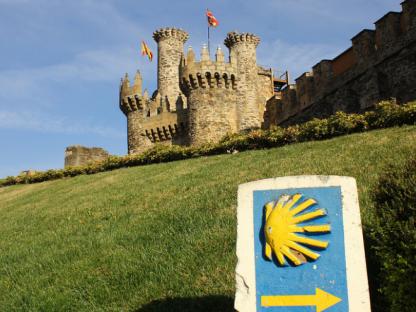
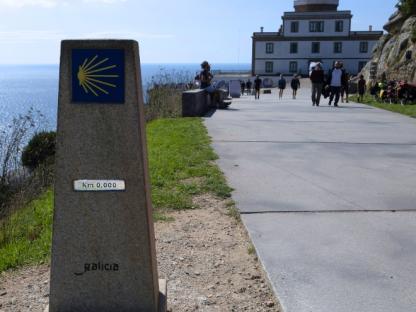
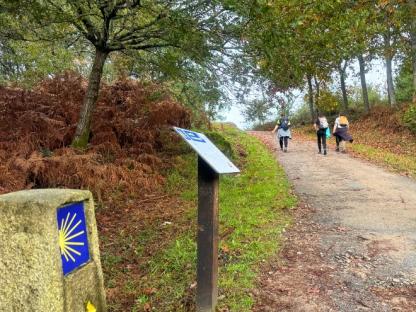
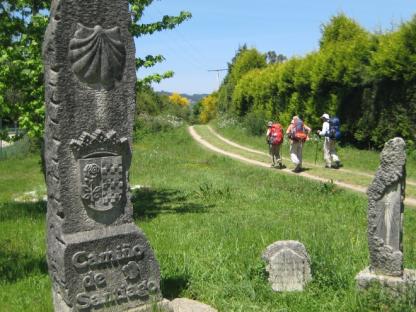
You’ll follow yellow arrows, scallop shell markers and local signs.
We also provide detailed route notes, maps, and access to our app for safe and easy navigation.
What should I pack for the Camino?
We recommend comfortable, broken-in walking shoes, layered hiking clothes, a refillable water bottle, hat, sunscreen, a light backpack, and a small first-aid kit.
With our luggage transfer service, you can walk freely with just a daypack.
What kind of landscapes will I encounter?
Each route has its own personality:
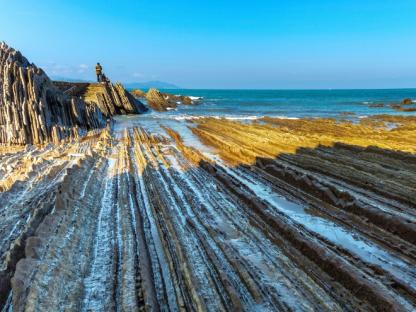
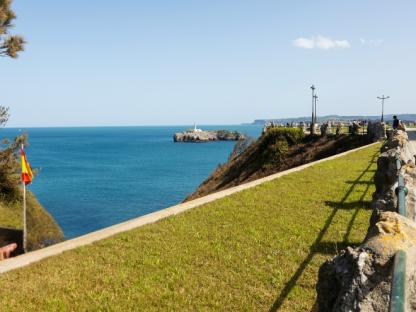
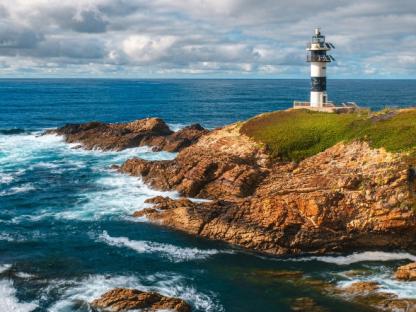
- Northern Way: dramatic coastlines, cliffs, and ocean air
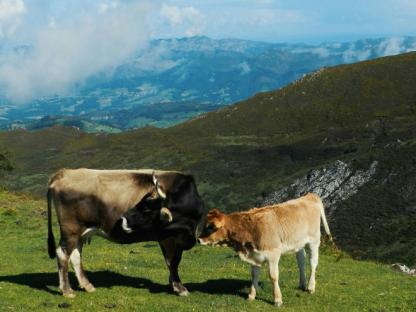
- Primitivo: remote valleys, mountain passes, ancient forest paths
- Sanabrés: rolling hills, historic villages, and the quiet of the Via de la Plata
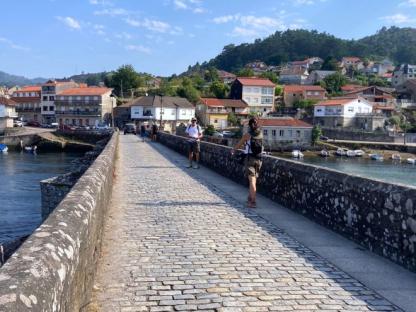
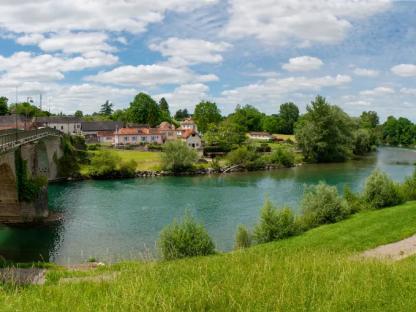
- English Way: green countryside, small ports, Galician farmland
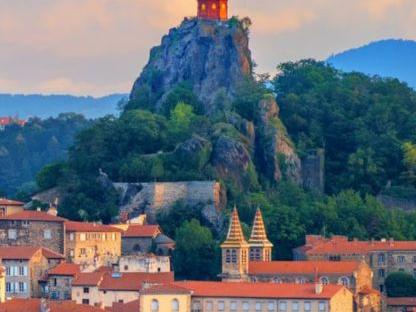
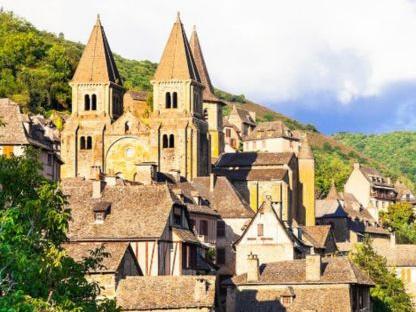
- Le Puy Route: French highlands, medieval villages, Romanesque abbeys
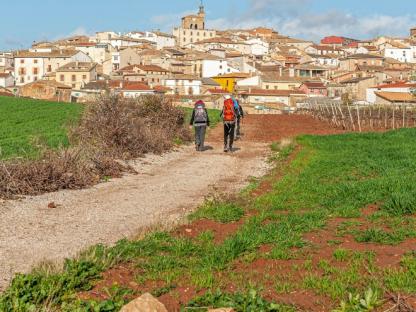
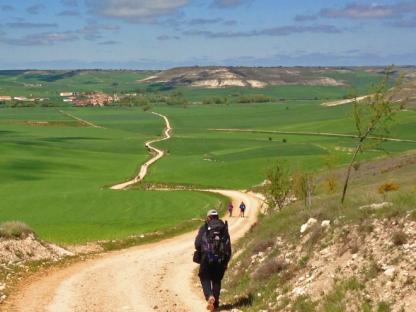
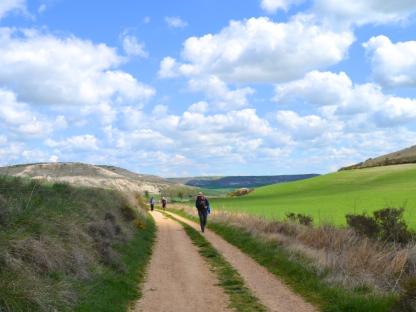
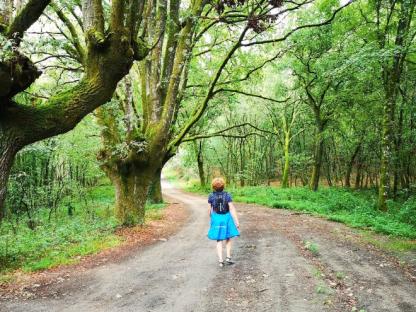
- French Way / Sarria to Santiago: vineyards, farmlands, oak forests and historic towns
The variety is part of what makes the Camino so unique — you can choose the landscape that speaks to you.
Do I need to be religious to walk the Camino?
Not at all.
Many walk for spiritual reasons, but others do it for nature, culture, challenge, or personal reflection. Whatever your reason, the Camino welcomes everyone.
Can I get the Compostela certificate?
Yes.
To receive the official Compostela, you must walk at least the final 100 km to Santiago. For example, walking our Sarria to Santiago tour (7 days) is enough to obtain the Compostella.
Can I walk solo?
Absolutely.
Many people choose to walk alone to reflect, disconnect or simply move at their own pace. The routes are safe, well-marked, and full of friendly fellow travellers. Some routes are more popular than others - and it's easier to find fellow walkers to spend the day with. Others are more meditative and less walked, perfect more those who are looking for a more meditative, solitary experience.
How does luggage transfer work?
Each morning, you leave your bag at reception — and it will be waiting for you at your next accommodation.
You walk freely, without the weight, and enjoy the journey even more.
When is the best time to walk?
From April to October, with spring and early autumn offering the best balance of weather and trail conditions.
The French and Primitivo routes may require more weather awareness in early spring.