You may walk the dog, take the stairs and spend your weekends outdoors, and still discover that none of this quite prepares you for walking six hours a day, several days in a row, on varied terrain, with a daypack on your back.
The goal of training for a walking holiday is not to become fit in the athletic sense. It is to teach your body something more specific: what it feels like to be on your feet for several hours at a time, day after day, and to recover well enough overnight to do it again the next morning.
That is a different kind of readiness from general fitness, and it is worth preparing for deliberately.
If you’re looking for inspiration for your next Camino, or want help choosing the itinerary that best matches your needs,
take our quiz at the link below!
Before planning anything, it helps to understand what your trip will actually ask of you. The variables that shape how you should train are not complicated, but they matter.
Look at your itinerary and note:
How many consecutive walking days does it include?
What is the average daily distance, in kilometres?
How much elevation gain and loss is typical per stage?
What kind of terrain: paved paths, forest tracks, rocky mountain trails?
Will you carry a daypack, or does luggage transfer mean you walk light?
A seven-day trip with luggage transfer, averaging 15 km per day on well-marked paths with moderate elevation, asks something very different from an eight-day high-altitude route where you gain 900 metres on the third day.
Our difficulty levels guide gives a clear breakdown of what each level of trip demands, which is a useful starting point for calibrating your preparation.
The honest answer is: more than most people allow themselves.
Eight to twelve weeks is a realistic preparation window for most walkers. If your trip includes significant daily elevation, consecutive days without rest, or terrain that requires balance and attention, twelve weeks is a better target. If you are already walking regularly and your trip is moderate, eight weeks may be enough.
What does not work is doing very little for several months and then cramming in long walks in the final fortnight. That approach tends to produce sore knees and blisters rather than readiness. The body adapts to walking load gradually, and there are no shortcuts to that process.
A useful way to think about it: start your training at a level that feels slightly easier than your current fitness, and build from there. The goal is to arrive at your departure date feeling prepared but not tired.
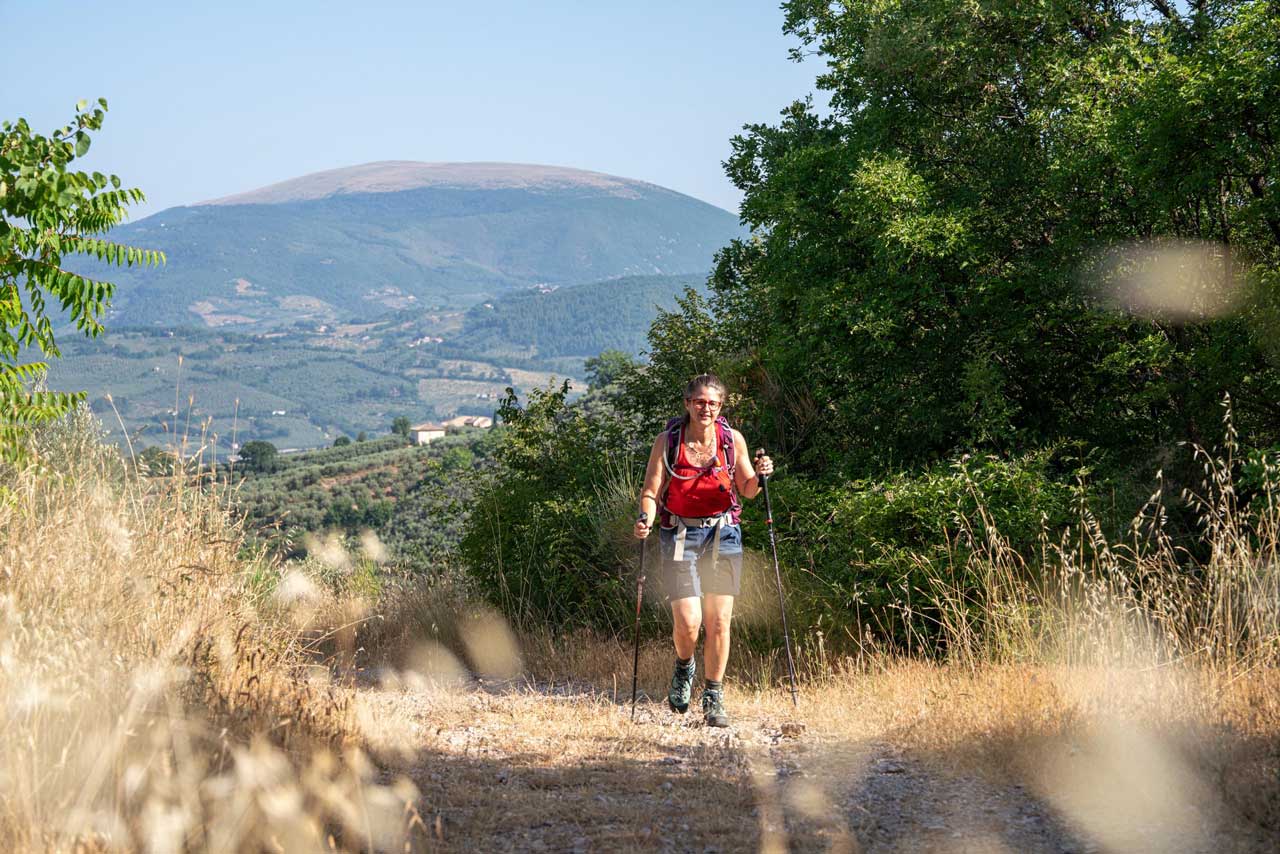
The following structure works well for most walkers preparing for a moderate to moderately challenging trip. Adjust the distances and intensity based on what your itinerary demands.
The priority in the first month is consistency, not distance. Three or four sessions a week, mixing shorter walks of 60 to 90 minutes on weekdays with one longer walk at the weekend, starting at around 8 to 10 km. Walk on varied ground where you can: a park with some incline, a footpath with uneven surfaces, anything that is not flat pavement.
There is no need to carry significant pack weight at this stage. A light daypack is fine if you prefer to have something on your back, but the priority here is getting your feet, ankles and legs used to regular walking again and establishing a routine you can build on.
This is where training becomes specific to your trip. Start carrying your daypack on weekend walks, loaded with roughly what you will carry on the trail: water, a snack, a light layer. Begin light and build gradually towards the actual weight you will carry on the trip.
Seek out hills, and pay particular attention to descents. Most walkers focus their effort on climbing, but long descents place different demands on the legs and are difficult to prepare for through flat walking alone. If you live somewhere flat, stairs, bridges and repeated short climbs are useful substitutes, and an inclined treadmill can help introduce some elevation. These are not the same as a mountain path, but they are a reasonable starting point; outdoor hills remain more representative of real trail conditions when you can find them.
Push the long weekend walk towards 15 to 18 km by the end of this block.
This block most closely prepares the body for the repeated effort of a multi-day walking holiday, and it is worth prioritising.
On at least two or three weekends during this period, walk a long day on Saturday, then get up and do another long walk on Sunday on legs that are already tired. That back-to-back effort is the closest simulation of a real multi-day trip you can do at home. It teaches your body how to recover overnight and keep moving, which is the specific skill a walking holiday requires.
One thing people often overlook: build in at least one full rest day each week throughout the programme. Rest gives your body time to recover and adapt to the increased walking load. Walking tired legs day after day without recovery leads to fatigue and minor injuries rather than fitness.
By the end of week ten or eleven, ease off slightly. Reduce volume in the final seven to ten days before departure so you arrive rested, not depleted.
Walking is the best training for walking. But a small amount of complementary work makes a real difference, particularly for walkers who have not been consistently active or who are preparing for a more demanding route.
Leg and core strength, twice a week, does not need to be complicated. Step-ups onto a bench, split squats, calf raises, and a plank or two address the muscles that walking loads most: quads and glutes on climbs, calves on descents, core stability for carrying a pack over several hours. These exercises build useful strength and stability without requiring an elaborate gym programme. Consistency matters more than complexity.
Swimming or cycling on non-walking days keeps cardiovascular fitness ticking over without adding more impact to feet and joints that are already adapting to increased load. These are useful additions, not filler.
Treadmills can support your training, particularly for adding volume or incline work in bad weather or when outdoor hills are hard to find. Where they fall short is in the variety of surfaces: a treadmill belt does not replicate the lateral adjustments and ankle work that uneven outdoor terrain demands. Use one if it helps with consistency, but try to get the majority of your walking done outside.
Poorly fitted or untested footwear is a reliable source of problems on a walking trip, and most of those problems are preventable.
The central principle is straightforward: use the boots or shoes, socks and insoles you plan to take on the trip during your training. By the time you reach your longer, more route-specific walks, none of your footwear should be new or untested. Test everything over meaningful distances and, where possible, on hills and descents.
A few things worth checking during training:
Train in the socks you plan to use on the trip: sock thickness changes how a shoe fits, and a combination that works on a short walk can cause problems over a full day
If you plan to use trekking poles, train with them before you go: using poles effectively takes practice, and the trip should not be the first time you learn to coordinate them with your stride
Carry a small blister kit on training walks from the start, and stop at the first sign of a hot spot rather than walking through it
Our walking holiday packing list covers footwear preparation in more detail, alongside everything else worth thinking about before your first stages.
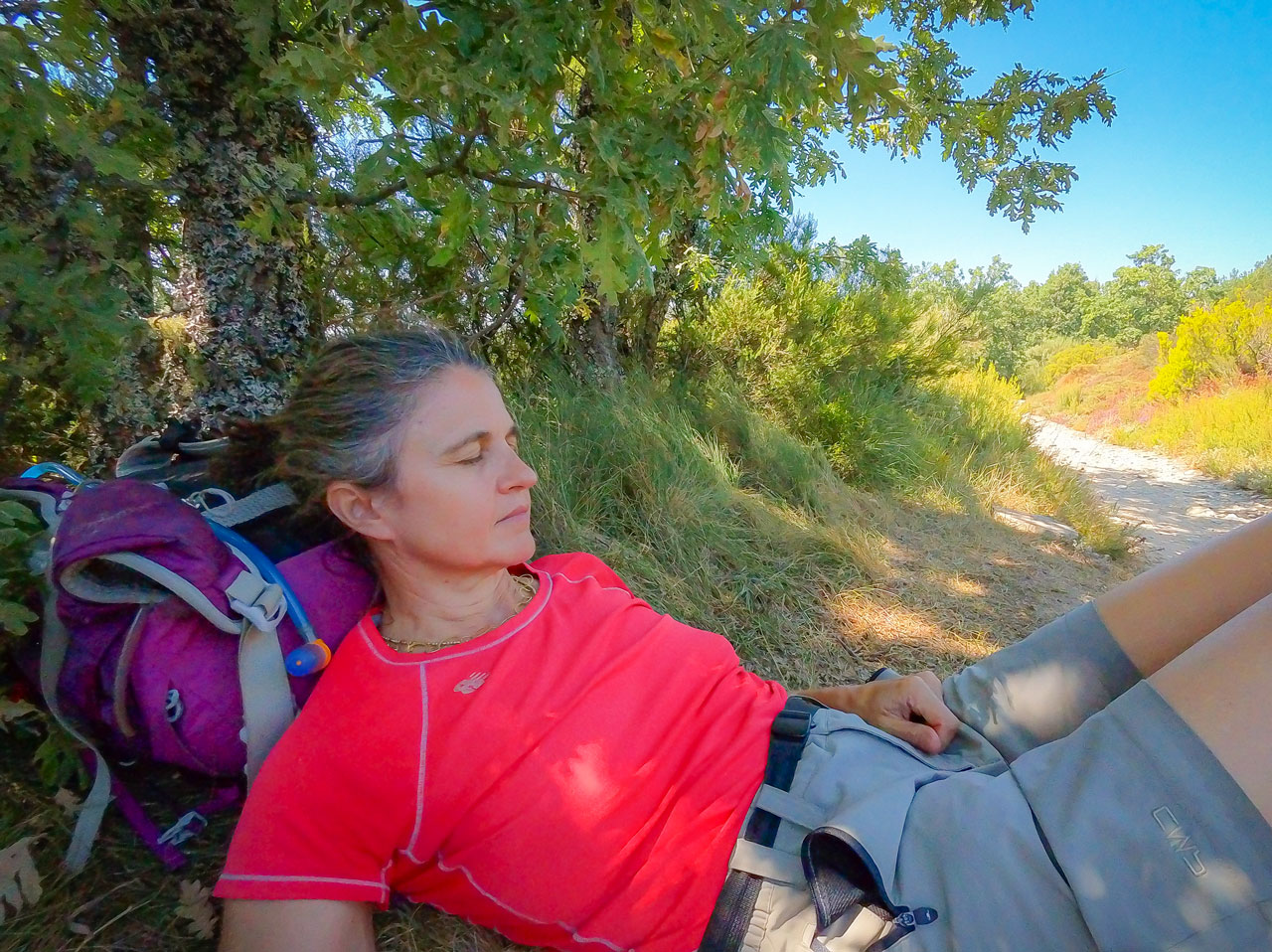
Training gets you to the starting line in good shape. How you manage the first few days determines whether the rest of the trip goes well.
One easy mistake is to go too fast, too hard, on day one. The first stage of a multi-day trip often feels easy because you are rested and the excitement is real. Resist the temptation to push. The fatigue from that first day compounds into day two and day three in ways that are difficult to recover from mid-trip.
A few principles that hold across most routes:
Walk at a pace you can sustain for several hours, not the pace you can hold for one
Take short breaks before you feel you need them: stopping regularly before fatigue builds is easier to manage than waiting until you are already exhausted
Eat regularly and drink throughout the day, adjusting to the length of the stage, weather conditions and available refill points
Arrive with something left in the tank: a well-paced stage should not require you to empty every reserve just to reach your accommodation
The goal, as we often say to walkers before they set off, is not to finish each day. It is to be able to start the next one.
Preparation for a walking trip is not about transforming yourself. It is about giving your body enough experience of the specific demands ahead that nothing on the route comes as a surprise.
For many walkers, eight to twelve weeks of progressive preparation provides a solid foundation: regular walking, the right footwear, hills where relevant and some back-to-back training days.
And that, in our experience, is when a walking holiday becomes what it was always meant to be: time spent noticing the path, the light, the landscape, and the particular pleasure of arriving somewhere under your own steam.
Written by the SloWays Team
 Nominee Best Specialist Tour Operator 2026