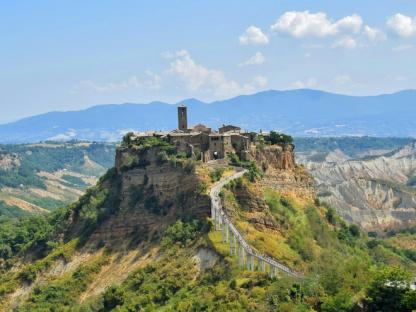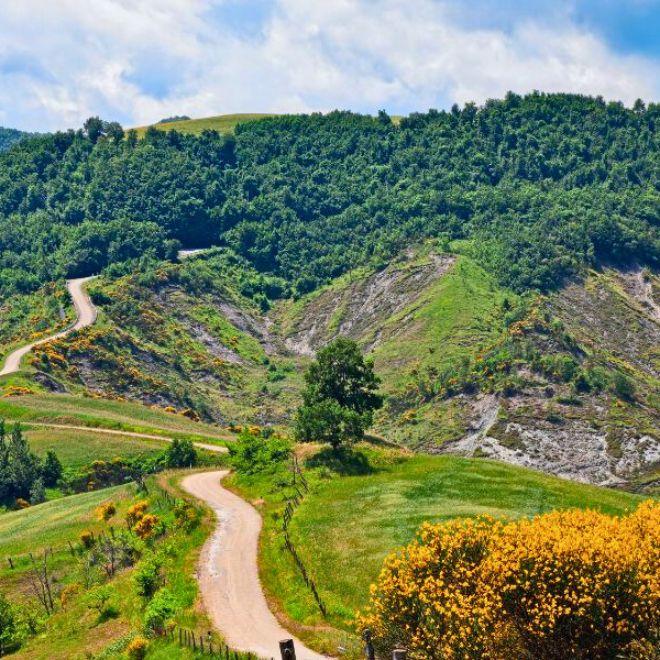
Civita Bagno Regio on the top hill o the via Romea Germanica

Hiking Italian Alps Via Romea Germanica

Via Romea Germanica: Enigmatic and Medieval

Named after the 'Germanic' countries of Northern Europe, the Via Romea Germanica was once the preferred path to reach Rome – an alternative 'camino' to the better-known Via Francigena, with which it shares the last section into Rome.

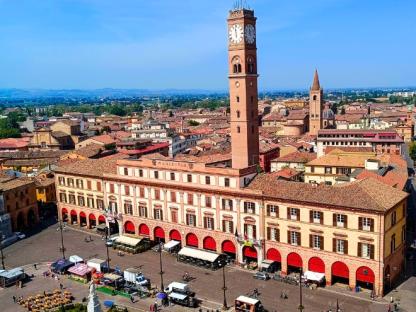
Our trekking trips follow the best section of the route, taking you from the vibrant university city of Forlì to the heart of Rome through some of Italy's most picturesque and enigmatic places.


DISCOVER OUR TRIPS

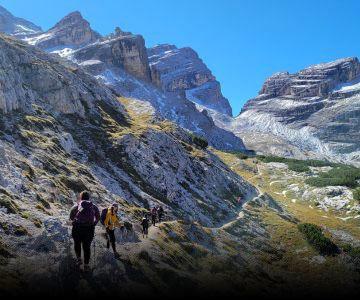
Scenic view of mountain paths and valleys on the Via Romea Germanica route

This route covers the enchanted forests of Casentino, the rugged beauty of the Tuscan-Romagnolo Apennines, and the serene beauty of Cortona before ending with the well-preserved Roman roads of Latium.

Highlights

  • The energy of the forests of Casentino
  • The timeless atmosphere of Civita di Bagnoregio, "the dying town" and other hilltop villages 
  • The Etruscan sites of Subbiano and Arezzo, famous for its jousting tournament and antique market 
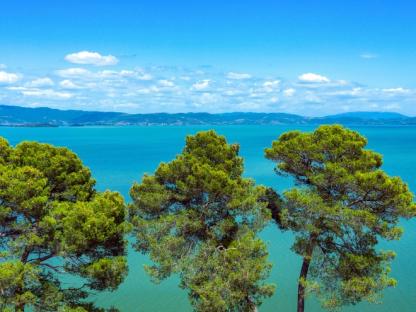
  • Natural beauties such as Lake Trasimeno and the Tuscan-Romagnolo Appennines 

Frequently Asked Questions

Everything You Need to Know Before You Walk

How long is the Via Romea Germanica, and how many stages does it cover?

The Via Romea Germanica is a long-distance pilgrimage route connecting Northern Europe to Rome.

Our itineraries focus on selected sections of the route, allowing you to experience the most scenic and culturally significant stages without having to walk the entire trail in one journey.

Depending on the section chosen, trips can range from a few walking days to multi-week adventures.
No.

Each section of the Via Romea Germanica can be walked independently and does not need to be completed in chronological order.

Many travellers choose to experience the route over several separate trips, returning to complete additional stages in the future.

The Via Romea Germanica is generally more demanding than easier pilgrimage routes.

Some stages include longer distances, varied terrain, and significant elevation changes.

It is best suited to walkers with a reasonable level of fitness and some experience of multi-day hiking.

The Via Romea Germanica crosses a remarkable variety of landscapes:

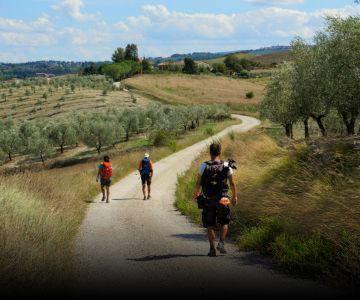
  • Rolling hills and rural countryside

  • Historic villages and medieval towns

  • Forests, rivers, and mountain areas

  • Cultural and religious landmarks connected to centuries of pilgrimage history

The best periods are generally spring and autumn, when temperatures are pleasant and walking conditions are at their best.

Summer is also possible, although some sections can be hot, especially at lower elevations.

Our self-guided walking tours typically include:

  • Pre-booked accommodation with private rooms and bathrooms whenever available

  • Luggage transfers where available

  • Detailed route notes, maps, and travel documentation

  • GPS navigation via the app

  • 7-days-a-week assistance throughout your journey

You will stay in a selection of small hotels, guesthouses, agriturismi, and locally owned accommodations.

Each property is chosen for its comfort, hospitality, and connection to the local area.

Arrival arrangements depend on the section of the route you choose.

All itinerary pages include detailed travel information explaining how to reach the starting point by public transport or private transfer.

Our team is also available to help with travel planning when needed.

Yes.

Many travellers choose to walk the Via Romea Germanica independently.

Accommodation is pre-booked, route documentation is provided, and support is available throughout the journey.

However, some sections are more demanding than other European pilgrimage routes and require good fitness and confidence in multi-day walking.

Signposting varies depending on the region and specific section of the route.

For this reason, we provide detailed route notes and GPS navigation through our app, allowing you to walk confidently even where waymarking is limited.

The right equipment is important for a long-distance pilgrimage route.

Essentials include:

  • Comfortable, well-broken-in walking boots

  • Layered clothing suitable for changing weather conditions

  • Waterproof jacket

  • Sun protection: hat, sunglasses, and sunscreen

  • Daypack for daily essentials

  • Trekking poles for routes with significant elevation changes

A detailed packing list is included in your travel documentation.

Our team provides 7-days-a-week assistance throughout your journey.

If you encounter any issue, you can contact us using the emergency details provided in your travel documents and in the SloWays app.

The app also contains route information, navigation tools, and useful travel contacts.

Our trips


Wanderlust Nominee Best Specialist Tour Operator 2025
Wanderlust
Nominee Best Specialist Tour Operator 2023
Change currency:

We accept:

VISA MASTERCARD
SATISPAY

We accept:

VISA MASTERCARD
SATISPAY
FTO
ATTA member
RePower
Travelife
ISO Partner
ISO Partner
FTO ATTA member RePower
Travelife ISO Partner ISO Partner

Touroperating
S-Cape Countryside Travels srl
Borgo Allegri 16R
50122 Firenze FI
P. IVA 05227330486

 
© 2026 SloWays. All rights reserved.
Touroperating S-Cape Countryside Travels srl Borgo Allegri 16R 50122 Firenze FI, Italy
VAT Nr 05227330486
extraSmallDevice
smallDevice
mediumDevice
largeDevice
largeDevice
largeDevice