via farncigena aosta ivrea

Cycling on Via Francigena, from Aosta to Ivrea

LEVEL
2
DISTANCE
125 km
DURATION
5 days | 4 nights
PERIOD
Apr May Jun Jul Aug Sep Oct
PRICE FROM
€ 681
CO2e FOOTPRINT
83 Kg/person
  1. Italy
  2.  | 
  3. Cycling Holidays
  4.  | 
  5. Tourcode ITSB185

Embark on an unforgettable journey along the Via Francigena, where every pedal stroke is a step deeper into a rich tapestry of experiences. 

Starting at the majestic Gran San Bernard Pass, straddling the Swiss-Italian border, you'll be treated to a mesmerizing panorama of crystalline lakes guarded by towering peaks reaching for the sky. Feel the wind as you freewheel down winding roads, descending into the ancient embrace of Aosta, a city steeped in Roman history and charm.

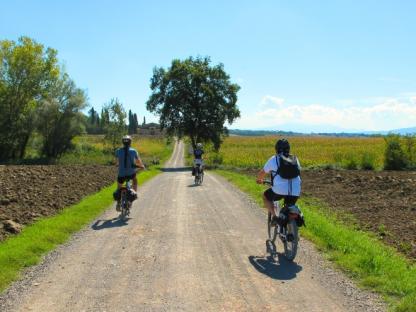
Following the path of the swift-flowing Dora Baltea river, you'll traverse cycle paths and quaint stone-walled lanes, bidding farewell to the Aosta Valley's rugged beauty. Your journey unfolds against a backdrop of rolling hills, where every turn reveals a new wonder – be it a medieval castle perched on a hilltop, a serene chartreuse monastery, or the weathered ruins of ancient Rome.

But it's not just the sights that will captivate you; it's the flavors of Northern Italy that will truly enchant your palate. Indulge in the region's finest cuisine, savoring each bite of handmade pasta, freshly pressed olive oil, and exquisite wines that speak of centuries of tradition and craftsmanship.

And for those who crave more adventure, the journey doesn't have to end here. Extend your voyage to the historic city of Pavia, where ancient streets whisper tales of bygone eras and hidden treasures await around every corner.

So saddle up and let the Via Francigena guide you on a journey of epic proportions – where every mile brings you closer to the heart and soul of Italy's magnificent landscapes, culture, and cuisine.

Highlights

  • Breathtaking landscapes along the Via Francigena.
  • Indulge in Northern Italy's finest food and wine.
  • Roman ruins, medieval castles, and serene monasteries, each whispering tales of bygone eras
  • The option to continue the journey to the historic city of Pavia.

Itinerary

Day 1

Arrive in Aosta

Arrive in Aosta

Welcome to Aosta, a historic Roman town nestled within a valley embraced by majestic mountains. Begin by immersing yourself in the serene ambience of the cloisters of Sant'Orso. Then, step back in time at the impressive Roman theatre, where echoes of ancient performances still linger in the air. As the day draws to a close, meander through the charming alleys of the town center, where every twist and turn reveals stunning vistas of towering peaks peeking over the rooftops. It's a captivating blend of history, culture, and natural beauty that sets the stage for the adventures yet to come.


Day 2

Transfer to Saint Bernard Pass and ride to Aosta, 40 km

Transfer to Saint Bernard Pass and ride to Aosta, 40 km

Today, a private transfer will whisk you to the majestic Great Saint Bernard Pass, where the first pilgrim hospice was established by Saint Bernard himself. From there, enjoy a breathtaking descent to Aosta along a panoramic road, passing through charming villages like Saint Rhemy and Etroubles, nestled amidst orchards and forests.

Distance: 40 Km

Ascent/descent: +103/-1270 m

Day 3

Ride from Aosta to Verrès, 50 km

Ride from Aosta to Verrès, 50 km

Continuing across the valley floor, the journey unfolds on a scenic cycle path tracing the tranquil River Dora, weaving past historic castles and verdant vineyards. A highlight awaits at the enchanting Saint Germain castle, where the imposing Midday tower stands as a testament to the noble De Mongioveto family's legacy of defense. As the route progresses towards Verrès, prepare to be captivated by the breathtaking vistas that unfold around every bend.

Distance: 50 Km

Ascent/descent: +230/-450 m

Day 4

Ride from Verrès to Ivrea, 35 km

Ride from Verrès to Ivrea, 35 km

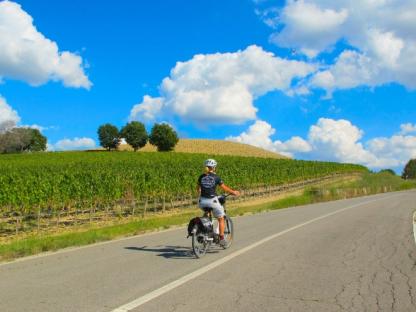
As you venture into Piedmont, the majestic alpine landscape gradually transitions into the rolling hills that characterize the region. With ascents becoming gentler and height differentials less daunting, you'll find yourself traversing wood trails and picturesque towns like Ivrea, boasting a charming old town center and the iconic tower of Santo Stefano. Continuing your journey, you'll approach the imposing Serra of Ivrea, Europe's largest drift, before reaching the quaint village of Roppolo, where a warm and welcoming family-run bed and breakfast eagerly awaits your arrival.

Distance: 35 Km

Ascent/descent: +150/-280 m

Day 5

Arrivederci Via Francigena!

Arrivederci Via Francigena!

The trip ends after breakfast, unless you have booked extra nights or other optional services with us. 

Optional: It is possible to longer the Via Francigena cycling trip to Pavia.

Details

Included


What is included

  • 4 Nights in double room in *** hotels , agriturismi and inns with breakfast
  • Luggage transportation from hotel to hotel
  • Travel App
  • Pilgrim Passport
  • Medical and luggage travel insurance
  • 24h phone assistance


What is not included 

  • Transfers to the starting location and from the arriving location of the tour
  • Lunches and dinners, if not otherwise stated
  • Bisits and entrance fees - tips
  • Personal expense
  • Possible sojourn taxes
  • Everything that is not mentioned in the "What is included" section.

Optional Services

  • These services can be added to the ones included in the base price of the tour:
  • Single room supplement
  • Cancellation insurance
  • Transfers to reach the starting location or to leave the arriving location of the tour, which will be quoted on request.


Classic Hotels


Accommodation on Our Trips

Our adventures feature a variety of accommodations, depending on the location and the type of trip you choose. We carefully select each property, ensuring it is well situated along the route and locally run, so that you receive a warm welcome and enjoy a comfortable, authentic experience.

Your comfort is a priority throughout your travels. Most of our trips include stays in friendly, independent, or family-run hotels, guest houses, and B&Bs. Each accommodation is chosen for its charm, cleanliness, and those personal touches that make you feel at home. Some trips offer more elevated stays that feel like a special treat, while others may include simpler options, such as mountain refuges, particularly in remote areas.

Classic Hotels – Comfort with Character

Most of our trips combine a variety of accommodation styles to suit the route and location. You will typically stay in charming, locally owned B&Bs, guest houses, inns, and small hotels that offer a warm welcome and comfortable surroundings. These properties often feature extra touches such as distinctive regional character, leisure facilities, or renowned local cuisine.

All accommodations feature private ensuite bathrooms unless otherwise specifically noted for mountain huts, refuges, and pilgrim hostels.

On some mountain adventures and selected pilgrimage routes, the experience may also include more basic accommodation, such as mountain huts, refuges, or pilgrim hostels, where ensuite rooms are not always available and shared bathrooms or dormitory-style accommodation may be part of the experience.

While simpler in style, these accommodations are often rich in atmosphere and camaraderie, providing an authentic connection with fellow travellers and the places you visit.

Hotel Cecchin - Aosta
Essenza Hotel - Verrés
Hotel 3T

When to travel


The climate in North Italy is generally very mild with differences depending on the geography of the region, from coasts and valleys to the continental areas. The warmest months are generally July and August, with temperatures ranging from 23°C up to 30°C. The valleys can often seehigher temperatures and 38°C to 40°C is not uncommon, while June and September normally offer lovely warm weather. Of course there are always exceptions or dry spells that cause a few days to get really hot. Spring (April and May) and Autumn (October and November) are often dry with sunny days, but the chances of rain is higher then.

Is this for me?


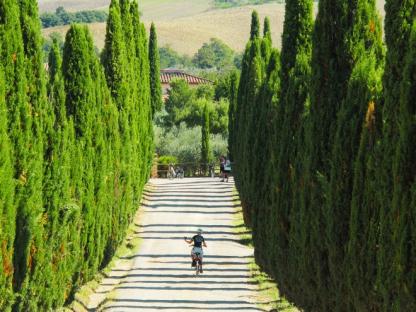
If you want to experience the magic of the first stretch of the Via Francigena while cycling through alpine valleys and the gentle rolling hills of Piedmont, then this trip is perfect for you. The route has no major climbs, making it suitable for anyone with a bit of preparation and a desire to explore at their own pace, surrounded by breathtaking landscapes and a region rich in history, flavors, and traditions. It’s the ideal choice if you’re looking for a genuine cycling experience that is active yet accessible to all.

What to bring


Clothing and Other Items

You will need your regular cycling gear, including high-visibility or reflective clothing for riding in low-light conditions. For evenings and time spent exploring towns and villages, comfortable outdoor trousers or shorts and quick-dry T-shirts are ideal. These can be hand-washed easily and will dry overnight while remaining smart enough for sightseeing or dining out. 
As your main luggage will be transported daily, you can pack a little more comfortably.  
However, we recommend travelling light, as you may occasionally need to carry your luggage when traveling to the to and from your destination and between accommodation reception areas and your room. Please note that laundromats ("lavanderia automatica") are uncommon in rural areas, so plan to wash smaller items by hand when necessary or ask the hotel if they offer this service. 

Comfortable Shoes

Bring a pair of lightweight trainers or casual shoes for evenings, sightseeing and visits to towns and villages. These can also serve as a spare pair in case your cycling shoes become wet.

Socks & Underwear 

Choose good-quality cycling or outdoor socks with quick-drying and moisture-wicking properties. Make sure they are comfortable and well-tested before your trip. Pack enough underwear for your personal needs, as laundry facilities may be limited.

Warm Layers, Hat & Gloves

Even during summer, temperatures can vary significantly, especially in mountainous, coastal or exposed areas. We recommend carrying a warm mid-layer such as a fleece or lightweight insulated jacket for evenings and cooler mornings. 
Weather conditions can change rapidly, so always have an extra layer available during your ride. Lightweight gloves and a warm hat or buff can be useful during colder months, particularly in spring and autumn.

Waterproof Cycling Jacket & Trousers

A good waterproof cycling jacket is essential in case of prolonged rain. We recommend a breathable cycling-specific rain jacket with an extended back panel and a close-fitting collar. Waterproof cycling trousers, thermal tights or leg warmers can provide additional protection in colder or wetter conditions. 
Remember that waterproof garments lose effectiveness over time, so check your equipment before travelling.

Dress Code

When visiting churches and religious sites, appropriate clothing is often required. In many locations, shorts, sleeveless tops and revealing clothing may not be permitted. 
We suggest carrying a lightweight scarf, which can be useful for covering shoulders when necessary and also offers protection from the sun.

Cycling Clothing

For maximum comfort during your ride, we recommend:

  • Cycling shorts or bib shorts with a quality chamois pad 
  • Cycling jerseys or moisture-wicking technical shirts 
  • Lightweight cycling gloves 
  • Sunglasses with UV protection 
  • A cycling cap or buff 
  • A lightweight windproof gilet or jacket 
  • Arm and leg warmers (particularly in spring and autumn) 


Quick-drying fabrics are highly recommended, as they can be washed overnight and reused the next day. 

Cycling Shoes

Flat-pedal shoes or gravel/MTB-style cycling shoes are recommended. Unlike road cycling shoes, gravel shoes allow comfortable walking when visiting towns, stopping at cafés or negotiating short unpaved sections. 
Choose shoes that are already well broken in and suitable for long days in the saddle.

Cycling Helmet

For your safety, make sure to always wear a helmet when riding even if the not required by the road regulations of the country you are visiting. On all our trips, it is possible to rent helmets, or if you prefer, bring your own. 

Practical info

How to arrive


On arrival:

From Turin (TRN), reach the central railway station, from where you can take a train to Aosta with two changes

From Milan (LIN or MPX), you can take a train to Aosta with two changes.

On departure:

From Ivrea, you can reach any Italian airport by train.

Train timetables are available on the website www.trenitalia.com.

Mobile App


Use the SloWays APP for iOS and Android smart phones in combination with the written documentation provided.

The App has the detailed tracks and maps that you can use offline and without roaming. Thanks to the phone’s internal GPS, you can check your exact position on the map, so you always know exactly where you are. It also helps you self-navigate you way while travelling. More information on how to use the App inside the roadbook documents.

The navigation features include:

  • Offline navigation. Mobile data not required after initial download
  • Accurate GPS tracks
  • Autorotation of the maps
  • Daily route summary and elevation chart
  • Panorama of the track and at street level
  • Alarm and vibration that alerts you in case you go off track.
  • Emergency SMS button with position coordinates
  • Possibility to record and take georeferenced photos of problems on route alerting fellow travelers
  • Hotel information
  • Points of interest along the way
  • Historical background

You may also like:

Wanderlust Nominee Best Specialist Tour Operator 2026
extraSmallDevice
smallDevice
mediumDevice
largeDevice
largeDevice
largeDevice