There is something appealing about the idea of following a path that has been walked for centuries. Travelling from village to village, discovering landscapes at your own pace, and reaching a destination not by train or car, but on foot.
If you're considering your first long-distance walking holiday, two historic routes are likely to catch your attention: the Camino de Santiago and the Via Francigena.
Both are ancient pilgrimage routes, rich in history, culture and landscapes. Both offer the opportunity to experience a different rhythm of travel, where the journey itself matters as much as the destination.
Yet they can feel surprisingly different.
The Camino de Santiago is often associated with its international community of pilgrims, the familiar yellow arrows and the shared experience of arriving in Santiago de Compostela. The Via Francigena brings to mind medieval Italian towns, vineyards, rural landscapes and the historic journey towards Rome.
But is one easier than the other? Which offers more cultural discoveries? And which should you choose if you've never been on a multi-day walking holiday before?
There is no single best pilgrimage for beginners. The right choice depends on what you want to experience, how much time you have and the kind of walking holiday you enjoy.
Let's explore the differences.
If you’re looking for inspiration for your next Camino, or want help choosing the itinerary that best matches your needs,
take our quiz at the link below!
Before comparing the experience of walking them, it helps to understand what makes these routes special.
The Camino de Santiago is a network of pilgrimage routes that lead to Santiago de Compostela, in north-western Spain, where tradition places the tomb of Saint James.
Its most famous itinerary is the Camino Francés, which crosses northern Spain from the French border. But there are several other routes, including the Portuguese Way, Camino del Norte, Camino Inglés and Camino Primitivo.
Each has its own landscapes, history and character.
The Via Francigena, meanwhile, is a historic pilgrimage route connecting Canterbury in England with Rome, following a journey documented by Archbishop Sigeric in the 10th century. Today, the route also extends southwards towards Santa Maria di Leuca, in Puglia.
Although the Via Francigena crosses several European countries, its Italian sections are particularly popular with walking travellers.
From the Alpine landscapes of the Aosta Valley to the rice fields of Piedmont, the medieval villages of Tuscany and the countryside of Lazio, it offers an extraordinary variety of experiences.
Both routes can be walked in sections, over several holidays or as part of a much longer journey. You don't need to complete either pilgrimage from beginning to end to appreciate its history and atmosphere.
Perhaps the most noticeable difference between the Camino de Santiago and the Via Francigena is the atmosphere you encounter along the way.

The Camino de Santiago is famous for its sense of community.
On popular sections of the Camino Francés, you'll meet walkers from different countries, often travelling for very different reasons but heading towards the same destination.
You may recognise familiar faces over several days, exchange a few words at a café or share a meal with people you've only just met.
The yellow arrows, scallop shells and traditional pilgrim greetings all contribute to the feeling of being part of a shared journey.
For some travellers, this is one of the Camino's greatest attractions.
You can walk independently without necessarily feeling alone.
Of course, the experience varies by route. The final stages from Sarria to Santiago are generally much busier than some sections of the Camino del Norte or Camino Inglés.
If you're looking for a quieter Camino, you can choose a less-frequented route without giving up the history and traditions of the pilgrimage.

The Via Francigena often offers a more solitary experience, particularly along its quieter rural sections.
You might spend much of the morning walking through vineyards, agricultural landscapes or woodland before reaching a small village.
Rather than encountering a continuous stream of fellow pilgrims, you may find yourself sharing the path with local residents going about their daily lives.
This creates a different relationship with the places you visit.
The route can feel less like a continuous gathering of travellers and more like a gradual discovery of the territories it crosses.
That doesn't mean the Via Francigena is always empty, or that the Camino is always crowded. Both experiences depend on the section and season.
If meeting fellow pilgrims is an important part of your ideal journey, the Camino de Santiago may appeal to you more. If you prefer quiet paths and time for reflection, the Via Francigena is worth considering.
Both pilgrimages offer remarkable cultural experiences, but they reveal different sides of Europe.
One of the pleasures of the Camino de Santiago is discovering how much northern Spain changes from one region to another.
On the Camino Francés, the journey passes through Navarra, La Rioja, Castile and León, and Galicia.
Along the way, you can encounter:
Other Camino routes offer equally distinctive experiences.
The Camino del Norte follows Spain's northern coastline, connecting maritime landscapes, fishing towns and regions with strong culinary traditions.
The Portuguese Way brings together the heritage of Portugal and Galicia, while the Camino Inglés recalls the history of pilgrims who arrived by sea from northern Europe.
The cultural experience is closely connected to the act of pilgrimage itself: churches, bridges, villages and historic towns have welcomed travellers for generations.
The Via Francigena offers a different kind of cultural richness.
Its Italian sections cross regions with remarkably varied identities, from Alpine valleys to historic cities and Mediterranean landscapes.
In the north, the route descends from the Great St Bernard Pass into the Aosta Valley, where mountain scenery, Roman heritage and Alpine traditions accompany the journey.
Further south, the path crosses Piedmont and the Po Valley before reaching the Apennines and entering Tuscany.
Here, the Via Francigena passes through some of Italy's most celebrated historic landscapes.
Between Lucca and Siena, walkers can discover:
Continuing south, the route passes through the landscapes of the Val d'Orcia, towards Lazio and eventually Rome.
But the Via Francigena doesn't end with the arrival in the Eternal City. Its southern extension continues through Lazio and Puglia, towards Santa Maria di Leuca, opening up another side of Italy's pilgrimage heritage.
The Via Francigena is particularly appealing if you enjoy Italian art, medieval architecture and landscapes shaped by centuries of rural life.
The Camino, meanwhile, offers an opportunity to discover the cultural diversity of northern Spain and the traditions of one of Europe's most famous pilgrimages.
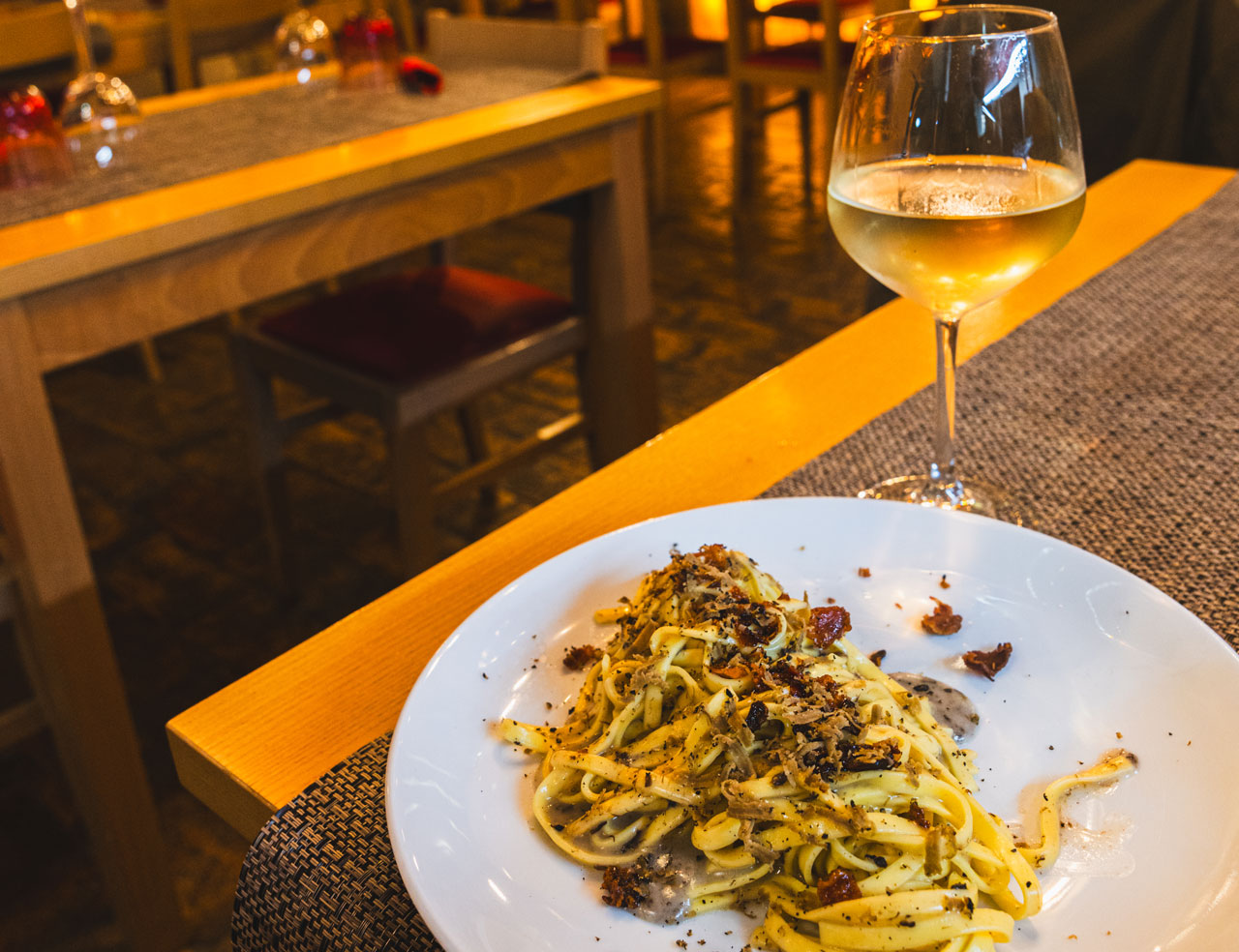
Walking is a wonderful way to discover a place through its food.
After several hours on the trail, a simple meal can become one of the most memorable moments of the day.
And both the Camino de Santiago and Via Francigena cross regions with extraordinary culinary traditions.
The food changes considerably depending on the route you choose.
In the Basque Country, you might begin or end your day with pintxos, the small dishes that are an essential part of local food culture.
In La Rioja, the vineyards are a reminder of the region's long wine-making tradition.
Around Astorga, you can discover cocido maragato, a substantial traditional meal.
And as you approach Santiago, Galician cuisine brings its own specialities: seafood, empanadas, local cheeses and the famous almond-based Tarta de Santiago.
Food becomes another way of understanding the places you pass through, their history and their relationship with the surrounding landscape.
On the Via Francigena, the culinary experience changes from region to region.
In the Aosta Valley, mountain cheeses and hearty Alpine dishes reflect the local environment.
Further south, the route introduces travellers to the culinary traditions of Piedmont and Emilia-Romagna.
In Tuscany, the food is closely connected to the agricultural landscape:
And in Lazio, the culinary traditions change once again as the route approaches Rome.
If food and wine are an important part of how you travel, both pilgrimages have plenty to offer.
The difference is less about which route has better food and more about which culinary culture you would like to discover.
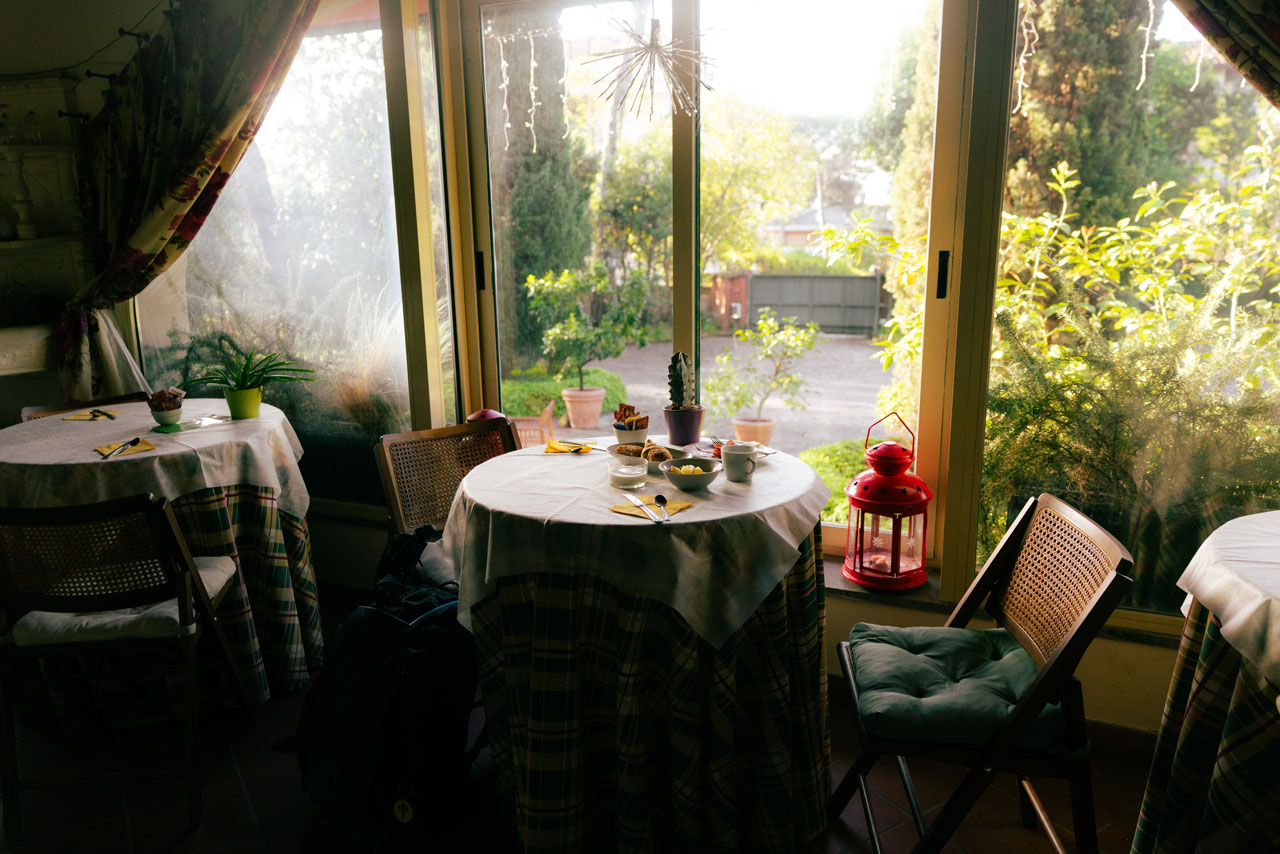
One of the questions first-time walkers often ask is whether a pilgrimage necessarily means sleeping in shared hostels and carrying a heavy backpack.
The short answer is no.
Both the Camino de Santiago and the Via Francigena have traditions of pilgrim hospitality, but there are different ways to experience them.
The Camino is particularly well known for its albergues, or pilgrim hostels, which are an important part of its communal culture.
However, private rooms, hotels and guesthouses are also available along many routes.
If you prefer more privacy and the reassurance of knowing where you'll stay each night, a self-guided walking holiday with accommodation arranged in advance can be an appealing alternative.
The Via Francigena also offers pilgrim accommodation, alongside hotels, guesthouses and traditional Italian agriturismi.
In some rural areas, accommodation options are more widely spaced, which makes planning individual stages especially important.
The type of accommodation available varies considerably depending on the region and itinerary.
With SloWays, you can explore both pilgrimages through self-guided walking holidays, with accommodation arranged in advance.
Depending on the itinerary, luggage transfer services may also be available, allowing you to carry only your daily essentials.
This means you can enjoy the independence of walking at your own pace without having to organise every practical detail yourself.
Comfort and authenticity are not opposites. Choosing a private room or walking with a lighter backpack doesn't change the history of the path beneath your feet.
This is where choosing the right itinerary becomes particularly important.
Neither the Camino de Santiago nor the Via Francigena is automatically easier.
Both include accessible sections and others that require greater physical preparation.
The final section of the Camino Francés, from Sarria to Santiago, is a popular choice for first-time pilgrims.
It offers established walking infrastructure, frequent opportunities to stop in villages and the experience of reaching Santiago on foot.
Other possibilities include the Camino Inglés from Ferrol or the Portuguese Way from Valença/Tui.
However, a shorter itinerary doesn't necessarily mean an easier walk.
Some Camino routes, particularly mountainous sections of the Camino del Norte and Camino Primitivo, involve challenging ascents and descents.
The Via Francigena offers an interesting advantage for travellers who are new to multi-day walking: some sections are available in versions designed for a gentler experience.
For example, the classic journey from Lucca to Siena can be enjoyed through a more accessible itinerary, allowing walkers to discover the same celebrated Tuscan region at a different rhythm.
There are also easier alternatives for sections of the Via Francigena between Siena and Lazio, including the approach from Viterbo to Rome.
This flexibility can be particularly appealing if you want to enjoy the cultural experience of a pilgrimage without committing to the demands of the classic stages.
When comparing routes, look beyond the total distance.
Consider:
The best first pilgrimage is the one that matches your abilities and allows you to enjoy the journey, rather than simply complete it.
You don't need a month of holiday to experience either route.
Both the Camino de Santiago and Via Francigena can be divided into individual sections, making them suitable for shorter walking holidays.
If you have approximately one week available, you can experience the final stages of the Camino Francés from Sarria to Santiago, follow the Camino Inglés from Ferrol or choose the Camino Sanabrés from Ourense.
These journeys allow you to experience the rhythm of pilgrimage and reach Santiago without walking an entire long-distance route.
If you have more time, you can explore longer sections or return another year to continue where you left off.
The Via Francigena offers similar flexibility.
A week is enough to explore a section of the route through the Aosta Valley, discover the historic landscapes between Pontremoli and Lucca, or walk through Tuscany from Lucca towards Siena.
If reaching a pilgrimage destination is particularly important to you, you can also follow the final section from Viterbo to Rome, arriving in the Eternal City on foot.
For travellers with less time, the Via Francigena offers another possibility: short walking breaks of just three or four days.
A weekend between Pontremoli and Aulla, or a few days walking between the medieval towns of Tuscany, can be an excellent introduction to the experience.
You can discover what it feels like to walk from one place to another, without committing to a longer holiday.
And if you enjoy it, there will always be another section waiting.
A pilgrimage doesn't have to be completed in a single journey. Sometimes, a few days are enough to discover that you want to return.
Both routes lead towards places that have attracted pilgrims for centuries.
But the experience of reaching them can be quite different.
For many Camino walkers, arriving in Santiago is one of the most memorable moments of the journey.
After days of following yellow arrows through villages and countryside, you enter the city and eventually reach the cathedral.
In the surrounding squares, pilgrims gather, rest, celebrate and reflect on the journey they have completed.
Even if you are not walking for religious reasons, there can be something moving about sharing that arrival with people who have travelled from different places and followed different routes towards the same destination.
Santiago is a city where the experience of pilgrimage is especially visible.
The Via Francigena offers another remarkable arrival: Rome.
After crossing the countryside of Lazio, the historic route approaches the city and eventually reaches St Peter's Basilica.
Here, the sense of pilgrimage meets the extraordinary cultural and architectural heritage of the Eternal City.
Rome is a very different destination from Santiago: larger, busier and layered with centuries of history beyond its role as a pilgrimage centre.
For some walkers, that contrast is part of the appeal.
There is something memorable about arriving in one of the world's great historic cities after travelling through quieter rural landscapes on foot.
If the symbolic experience of reaching a pilgrimage destination matters to you, both routes offer a powerful conclusion, each in its own way.
After considering the atmosphere, landscapes, cultural experiences and practical aspects, the decision may feel a little clearer.
Rather than asking which pilgrimage is better, ask yourself what you most want from your first walking journey.
Of course, these aren't strict rules.
You can find quiet paths on the Camino de Santiago and sociable experiences on the Via Francigena. You can enjoy extraordinary cultural discoveries on both routes, and each offers itineraries for different levels of walking experience.
The most important thing is choosing the journey that feels right for you.
Whether you choose the Camino de Santiago or the Via Francigena, you will discover something that both routes have in common.
Walking changes the way you experience a place.
A town is no longer simply somewhere you arrive by train or car. It becomes somewhere you have approached slowly, through fields, forests and villages.
You begin to notice the landscape changing around you, the differences between one region and another, the small details that often disappear when travelling quickly.
And you discover that the journey itself can be just as meaningful as the destination.
With SloWays, you can explore both historic pilgrimages independently, with accommodation and practical arrangements organised in advance, choosing an itinerary that suits your time, interests and walking experience.
Whether your first steps take you towards Santiago or Rome, the most important thing is finding a journey that makes you want to keep walking.
Written by the SloWays Team
 Nominee Best Specialist Tour Operator 2026