When you picture the Camino de Santiago, what comes to mind?
Perhaps a long line of pilgrims, heavy backpacks, early mornings and nights spent in shared hostels. There is certainly a place for that kind of journey. But it is far from the only way to experience one of Europe's most celebrated pilgrimage networks.
Walking the Camino doesn't have to mean giving up comfort, good food or the pleasure of discovering a place beyond the trail.
In fact, some of the most memorable moments happen after the day's walking is over: exploring a medieval town, tasting a regional wine, discovering a centuries-old church or sitting down to dinner in a family-run restaurant.
If you're looking for a journey that combines walking, cultural discovery and a comfortable place to rest each evening, the Camino offers plenty of possibilities.
Here are some of the best routes to consider, and what makes each one special.
If you’re looking for inspiration for your next Camino, or want help choosing the itinerary that best matches your needs,
take our quiz at the link below!
The Camino has a long tradition of simple pilgrim accommodation, including albergues, or hostels, where walkers share rooms and facilities.
For many pilgrims, this communal experience is an important part of the journey. But it isn't a requirement.
Today, it is possible to experience the Camino in different ways, including self-guided walking holidays with accommodation arranged in advance.
Travelling this way means you can still:
With SloWays, you can choose from different Camino routes and individual sections, combining the freedom of independent walking with the reassurance of a pre-arranged itinerary.
Of course, comfort doesn't mean that every stage will be easy. The Camino is still a walking journey, and some routes involve long distances or demanding terrain.
The aim is not to remove the challenge of walking, but to make the experience more enjoyable in the way that matters to you.
Every Camino route has its own history, but cultural discovery isn't limited to famous monuments.
Sometimes it is a cathedral that has welcomed pilgrims for centuries. Sometimes it is a regional dish you have never tasted, a local festival, an old stone bridge or a conversation over coffee.
When choosing your Camino, think about which aspects of a place interest you most:
With that in mind, let's explore five Camino experiences that offer particularly rewarding combinations of culture, landscape and walking.
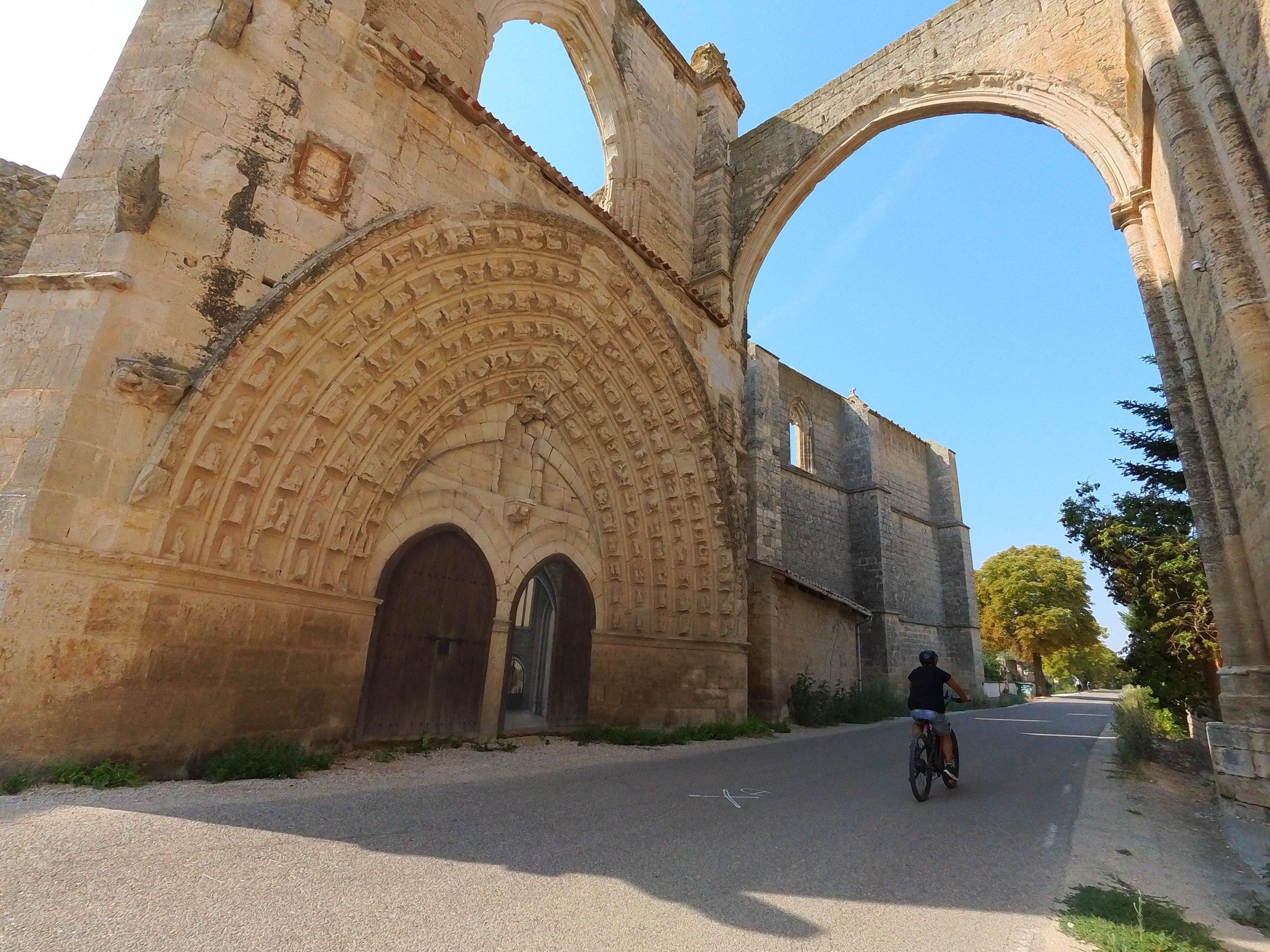
The Camino Francés, or French Way, is the best-known route to Santiago de Compostela.
It crosses northern Spain through regions with distinct cultural identities, from Navarra and La Rioja to Castile and Galicia.
For travellers interested in history and architecture, its appeal is difficult to overstate.
The French Way connects some of northern Spain's most remarkable historic towns and pilgrimage landmarks.
Depending on the section you choose, highlights include:
There is also the everyday culture of the Camino: small cafés serving breakfast to early walkers, village squares where pilgrims gather, and restaurants offering regional specialities at the end of the day.
One of the pleasures of the Camino Francés is how naturally cultural discovery becomes part of the walking experience.
With SloWays, you don't have to walk the entire French Way in one holiday.
You could choose:
Best for: travellers who want a strong sense of pilgrimage history, impressive architecture, regional food and the sociable atmosphere of a well-established route.

The Portuguese Way approaches Santiago from the south, following routes that have connected Portugal and Galicia for centuries.
It offers a fascinating combination of historic towns, green countryside and cultural traditions shaped by life on both sides of the border.
For travellers who enjoy discovering places gradually, it is a particularly rewarding choice.
The SloWays itinerary from Valença/Tui to Santiago begins in an area where the River Minho marks the border between Portugal and Spain.
Valença is known for its historic fortress, while Tui offers a beautiful old town dominated by its cathedral.
Further along the route, the cultural highlights continue:
Along the way, there are opportunities to discover Galician cuisine, from seafood and local cheeses to the region's wines.
And while the route has a rich history, much of its charm lies in the smaller places between the main towns.
The Portuguese Way is a reminder that culture is something you encounter not only in monuments, but also in everyday life.
SloWays offers the Valença/Tui to Santiago route in eight days, as well as a longer Portuguese Way itinerary for travellers with more time.
The shorter journey is an appealing option if you want to experience the final approach to Santiago while discovering a different side of the Camino.
Best for: travellers who love historic towns, local traditions, regional food and a journey that combines cultural discoveries with green landscapes.

If your ideal walking holiday includes dramatic coastal scenery and distinctive regional cuisine, the Camino del Norte deserves particular attention.
Following Spain's northern coastline, the route passes through the Basque Country, Cantabria, Asturias and Galicia.
It is often less crowded than the most popular sections of the Camino Francés, although its terrain can be more demanding.
One of the most appealing sections begins in San Sebastián, a city celebrated for its gastronomy and coastal setting.
Before setting off, take time to explore the old town and its lively pintxos bars, where small dishes are an essential part of local food culture.
From here, the Camino reveals another side of northern Spain:
The contrast between lively coastal towns and quieter countryside makes this section particularly varied.
The Camino del Norte offers wonderful opportunities for cultural discovery, but it shouldn't be confused with an easy coastal stroll.
Some stages involve repeated ascents and descents, and parts of the route follow asphalt roads.
Choosing pre-arranged accommodation and luggage transfer where available can make the logistics more comfortable, but you should still consider the physical demands of the walking.
SloWays offers several sections of the Northern Way, including San Sebastián to Marquina in eight days and Bilbao to Santander in six days.
Best for: travellers who value coastal scenery, regional gastronomy and cultural variety, and who are comfortable with more challenging walking stages.

Not every culturally rewarding Camino needs to pass through famous cities or major landmarks.
The Camino Inglés, or English Way, offers a shorter journey with a distinctive historical identity.
Its origins are connected to pilgrims who travelled by sea from northern Europe, arriving at ports in Galicia before continuing towards Santiago on foot.
Today, the route from Ferrol follows a combination of historic towns, rural paths and green Galician landscapes.
The journey begins in Ferrol, a city with a rich naval and maritime heritage.
Its historic Magdalena district, waterfront and military architecture provide an interesting introduction to the route.
As you continue inland, the atmosphere changes.
The Camino passes through villages, woodland and countryside, offering opportunities to experience a quieter side of Galicia.
Compared with the busiest final sections of the French Way, the Camino Inglés can feel more intimate, with fewer fellow walkers along some stages.
Its appeal lies in the combination of pilgrimage history and the pleasure of discovering places that receive fewer international visitors.
The SloWays itinerary from Ferrol to Santiago takes seven days, making it a practical option for travellers with approximately one week available.
It is also particularly interesting for those who want to walk a route with a clear beginning and end, rather than choosing an intermediate section of a longer Camino.
Best for: travellers looking for maritime history, rural Galician culture and a relatively quieter pilgrimage experience.

Some sections of the Camino deserve particular attention because of the variety of experiences they bring together.
The journey from León to Sarria is one of them.
Over ten days, the landscape changes from the historic city of León to the plains of Castile, the vineyards of El Bierzo and the green hills of Galicia.
It is a route where architecture, rural traditions and the history of pilgrimage are closely intertwined.
The journey begins in León, where the cathedral and historic centre offer a memorable introduction.
As you walk westwards, you encounter places with very different identities:
The route is also a reminder that the Camino is not only about reaching Santiago.
Each region has its own history, landscape and way of life, and walking allows you to experience those changes gradually.
The SloWays itinerary from León to Sarria takes ten days and includes some demanding walking stages.
It is therefore better suited to travellers who already feel comfortable walking longer distances over several consecutive days.
For those with the time and experience, it offers a particularly rich combination of cultural discovery and varied landscapes.
Best for: travellers who want a longer, more immersive Camino experience, with historic cities, rural traditions and changing scenery.
Whichever route you choose, there are practical ways to make your journey more comfortable without losing the essence of the Camino.
Shared pilgrim hostels are an important part of Camino culture, but they are not the only option.
Hotels, guesthouses and other small accommodation providers can offer a different experience, particularly if you value privacy and a good night's rest after walking.
On a SloWays self-guided holiday, accommodation is arranged in advance, so you know where you will be staying at the end of each stage.
Carrying everything you need for several days can be physically demanding.
Where available, luggage transfer allows you to walk with a lighter daypack, while your main bag is transported between overnight stops.
You still cover the route on foot, but without carrying all your belongings throughout the day.
A walking holiday doesn't need to be a race between overnight stops.
If a particular city or region interests you, consider allowing extra time to explore it.
A day in San Sebastián, an additional evening in Burgos or time to discover Santiago after arriving can add another dimension to the experience.
And don't overlook the smaller moments: stopping at a village café, visiting a local market or trying a dish you have never heard of.
Comfort is not only about accommodation.
It also means choosing daily stages that suit your abilities and preferences.
Before booking, consider:
A well-chosen itinerary allows you to enjoy both the walking and the places you discover along the way.
If you're still undecided, start with the kind of experience you would most enjoy.
There is no single right choice.
And there is certainly no need to sacrifice cultural discovery or everyday comfort to have a meaningful pilgrimage experience.
Perhaps the most rewarding thing about walking the Camino de Santiago is the way it changes your relationship with the places you visit.
A town is no longer simply somewhere you arrive by train or car. It becomes a destination you have approached slowly, through fields, forests and villages.
A local meal tastes different after a day on foot. A historic building becomes part of a journey rather than another stop on a sightseeing itinerary.
And the people you meet — fellow pilgrims, accommodation hosts, café owners — become part of your memories of the route.
The Camino can be challenging, sociable, reflective, culturally rich and comfortable in different ways. These experiences are not mutually exclusive.
With SloWays, you can explore its historic routes independently, with accommodation and practical arrangements organised in advance, choosing the journey that best suits your interests and walking experience.
Because the Camino is not only about how far you walk.
It is also about everything you discover along the way.
Written by the SloWays Team
 Nominee Best Specialist Tour Operator 2026