pieterpad stage 3 walking to vorden

Pieterpad: Stage 2, Coevorden to Vorden

LEVEL
2
DISTANCE
107 km
DURATION
8 days | 7 nights
PERIOD
Jan Feb Mar Apr May Jun Jul Aug Sep Oct Nov Dec
PRICE FROM
€ 946
  1. Netherlands
  2.  | 
  3. Caminos
  4.  | 
  5. Tourcode NL48000

A new itinerary that takes you to the discovery of surprising and lesser-known corners of the Netherlands, blending history, nature, and charming villages. The journey begins in Coevorden, an ancient fortified city with a medieval past tied to knights and the battles between the Dutch and the bishops of Utrecht. From here, the route winds through Overijssel, a region rich in diverse landscapes: from the rolling hills and heaths of the Sallandse Heuvelrug, where deer and rare birds find refuge, to the bucolic tranquility of Twente, an idyllic countryside dotted with windmills, traditional farms, and dense forests.

A perfect journey for both seasoned walkers and those taking their first steps into the world of slow travel.

Highlights

  • Untamed Nature: Walk along the Overijsselse Vecht, explore the Poort van Drenthe, and traverse the rolling landscapes of the Sallandse Heuvelrug and Rheezermaten.
  • Scenic Heights: Climb the Lemelerberg, Archemerberg, Besthemerberg, and Holterberg for breathtaking views over the Dutch countryside.
  • Unique Landmarks: Discover the massive Dikke Steen, the ancient Dikke Boom, and the symbolic Leeuw & Twilhaar monuments.
  • Historic Estates & Castles: Admire stately manor houses, grand estates, and well-preserved castles that tell the story of the region’s noble past.
  • Charming Towns & Villages: Stroll through the historic streets of Ommen, the picturesque village of Rheeze, and the characterful town of Gramsbergen.

Itinerary

Day 1

Arrival Coevorden

Arrival Coevorden

Travel to Coevorden station on your own and check in at your accommodation. If you still have energy after traveling, definitely take a walk through the park. 

Day 2

Coevorden - Hardenberg, 19 km

Coevorden - Hardenberg, 19 km

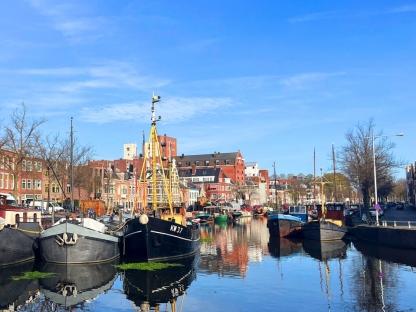
Leaving Coevorden, known as the ‘goose city,’ you step into the serene beauty of the Poort van Drenthe, a striking natural gateway marked by an impressive stone artwork. Crossing from Drenthe into the province of Overijssel, the trail follows the tranquil valley of the Overijsselse Vecht river, a lifeline for the region’s rich landscapes.

In Gramsbergen, take a moment to admire the charming historic center, where beautifully restored houses line the streets, and the bronze statue of the ‘Pieterpad’ walkers pays tribute to those who traverse this famous route. The journey continues through the hamlet of Ane and the England Forest, a lush woodland nestled in an ancient meander of the Vecht. Finally, you reach Hardenberg, a peaceful riverside town where you can relax and reflect on the day's walk.

Day 3

Hardenberg - Ommen, 21,5 km

Hardenberg - Ommen, 21,5 km

On the trail, first walk along the 'Molengoot', an old course of the river Vecht, where the landscape tells stories of the river’s past. Enjoy the natural beauty of the Rheezermaten, a protected nature reserve where wetlands and meadows create a haven for wildlife.

Then visit the beautiful village of Rheeze, its history stretching back to the Middle Ages. This well-preserved village offers a glimpse into the past with its traditional Saxon farmhouses and picturesque setting.

Continue through the peaceful Hardenberg forest, where shaded paths lead you along the banks of the rivers Vecht and Beneden-Regge. The route takes you over the scenic Junne estate, with its rolling fields and ancient woodlands, before reaching the lively town of Ommen, where the day's walk ends with a welcoming atmosphere and plenty of charm.

Day 4

Ommen - Hellendoorn, 20 km

Ommen - Hellendoorn, 20 km

The Pieterpad continues through the Vecht and Beneden-Regge basins, a hilly part of Overijssel. This is evident from the Ommerland watchtower at the top the Besthemerberg (112 ft). Climb the tower and enjoy the beautiful view over the Vecht valley! Other Dutch 'mountains' on the route include the Archemerberg (256 ft) and the adjacent Lemelerberg (144 ft). In this undulating landscape, pass the 'Fat Stone' boulder and walk along the juniper bushes on the Lemelerberg. Admire the monumental 'Lion' in Park 1813 and reach Hellendoorn via the wooded Eelerberg estate. 

Day 5

Hellendoorn - Holten, 15,5 km

Hellendoorn - Holten, 15,5 km

Today, traverse the Sallandse Heuvelrug, a striking moraine stretching from Ommen to Holten. This is Overijssel at its highest, where rolling hills are blanketed by vast forests and sweeping heathlands, offering a landscape unlike any other in the Netherlands.

Following the path over the Hellendoornse Berg, head towards 't Ravijn, where you can admire the intriguing 'Stardust' artwork, installed as a tribute to a brief yet fascinating gold rush that once took place here.

Take a moment to reflect at the solemn Twilhaar forced labor camp monument, a powerful reminder of history hidden within these peaceful surroundings. Continue your walk, taking in breathtaking panoramas from the summits of Haarlerberg and Holterberg. The journey then leads through the serene Noetselenberg estate, before reaching the welcoming village of Holten, where your day's adventure concludes.

Day 6

Holten - Laren, 15 km

Holten - Laren, 15 km

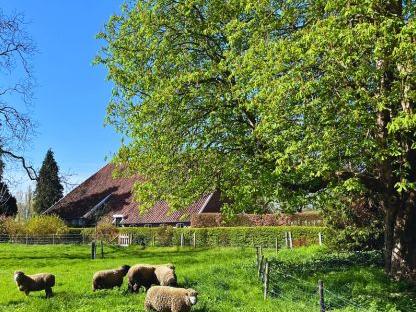
Leave Holten behind and step into the charming hamlet of Beuseberg, situated on the outskirts of the Overijsselse moraine. Follow a majestic beech-lined lane near the tranquil Schipbeek brook, crossing its waters to enter Gelderland’s Achterhoek, a region known for its picturesque farmsteads and rolling countryside.

Along the way, make time for a visit to the exquisite Verwolde Manor, an elegant estate surrounded by lush gardens and home to a delightful tea garden, perfect for a restful pause. Here, you'll also find the legendary 'Dikke Boom' (Fat Tree), the largest oak tree in the Netherlands, a silent witness to centuries of history.

Continuing on, just before reaching Laren, you'll pass by De Binnenhof, a distinguished 18th-century rectory that was later expanded into a graceful 19th-century villa. This historic landmark adds yet another layer of charm to this scenic and culturally rich journey.

Day 7

Laren - Vorden, 16 km

Laren - Vorden, 16 km

The day begins with a peaceful walk through Groot Dochteren, a charming hamlet known for its scattered farmsteads and serene countryside. Crossing both the Twente Canal and the Berkel River, you’ll make your way toward the Velhorst Estate, where a stunning viewpoint offers sweeping vistas over the tranquil Kienveen nature reserve.

Continue your journey through a vast expanse of heathland, where towering conifer forests—planted in the early 20th century—create an enchanting woodland atmosphere. As you walk, the landscape gradually reveals the grandeur of Het Enzerinck, a stately neoclassical manor built in 1826, standing proudly amidst its elegant surroundings.

Your destination today is Vorden, but if time and energy permit, consider a short detour to the magnificent Hanseatic city of Zutphen, just a quick 9-minute train ride away. Its medieval charm, historic architecture, and vibrant atmosphere make it well worth the visit!

Day 8

Departure Vorden

Departure Vorden

After breakfast, this part of the Pieterpad ends here for you.  

Details

Included


What is included

  • 7 Nights in double room in ** hotels/guesthouses with breakfast
  • maps and detailed description of the itinerary
  • Medical and luggage travel insurance
  • 24h phone assistance
  • luggage transfer
  • city tax

What is not included 

  • Transfers to the starting location and from the arriving location of the tour
  • lunches and dinners, if not otherwise stated
  • visits and entrance fees - tips
  • personal expense
  • everything that is not mentioned in the "What is included" section.
  • Optional Services

These services can be added to the ones included in the base price of the tour:

  • Single room supplement
  • Packed lunch
  • luggage transfer
  • cancellation insurance
  • Parking
  • Ferry fees 
  • extra meals

Classic Hotels


Accommodation on Our Trips

Our adventures feature a variety of accommodations, depending on the location and the type of trip you choose. We carefully select each property, ensuring it is well situated along the route and locally run, so that you receive a warm welcome and enjoy a comfortable, authentic experience.

Your comfort is a priority throughout your travels. Most of our trips include stays in friendly, independent, or family-run hotels, guest houses, and B&Bs. Each accommodation is chosen for its charm, cleanliness, and those personal touches that make you feel at home. Some trips offer more elevated stays that feel like a special treat, while others may include simpler options, such as mountain refuges, particularly in remote areas.

Classic Hotels – Comfort with Character

Most of our trips combine a variety of accommodation styles to suit the route and location. You will typically stay in charming, locally owned B&Bs, guest houses, inns, and small hotels that offer a warm welcome and comfortable surroundings. These properties often feature extra touches such as distinctive regional character, leisure facilities, or renowned local cuisine.

All accommodations feature private ensuite bathrooms unless otherwise specifically noted for mountain huts, refuges, and pilgrim hostels.

On some mountain adventures and selected pilgrimage routes, the experience may also include more basic accommodation, such as mountain huts, refuges, or pilgrim hostels, where ensuite rooms are not always available and shared bathrooms or dormitory-style accommodation may be part of the experience.

While simpler in style, these accommodations are often rich in atmosphere and camaraderie, providing an authentic connection with fellow travellers and the places you visit.

When to travel


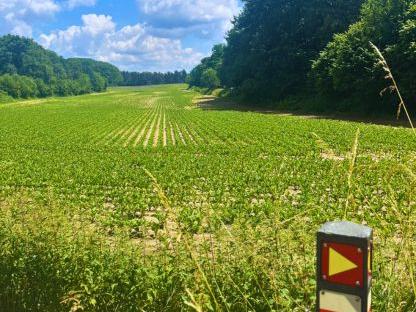
The best months to walk the Pieterpad are spring (April–June) and early autumn (September–October). During these periods, the weather is mild, nature is at its most vibrant, and the trails are neither too muddy nor too dry. Spring offers blooming fields, fresh greenery, and longer daylight hours, while autumn paints the landscapes in warm hues, with cooler temperatures perfect for walking. Summer (July–August) can be pleasant but may bring warm days and busier trails, while winter (November–March) can be cold and wet, making some paths more challenging.

Is this for me?


The Pieterpad is a long-distance walk suitable for anyone with a good level of fitness and a love for slow travel. The route is non-technical, with well-marked paths through varied landscapes—rolling hills in the south, forests, heathlands, and river valleys. There are no extreme elevations, making it accessible to most walkers, but some daily distances can be long, requiring endurance. Weather conditions, especially in winter, may add some challenge. If you enjoy discovering hidden corners of the Netherlands at a relaxed pace, this could be the perfect journey for you!

What to bring


Clothing and other items
You will need your regular walking/cycling gear, including some sort of reflective garment. For the evenings, smart outdoor style trousers (or shorts) are invaluable, as are quick-dry t-shirts. These can be washed easily and will dry overnight and still look good for sightseeing or having a drink in town.

Take as little as possible to avoid potentially lugging a heavy suitcase up three flights of stairs at the end of the day. Please be aware that laundromats (“Laverie”) are not common in rural areas, so plan to do handwashing of small items.

Lightweight walking shoes/ trainers
For wearing around towns & villages. They can also be a back-up pair.

Socks & underwear
Take only good quality socks with quick-dry and insulating qualities. Road test them before you go on the trip. Take a suitable quantity of underwear as washing facilities are limited.

Warm jacket, hat, gloves
Bring a fleece, Polartec or warm layers for the evenings especially in spring or autumn; be sure it is totally suitable for your needs.
A fleece jacket which blocks the wind (Wind-stopper) is the most preferable. In the summer months a lightweight jacket is suitable for evenings.
If you are cycling/walking in mountainous or coastal areas, even in the height of summer, the weather can change very quickly and unexpectedly and you should be prepared for fog, mist, rain, snow or hail at any time. Always take an extra layer with you, as well as a warm hat and gloves.

Waterproof jacket & trousers
If you are caught in heavy rain, with good waterproof clothing you should remain dry. Remember that most garments will lose their properties over time. Few will remain waterproof for more than five years and many deteriorate in three years or less. We recommend a rain jacket with a good hood and collar and waterproof or thermal walking/cycling trousers or tights.

Dress code
In general, you should wear suitable clothing when entering a church (in many places, it is considered unacceptable to go inside wearing shorts or a tank-top). We suggest that women carry a shawl to cover up bear shoulders or low-cut tops. It also comes in handy when your shoulders get sunburned!

It is considered inappropriate for men to go without a shirt / T-shirt (other than at the beach).

Trekking poles (adjustable)
Highly recommended. A pair works best, depending on what you are comfortable with. If you suffer from back or knee pain this should be considered essential. Remember to practise walking with your pole(s) on different types of terrain in the months preceding your trip.

Walking boots
The importance of good footwear cannot be stressed enough. Your boots should be sturdy and of good enough quality to handle all types of terrain. Lightweight boots, (cordura/leather boots) which have Gore-Tex or sympatex water-proofing are most suitable for this trip. They should provide good ankle protection and be well broken in. Waxing leather boots regularly prolongs their life.

Walking tops & trousers
We recommend walking trousers and shorts and quick-dry wicking t-shirts. These can be washed easily and will dry overnight and still look good for sightseeing or having a drink in town. Wicking T-shirts are fast drying, keep moisture away from your skin and are available at outdoor stores. You should also bring one pair of loose-fitting trousers to wear in cities and for evenings out, etc. Shorts or zip-off trousers are useful in warmer weather.

Practical info

Mobile App


Use the SloWays APP for iOS and Android smart phones in combination with the written documentation provided.

The App has the detailed tracks and maps that you can use offline and without roaming. Thanks to the phone’s internal GPS, you can check your exact position on the map, so you always know exactly where you are. It also helps you self-navigate you way while travelling. More information on how to use the App inside the roadbook documents.

The navigation features include:

  • Offline navigation. Mobile data not required after initial download
  • Accurate GPS tracks
  • Autorotation of the maps
  • Daily route summary and elevation chart
  • Panorama of the track and at street level
  • Alarm and vibration that alerts you in case you go off track.
  • Emergency SMS button with position coordinates
  • Possibility to record and take georeferenced photos of problems on route alerting fellow travelers
  • Hotel information
  • Points of interest along the way
  • Historical background

You may also like:

Wanderlust Nominee Best Specialist Tour Operator 2026
extraSmallDevice
smallDevice
mediumDevice
largeDevice
largeDevice
largeDevice