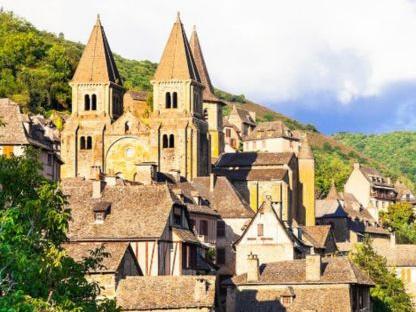
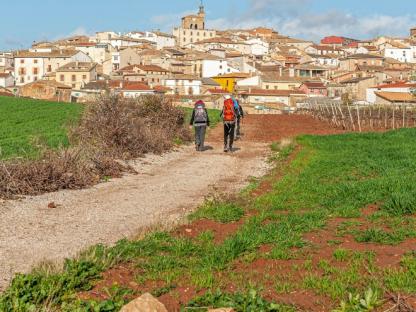
skyline of puy en velay where the camino de santiago starts

Le Puy Camino to Aumont Aubrac

LEVEL
3
DISTANCE
96 km
DURATION
6 days | 5 nights
PERIOD
Apr May Jun Jul Aug Sep Oct
PRICE FROM
€ 558
CO2e FOOTPRINT
59,50 Kg/person
  1. France
  2.  | 
  3. Self-Guided
  4.  | 
  5. Tourcode FRSW500
Le Puy is the starting point of this pilgrimage - a unique village, surrounded by lush dormant volcanoes and towering rock formations adorned with human marvels: from the Notre-Dame de France church with the statue of the Madonna to the chapel of Saint-Michel d'Aiguilhe, the Polignac fortress, and Lavoûte Castle.From here, you will cross Place du Pot and embark on a journey through nature that alternates between rocky expanses and verdant fields, wheat fields, and chapels carved into the rocks.
You'll traverse the Margeride plateau and its forests, and finally reach Aubrac, where the bell of the lost rang every day to summon pilgrims on their journey, like a beacon in the heart of the plateau.

Highlights

  • Walk through the unique volcanic landscape of charming Auvergne,
  • Visit UNESCO World Heritage Sites such as the Romanesque Cathedral of Notre Dame and Hôtel-Dieu
  • Discover Saugues, famous for its English Tower, its Mushroom Fair and the legendary Beast of Gévaudan
  • Taste local products such as “Le Petit Salé” in Le Puy-en-Velay (green lentils with a smoked Sausage)

Itinerary

Day 1

Arrival in Le Puy-en-Velay

Arrival in Le Puy-en-Velay

Perched between the Auvergne volcanoes and the Rhône Alpes basin, the city of Puy-en-Velay offers an incredible view of the horizons. The Puy cathedral has one of the most beautiful Romanesque cloisters in Europe, famous for its polychrome arcades and its remarkable capitals, listed as World Heritage by Unesco.

Day 2

From Le Puy-en-Velay to Saint-Privat-d'Allier, 23 km

From Le Puy-en-Velay to Saint-Privat-d'Allier, 23 km

Your first walk starts from the steps of the cathedral of Le Puy-en-velay. Today, you take the way of Velay massif. The particularity lies in its landscape alternating rock, greenery and rural landscapes typical of this region that you can admire throughout the walk. Arriving in Saint-Privat-d’Allier, you will overlook the impressive gorges of Allier and its river, still wild.

Distance: 23 km

Elevation gain: +573/-390 m

Day 3

From Saint-Privat-d'Allier to Saugues, 19 km

From Saint-Privat-d'Allier to Saugues, 19 km

Passing by the chapel of Rochegude and its promotory, enjoy the stunning view on the gorges of Allier. You will cross this river, which is still wild, in Monistrol-d’Allier before going back on the other bank and reach Saugues, at the doors of the Margeride. It’s a pretty difficult stage with a strong uphill slope. On your way, you will be able to see the rustic villages and hamlets typical of the region, before finishing your stage in Saugues.

Distance: 19 km

Elevation gain: +791/-694 m

Day 4

From Saugues to Les Faux, 27,5 km

From Saugues to Les Faux, 27,5 km

After breakfast, your walk continues to Le Sauvage, an agricultural hilltop area dating from the Templar period. You reach the Saint-Roch chapel, and enter the department of La Lozère, before reaching your destination of Les Faux

Distance: 27,5 km

Elevation gain: +611/-628 m

Day 5

From Les Faux to Aumont-Aubrac, 22 km

From Les Faux to Aumont-Aubrac, 22 km

From Les Faux, you begin your ascent towards Grazières-Mages before beginning your descent towards Les Estrets, through silent forests and agricultural lands, to finish at Aumont-Aubrac. Between Lozère, Cantal and Aveyron, you will be charmed by these green deserted landscapes. Arrival in Aumont-Aubrac, end of your walking trip.

Distance: 22 km

Elevation gain: +383/-292 m

Day 6

Au revoir Aumont Aubrac!

Au revoir Aumont Aubrac!

Your walking trip comes to an end today after breakfast. 

Details

Included


What is included

  • 5 Nights in double room in **/*** hotels , B&B with breakfast
  • 4 dinners
  • luggage transportation from hotel to hotel
  • maps and detailed description of the itinerary
  • Medical and luggage travel insurance
  • 24h phone assistance

What is not included 

  • Transfers to the starting location and from the arriving location of the tour
  • lunches and dinners, if not otherwise stated
  • visits and entrance fees - tips
  • personal expense
  • possible sojourn taxes
  • everything that is not mentioned in the "What is included" section.

Optional Services

These services can be added to the ones included in the base price of the tour:

  • Single room supplement
  • cancellation insurance
  • Transfers to reach the starting location or to leave the arriving location of the tour, which will be quoted on request.

Classic Hotels


Accommodation on Our Trips

Our adventures feature a variety of accommodations, depending on the location and the type of trip you choose. We carefully select each property, ensuring it is well situated along the route and locally run, so that you receive a warm welcome and enjoy a comfortable, authentic experience.

Your comfort is a priority throughout your travels. Most of our trips include stays in friendly, independent, or family-run hotels, guest houses, and B&Bs. Each accommodation is chosen for its charm, cleanliness, and those personal touches that make you feel at home. Some trips offer more elevated stays that feel like a special treat, while others may include simpler options, such as mountain refuges, particularly in remote areas.

Classic Hotels – Comfort with Character

Most of our trips combine a variety of accommodation styles to suit the route and location. You will typically stay in charming, locally owned B&Bs, guest houses, inns, and small hotels that offer a warm welcome and comfortable surroundings. These properties often feature extra touches such as distinctive regional character, leisure facilities, or renowned local cuisine.

All accommodations feature private ensuite bathrooms unless otherwise specifically noted for mountain huts, refuges, and pilgrim hostels.

On some mountain adventures and selected pilgrimage routes, the experience may also include more basic accommodation, such as mountain huts, refuges, or pilgrim hostels, where ensuite rooms are not always available and shared bathrooms or dormitory-style accommodation may be part of the experience.

While simpler in style, these accommodations are often rich in atmosphere and camaraderie, providing an authentic connection with fellow travellers and the places you visit.

When to travel


The weather in southern France offers a delightful range of conditions. Generally, the climate is warm and mild, with temperatures ideal for walking, ranging from 19°C to around 26°C during the summer months. Summers are typically hot, dry, and filled with sunshine, while late spring and early autumn bring slightly cooler days that remain comfortably warm, often perfect for enjoying dinners al fresco.  

Self-guided walking holidays provide the advantage of flexibility, allowing you to begin your journey on any date within the season, free from the constraints of fixed schedules.

Is this for me?


This journey covers the initial stages of the Puy Way pilgrimage route. You can choose to follow this first section or extend your journey by traversing a longer portion of the itinerary. This trip is suitable for those who have prior experience with multi-day hiking due to the length of the stages, especially the 33 km one.

Otherwise, it is an enjoyable and well-marked trail.

What to bring


Clothing and other items
You will need your regular walking/cycling gear, including some sort of reflective garment. For the evenings, smart outdoor style trousers (or shorts) are invaluable, as are quick-dry t-shirts. These can be washed easily and will dry overnight and still look good for sightseeing or having a drink in town.

Take as little as possible to avoid potentially lugging a heavy suitcase up three flights of stairs at the end of the day. Please be aware that laundromats (“Laverie”) are not common in rural areas, so plan to do handwashing of small items.

Lightweight walking shoes/ trainers
For wearing around towns & villages. They can also be a back-up pair.

Socks & underwear
Take only good quality socks with quick-dry and insulating qualities. Road test them before you go on the trip. Take a suitable quantity of underwear as washing facilities are limited.

Warm jacket, hat, gloves
Bring a fleece, Polartec or warm layers for the evenings especially in spring or autumn; be sure it is totally suitable for your needs.
A fleece jacket which blocks the wind (Wind-stopper) is the most preferable. In the summer months a lightweight jacket is suitable for evenings.
If you are cycling/walking in mountainous or coastal areas, even in the height of summer, the weather can change very quickly and unexpectedly and you should be prepared for fog, mist, rain, snow or hail at any time. Always take an extra layer with you, as well as a warm hat and gloves.

Waterproof jacket & trousers
If you are caught in heavy rain, with good waterproof clothing you should remain dry. Remember that most garments will lose their properties over time. Few will remain waterproof for more than five years and many deteriorate in three years or less. We recommend a rain jacket with a good hood and collar and waterproof or thermal walking/cycling trousers or tights.

Dress code
In general, you should wear suitable clothing when entering a church (in many places, it is considered unacceptable to go inside wearing shorts or a tank-top). We suggest that women carry a shawl to cover up bear shoulders or low-cut tops. It also comes in handy when your shoulders get sunburned!

It is considered inappropriate for men to go without a shirt / T-shirt (other than at the beach).

Trekking poles (adjustable)
Highly recommended. A pair works best, depending on what you are comfortable with. If you suffer from back or knee pain this should be considered essential. Remember to practise walking with your pole(s) on different types of terrain in the months preceding your trip.

Walking boots
The importance of good footwear cannot be stressed enough. Your boots should be sturdy and of good enough quality to handle all types of terrain. Lightweight boots, (cordura/leather boots) which have Gore-Tex or sympatex water-proofing are most suitable for this trip. They should provide good ankle protection and be well broken in. Waxing leather boots regularly prolongs their life.

Walking tops & trousers
We recommend walking trousers and shorts and quick-dry wicking t-shirts. These can be washed easily and will dry overnight and still look good for sightseeing or having a drink in town. Wicking T-shirts are fast drying, keep moisture away from your skin and are available at outdoor stores. You should also bring one pair of loose-fitting trousers to wear in cities and for evenings out, etc. Shorts or zip-off trousers are useful in warmer weather.

Practical info

Mobile App


GUIBO is the app that allows you to easily follow your daily walking routes, with maps, tracks and useful information always available on your smartphone.

Practical information
With the download you will have access to three main sections:

  • Tour itinerary: the complete map of your trip with day-by-day routes.
  • Things to know: useful information such as emergency numbers, travel programme, accommodations and points of interest.
  • Service: technical support, FAQs and assistance if needed.

What to bring with you

To use the app at its best, we recommend having:

  • A fully charged smartphone or tablet (iPhone, iPad or Android)
  • The GUIBO travel app installed
  • The credentials to unlock your trip
  • A fully charged power bank

You may also like:

Wanderlust Nominee Best Specialist Tour Operator 2026
extraSmallDevice
smallDevice
mediumDevice
largeDevice
largeDevice
largeDevice